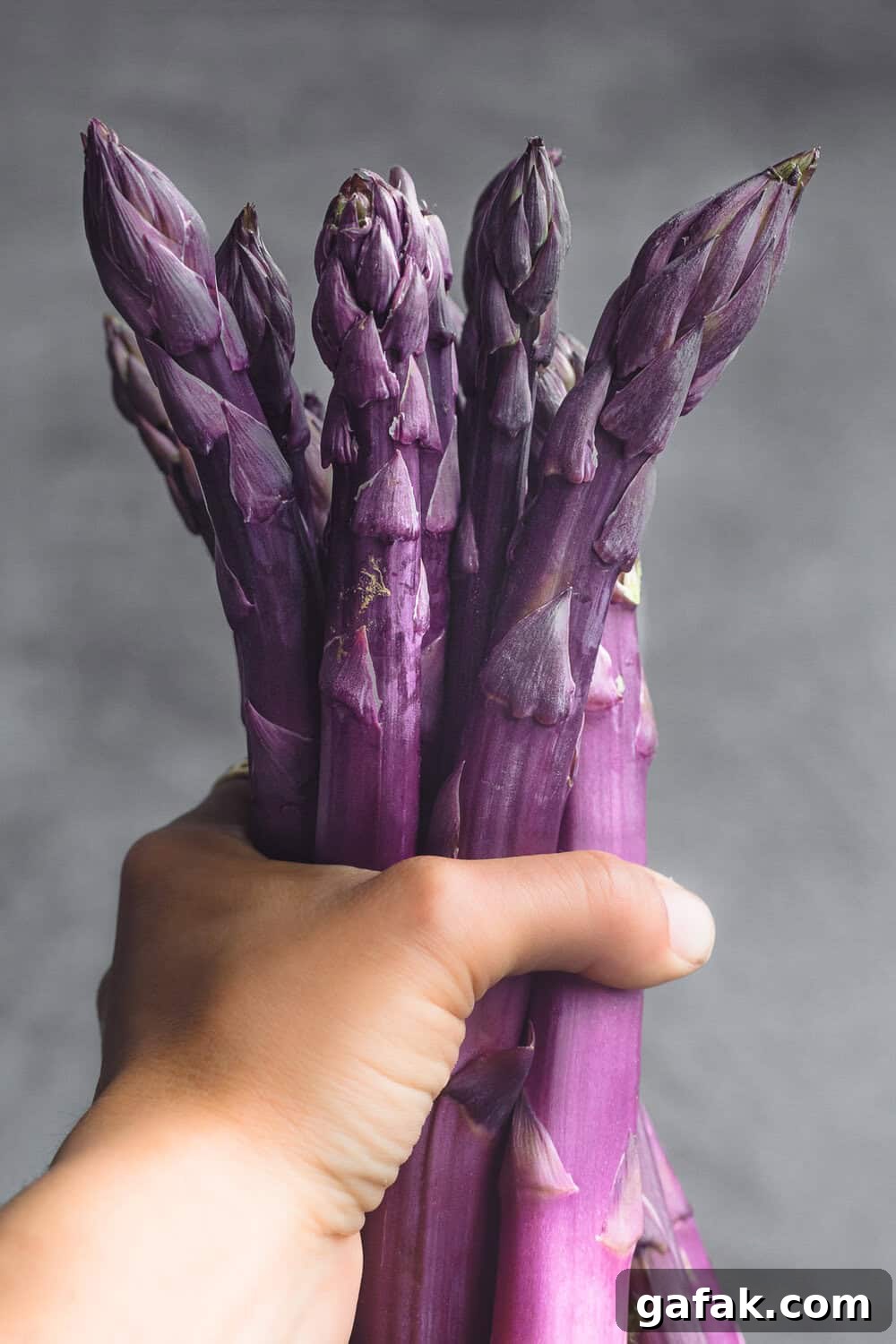
Meet purple asparagus: the sweetest, most tender, anthocyanin-rich spear—often called dessert asparagus for good reason.
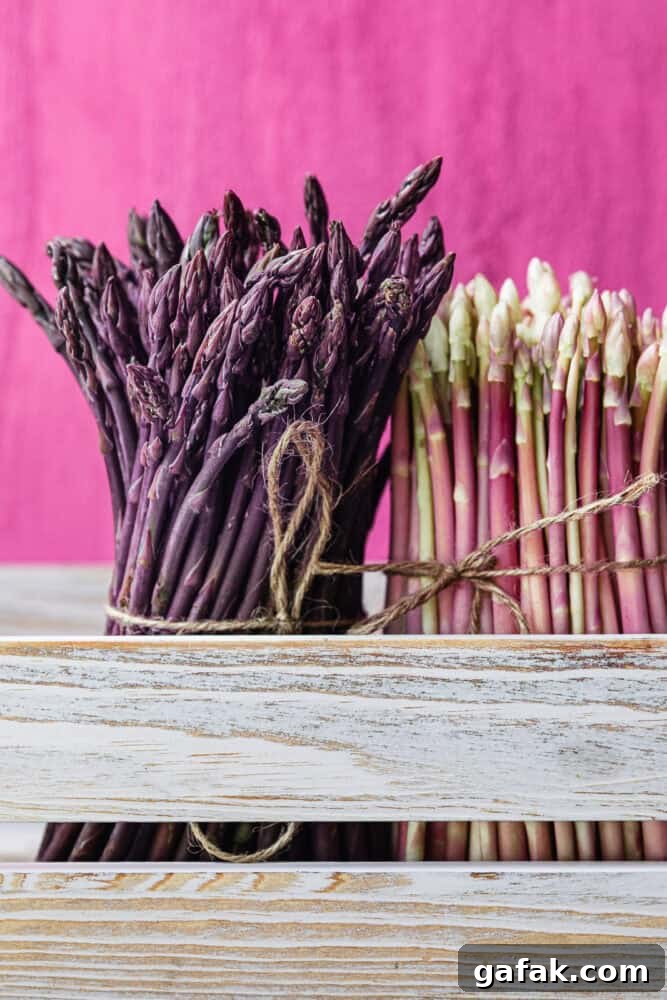
There are several types of asparagus you might encounter: green asparagus, grown in full sun; white asparagus, grown in the dark with no chlorophyll development; pink asparagus, which develops its hue with limited light; and purple asparagus, which is a distinct cultivar all its own.
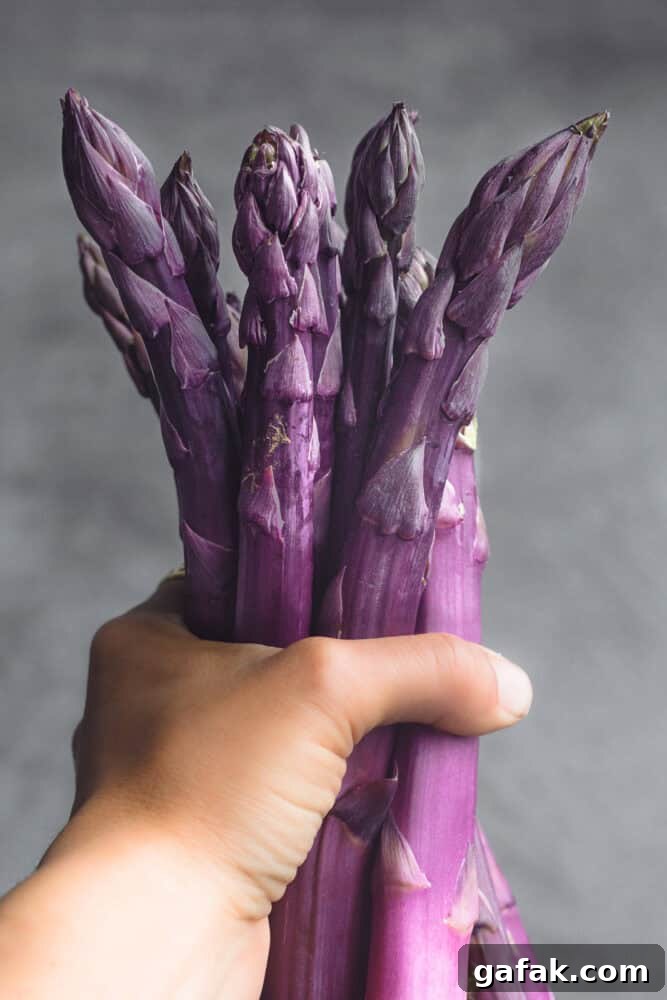
Purple asparagus traces its origins to the Albenga area of Liguria in northwest Italy. The original heirloom variety, Violetto d’Albenga, was refined by local growers during the Italian Renaissance and has influenced many modern cultivars. Popular contemporary varieties like Purple Passion and Pacific Purple are descendants of these historic plants.
While green, white, and pink asparagus are essentially the same species cultivated under different light conditions, purple asparagus is a separate cultivar bred over generations for its sweetness, delicate texture, and vibrant violet color.
The striking purple shade comes from anthocyanins, natural plant pigments also responsible for the color in vegetables like purple carrots, purple cauliflower, and purple potatoes. These pigments give purple asparagus its distinctive appearance and contribute to its antioxidant profile.

Keep in mind the color is fragile: anthocyanins are heat-sensitive, so purple asparagus often loses its violet hue and turns green when exposed to high heat. Although the color fades, the delicate, sweet flavor remains.
Because it is generally sweeter and less fibrous than green asparagus, purple asparagus is excellent raw. Shave or slice it thinly for salads—raw asparagus is best when cut into thin ribbons or slivers.
If you prefer to cook it, use quick methods to preserve texture and flavor: fast searing, a brief blanch, quick roast, sauté, or a hot grill. Avoid heavy peeling; the purple color is concentrated in the skin, while the flesh beneath is pale green. Lightly trimming the woody ends is usually enough.
More Purple Fruits & Veggies
If purple asparagus caught your eye, there are many other purple vegetables worth exploring. These varieties share the same anthocyanin pigments and often offer similar antioxidant benefits.
- Purple Cauliflower — a vibrant alternative to classic white cauliflower, packed with antioxidants.
- Purple Potatoes — colorful tubers with a rich nutrient profile and striking flesh.
- Purple Carrots — heirloom-style carrots with deep purple color and added antioxidants.
- Purple Brussels Sprouts — slightly sweeter and nuttier than their green counterparts.
- Purple Kale — a visually striking and nutrient-dense option for salads and sautés.
- Purple Basil — the same aromatic plant as green basil but with a dramatic purple hue.
- Radicchio — a bold, bitter leafy vegetable that brightens winter dishes.
- Mulberries — an ancient, anthocyanin-rich berry worth trying if you find them.
If you get your hands on purple asparagus, I’d love to see—tag me on Instagram at @danielagerson. Sharing photos of beautiful produce is one of the simple joys of cooking.
There’s a whole world of colorful fruits and vegetables to discover. Try bringing more of these varieties into your kitchen to add flavor, texture, and eye-catching color to salads, sides, and main dishes.
Let’s make waves in the kitchen.