[et_pb_section fb_built=”1″ _builder_version=”3.22″ use_background_color_gradient=”on” background_color_gradient_start=”rgba(255,255,255,0.65)” background_color_gradient_end=”rgba(255,255,255,0.65)” background_color_gradient_overlays_image=”on” background_image=”https://wholefoodfor7.com/wp-content/uploads/2018/07/bg-pattern.png” background_size=”contain” background_repeat=”repeat”][et_pb_row _builder_version=”3.25″ background_size=”initial” background_position=”top_left” background_repeat=”repeat”][et_pb_column type=”4_4″ _builder_version=”3.25″ custom_padding=”|||” custom_padding__hover=”|||”][et_pb_text admin_label=”blog post or details about recipe” _builder_version=”4.4.8″ hover_enabled=”0″]
Cravings can feel overwhelming — I know that from personal experience as a recovering sugar addict. People often say a craving lasts about three minutes, but for me it felt constant: an almost persistent urge that only eased after I gave in. I tried substituting what seemed like healthier options — paleo treats, fruit, or protein bars — but as Melissa Hartwig Urban points out in Food Freedom Forever, sugar is still sugar. My brain recognized a sweet hit and that was enough to keep the cycle going. The same applies to cravings for salty snacks.
This post isn’t about real physical hunger. If you are truly hungry because you’ve under-eaten to meet a restrictive calorie goal, that’s a different issue. One of the most important changes in overcoming my cravings was stopping the 1,200-calorie mindset and instead eating well-balanced meals that filled me up — especially including healthy fats. Eating satisfying meals made the constant physical drive to snack much easier to manage. I use a simple plate approach to stay nourished and avoid getting to the point of desperate hunger.
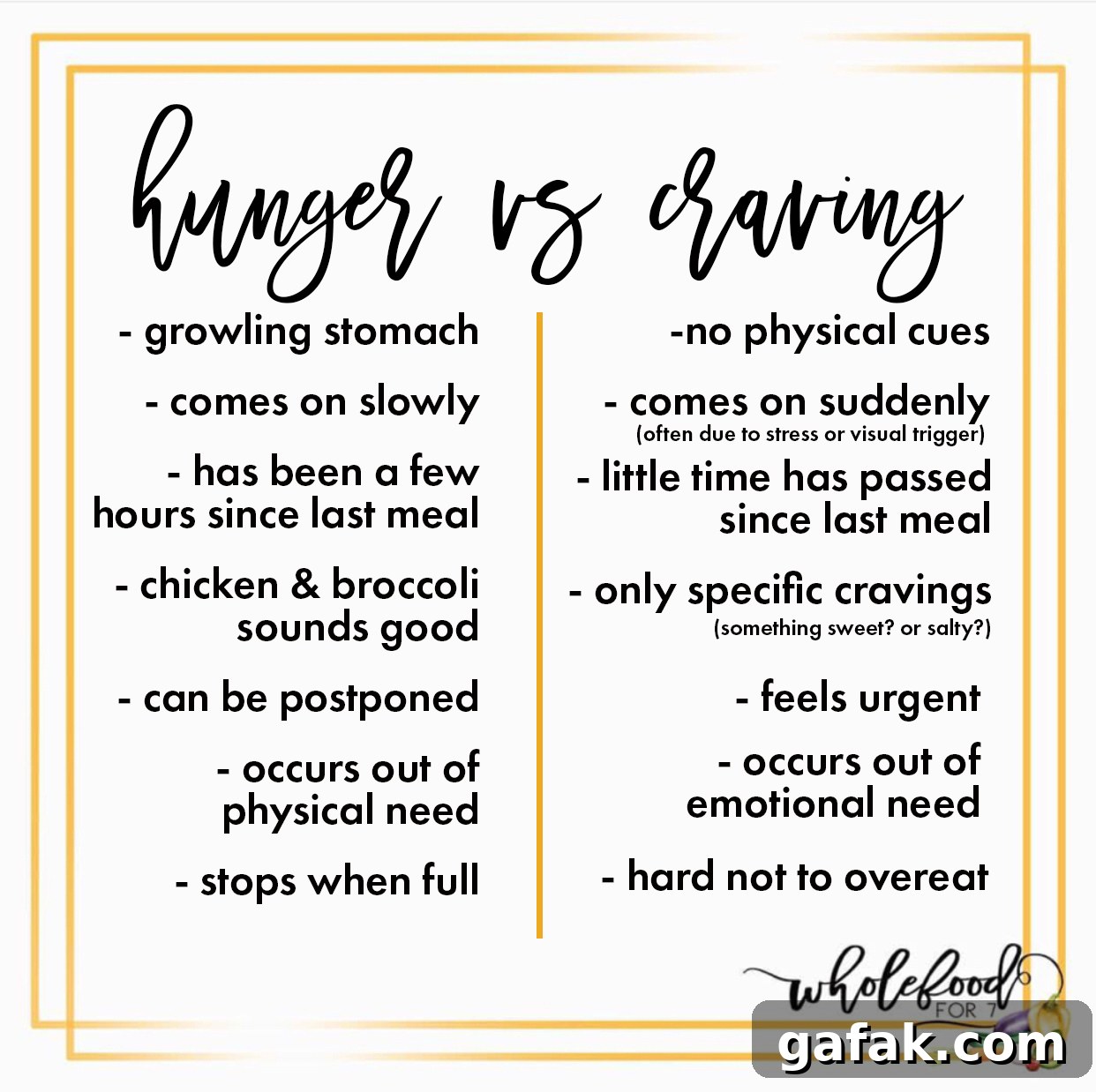
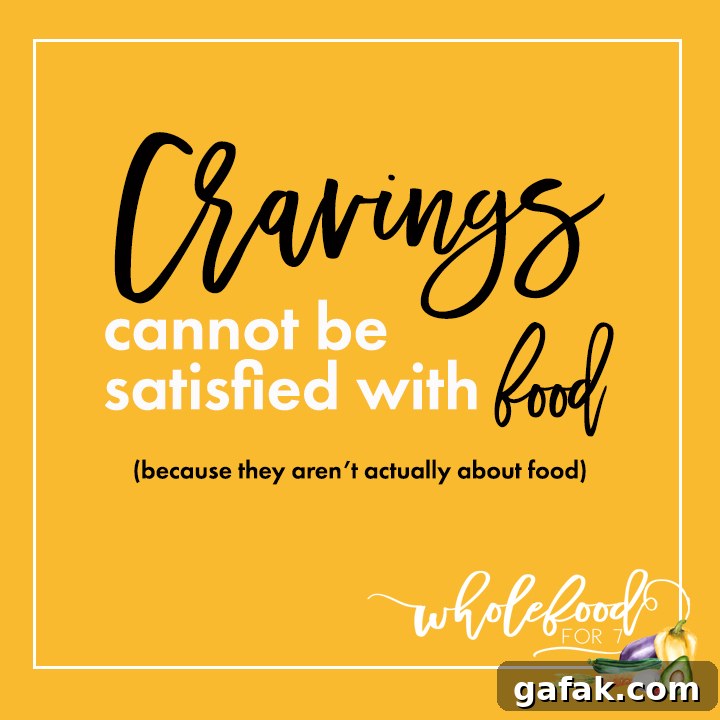
Most cravings aren’t solved by food because they’re not rooted in true physiological hunger. Cravings are often emotional signals — stress, fatigue, boredom, loneliness, frustration. Food can temporarily soothe those feelings, but it doesn’t fix their root cause. Using food to cope is like putting a bandage on a deeper wound.
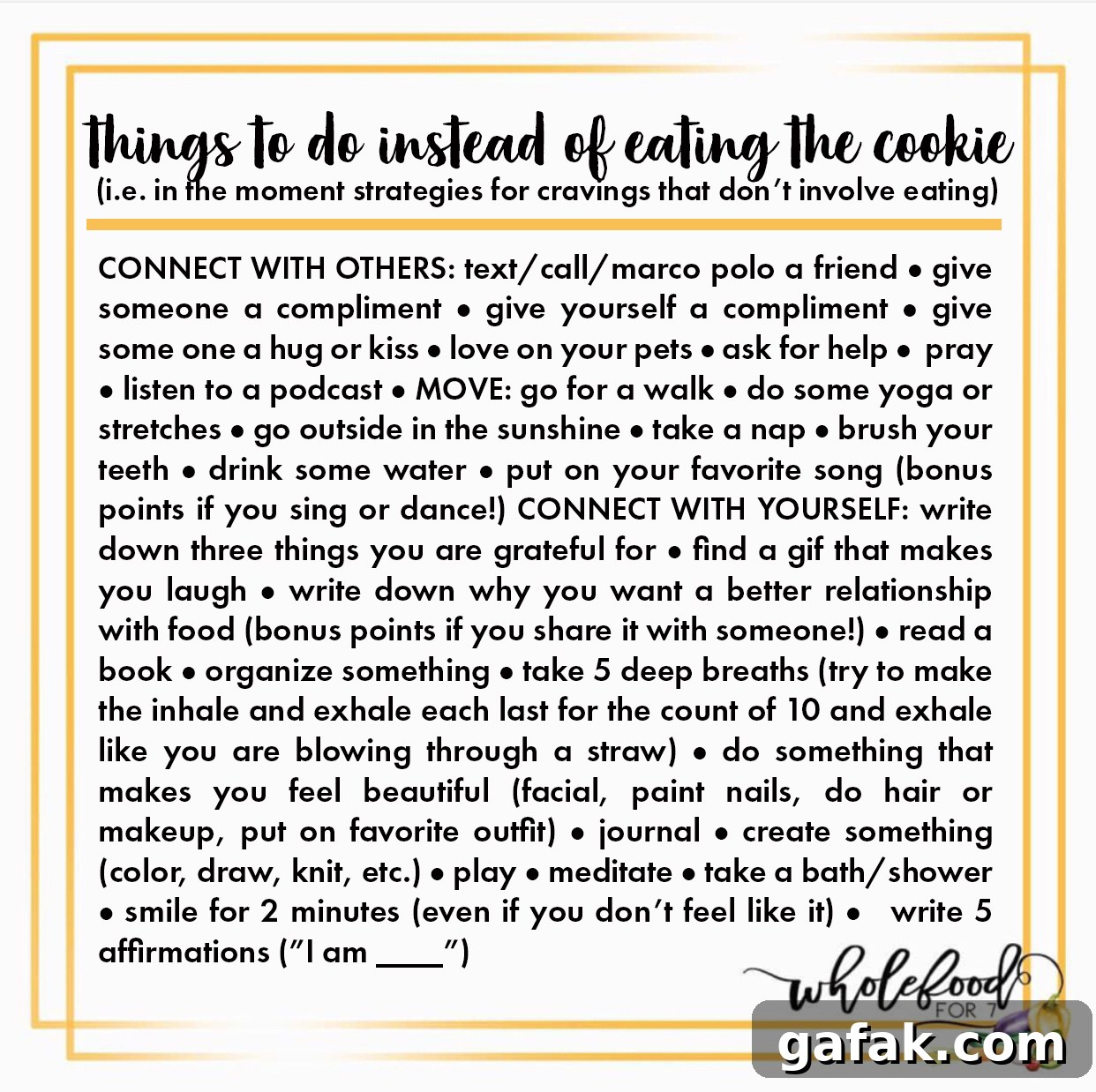
What does help is filling your cup with non-food sources of nourishment. Call it self-care: the goal is to address the emotional need behind the craving. Below is a comprehensive list of practices I used instead of reaching for snacks. I’ve personally used each of these strategies at various times. Some are quick and simple, others may take more time or planning, but most require nothing more than a few intentional breaths or a short shift in perspective.
I challenge you to try at least five of these alternatives the next time the craving monster appears. If you want more background on how I confronted my sugar addiction, you can read about the five crucial steps that helped me recover.
Click here for a printable PDF of “Things to do instead of eating the cookie”
[/et_pb_text][et_pb_post_nav in_same_term=”on” prev_text=”PREVIOUS POST” next_text=”NEXT POST” _builder_version=”3.11″][/et_pb_post_nav][/et_pb_column][/et_pb_row][/et_pb_section]