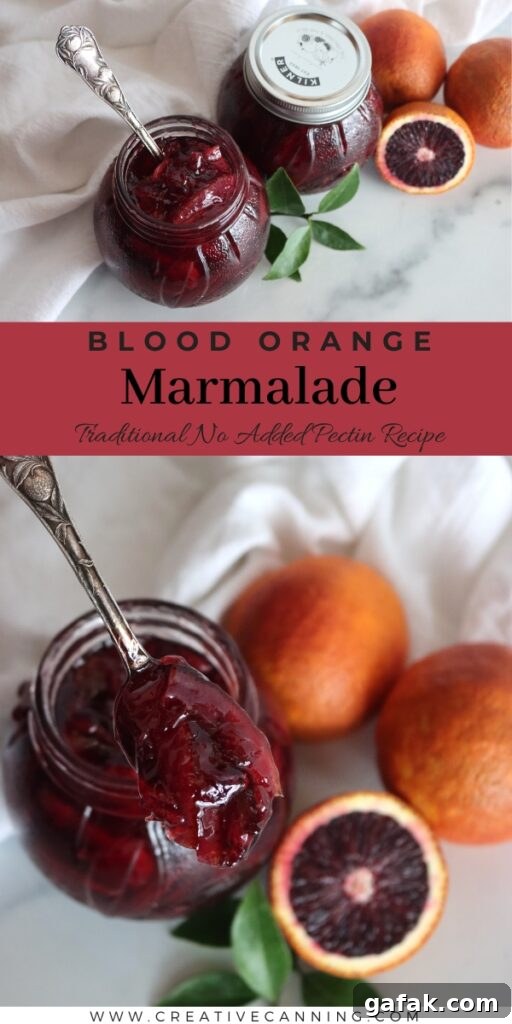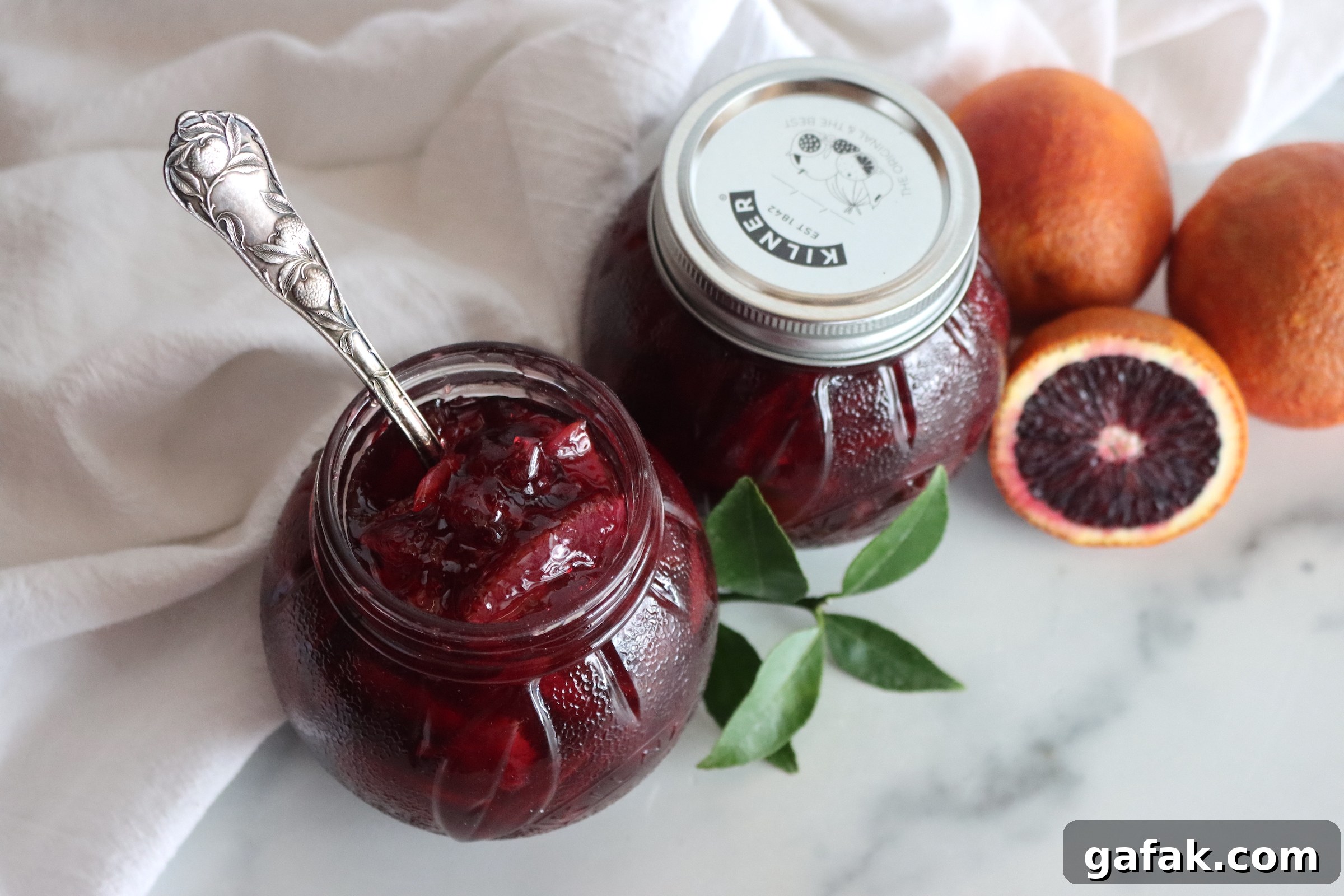
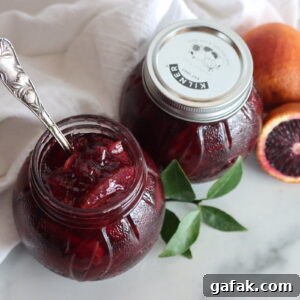
Blood orange marmalade is a beautiful preserve with a deep crimson color and a bright balance of sweetness and citrusy tartness. Its subtle berry and floral notes make it delicious on toast, pastries, or used as a glaze for roasted or grilled meats.
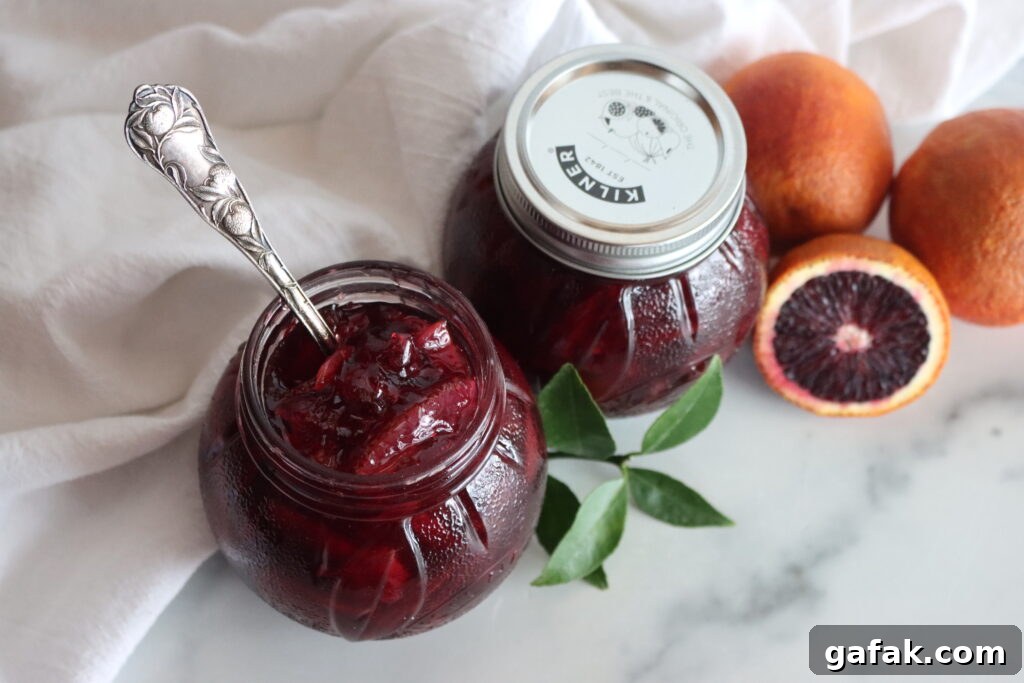
Blood oranges are prized for their red flesh and a flavor that mixes classic citrus tang with raspberry-like and floral undertones. They have a naturally higher pectin content than many other sweet oranges, which helps marmalades set well. Making your own lets you control sweetness, adjust the balance of flavors, and skip preservatives. It’s also a great way to use a bumper crop of seasonal fruit.
Compared with some other citrus, blood oranges tend to have a thinner rind and less bitterness, so marmalade can be made more quickly without losing depth of flavor. With a little patience you’ll end up with a marmalade that showcases the best qualities of these special oranges.
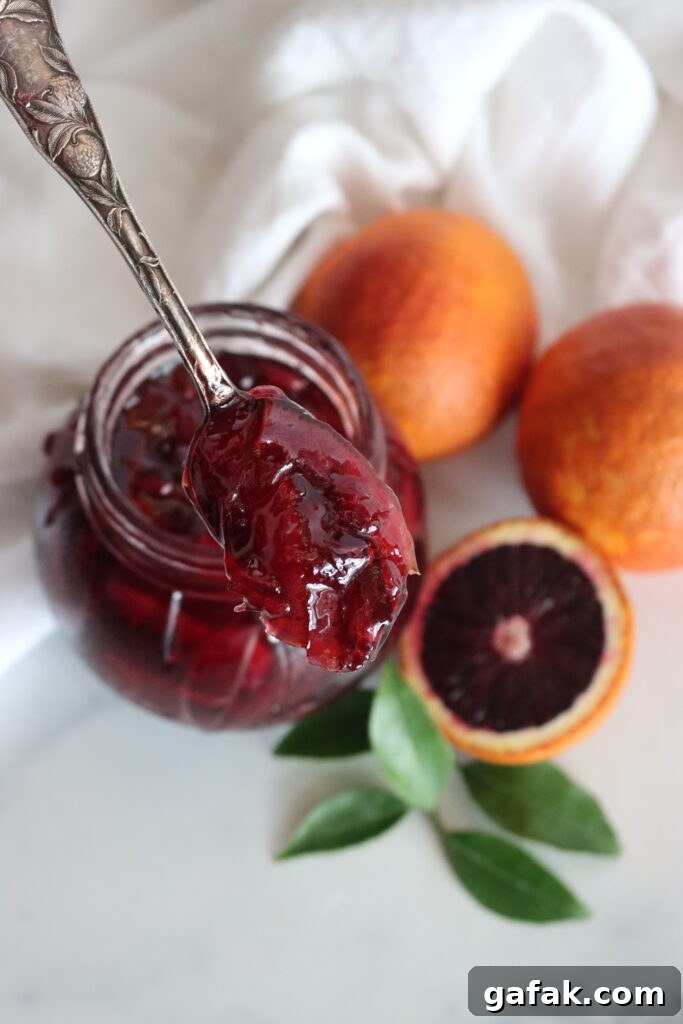
Ingredients for Blood Orange Marmalade
To make about five half-pint jars (roughly 30 servings), you will need:
- 12 blood oranges, divided (about 4½–5 lbs)
- 8 cups granulated sugar
- ¼ cup fresh lemon juice (from 2–3 lemons)
This recipe follows a traditional two-day method that relies on the pectin naturally present in the orange peels. The peels are soaked and simmered to extract pectin, so powdered pectin is not needed. The old-fashioned approach gives excellent texture and saves on ingredient costs, but it does require an overnight rest for the peels.
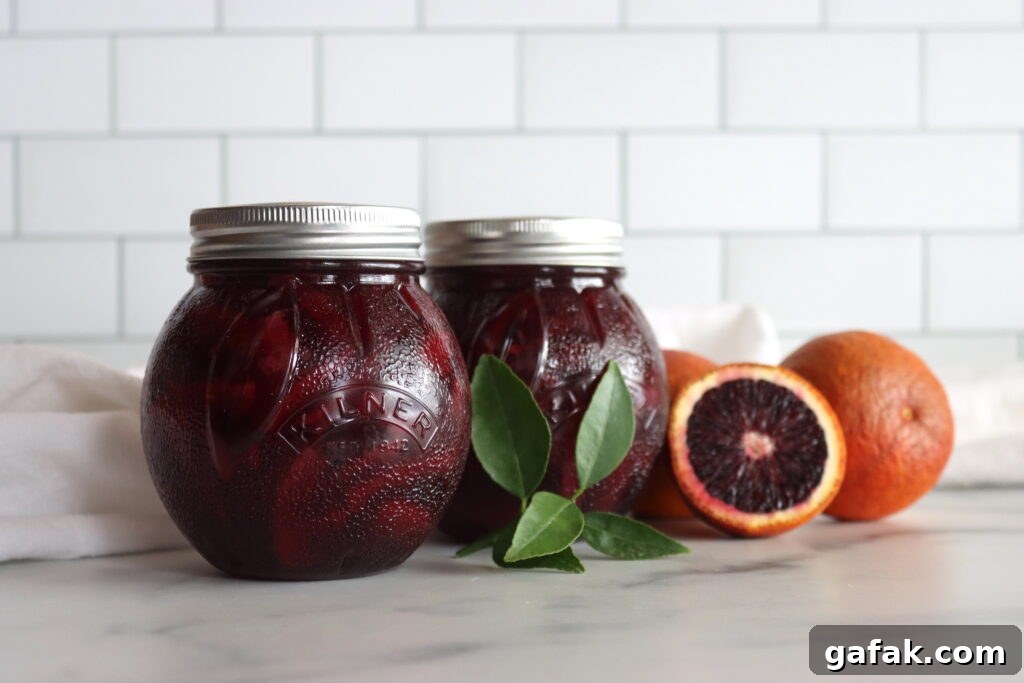
Making Blood Orange Marmalade
This two-day method prepares the fruit on day one so the peels can release their pectin overnight. On day two you finish the marmalade and, if desired, process the jars.
Day 1
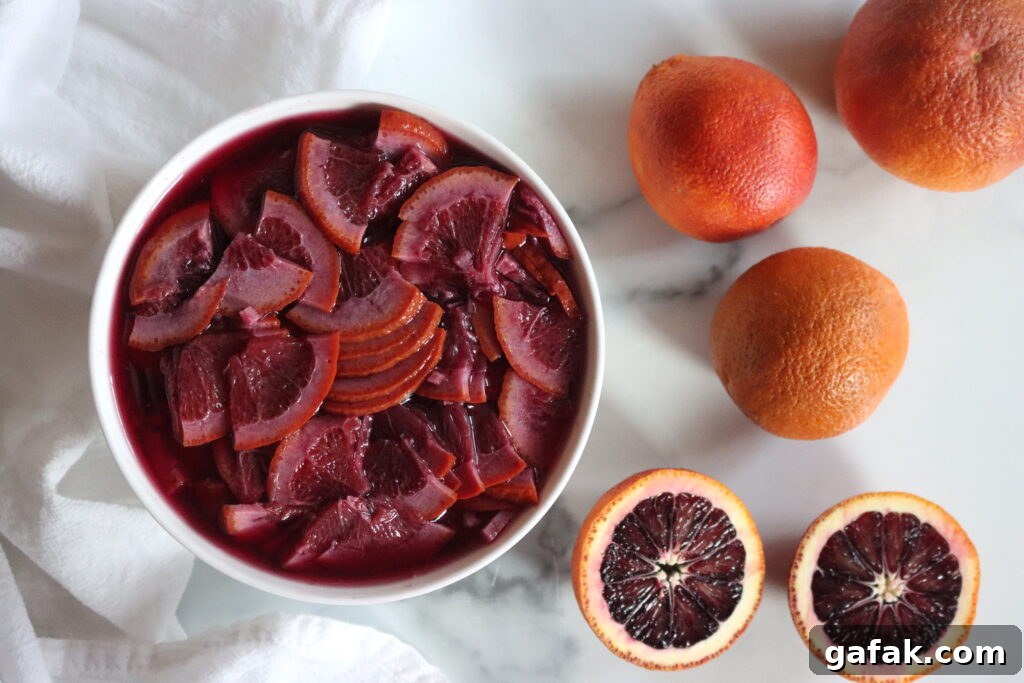
Wash the blood oranges thoroughly. Slice six of the oranges (half of them) lengthwise into quarters, then cut those quarters crosswise into very thin strips so the rind pieces will be fine in the finished marmalade. A mandoline can speed this step. Retain as much juice as possible while slicing.
Place the sliced oranges and any retained juice in a large saucepan and add enough water to cover the fruit. Bring to a boil over high heat, then remove from the heat, cover, and let sit at room temperature overnight (at least 8 hours).
Day 2
The next day, juice the remaining six blood oranges. Measure the juice into a one-quart glass measuring cup and discard the pulp and rind from those juiced fruit.
Use a slotted spoon or small strainer to lift the soaked orange slices from their soaking liquid, reserving both the fruit and the liquid. Place the drained orange slices into a large Dutch oven or jam pot.
Add enough of the reserved soaking liquid to the fresh orange juice to total 4 cups of liquid. Discard any leftover soaking liquid. Pour the 4 cups of combined liquid over the orange slices in the pot.
Stir in 8 cups of granulated sugar, then add ¼ cup fresh lemon juice. Place the pot over medium-high heat and bring to a boil, stirring frequently to dissolve the sugar and prevent scorching.
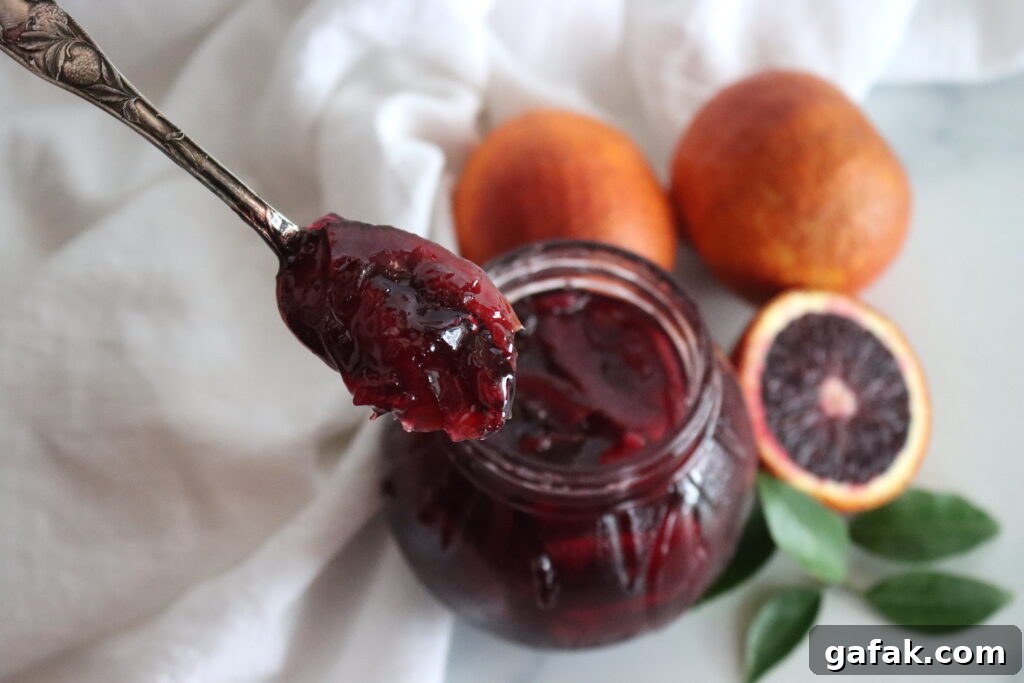
Reduce heat and simmer, uncovered, stirring occasionally until the marmalade reaches its gel stage. This typically takes about 20 minutes but can vary. To test, use a candy thermometer (220°F) or the cold plate test: chill several small plates in the freezer, spoon a little marmalade onto a plate, return it to the freezer for two minutes, then nudge the surface—when it forms a skin that wrinkles it’s ready. If the mixture is still loose, continue cooking and test again.
When the marmalade is done, remove from the heat and ladle into hot jars or containers, leaving ¼ inch headspace. Wipe rims clean, apply lids, and let cool.
Canning Blood Orange Marmalade
If you plan to water-bath can the marmalade, prepare jars, lids, and a canner while the peels are soaking overnight so everything is hot and ready.
Once the marmalade reaches 220°F or passes the cold-plate test, carefully fill hot jars, leaving ¼ inch headspace. Remove air bubbles, wipe rims with a clean damp cloth, and apply lids and bands.
Process jars in a boiling water bath for 10 minutes (increase to 15 minutes at elevations above 6,000 feet). After processing, turn off heat and let jars sit in the water five minutes. Remove jars and set them on a towel to cool undisturbed for 24 hours, then check seals. Store any unsealed jars in the refrigerator and use them promptly.
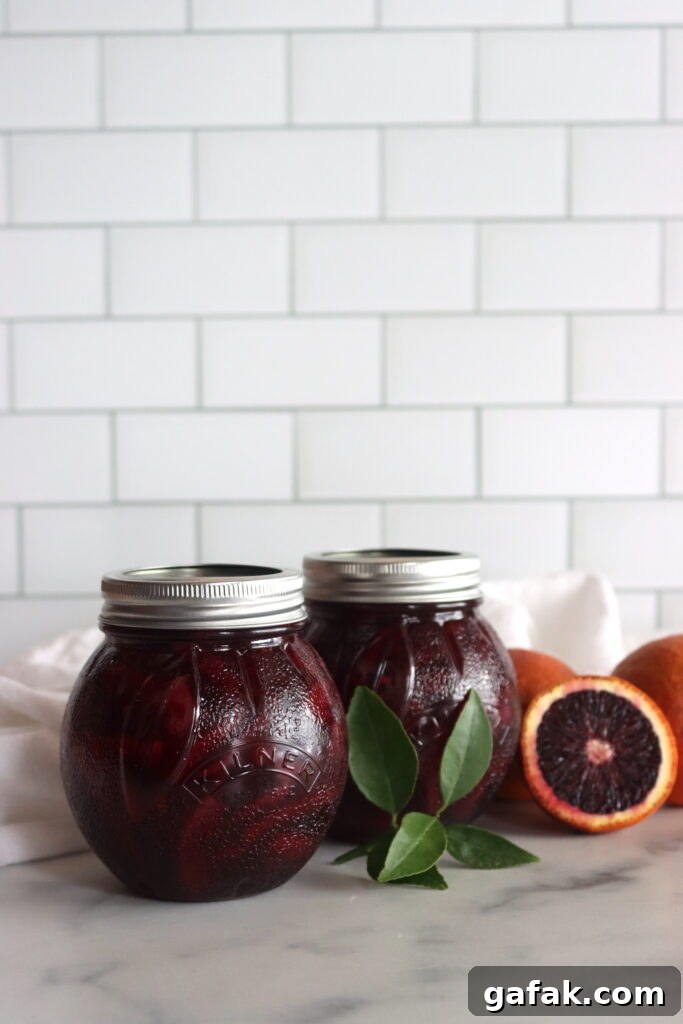
Properly sealed jars can be stored in a cool, dry pantry for up to 18 months for peak quality. Refrigerate after opening.
Variations
Add 2 teaspoons of freshly grated ginger when you stir in the sugar and lemon juice for a ginger-blood orange marmalade. Blood oranges also pair well with apricot, mango, peach, or strawberry—replace about 1 cup of orange pulp with one of these fruits mashed to a pulp, or add the other fruit pulp in addition to the orange pulp (too much extra fruit may affect the set).
For a floral accent, try a small amount of edible lavender or hibiscus when cooking, but use sparingly to avoid overpowering the citrus.
Uses
Blood orange marmalade makes a flavorful glaze for chicken, pork, or lamb and can be used in place of barbecue sauce on ribs. It’s also excellent on muffins, scones, and toast — try it with peanut butter for a citrus twist on a PB&J.
Blood Orange Marmalade
Ingredients
- 12 blood oranges, divided (about 4.5 to 5 lbs)
- 8 cups granulated sugar
- ¼ cup fresh lemon juice (from 2–3 lemons)
Instructions
Day 1
- Wash the oranges and slice six of them into thin strips, keeping as much juice as possible.
- Place slices in a large saucepan, cover with water, bring to a boil, then remove from heat and let sit covered overnight (at least 8 hours).
Day 2
- Juice the remaining six oranges and set the juice aside.
- Strain the soaked orange slices, reserving the soaking liquid. Place the slices in a large pot.
- Add enough soaking liquid to the fresh juice to total 4 cups, then pour this over the orange slices.
- Stir in ¼ cup lemon juice and 8 cups granulated sugar.
- Bring to a boil over medium-high heat, stirring to dissolve the sugar, then simmer uncovered until the marmalade reaches gel stage (about 20 minutes).
- Test for set using a candy thermometer (220°F) or the cold plate method.
- Ladle into jars or containers, leaving ¼ inch headspace. Wipe rims, seal, and, if canning, process in a boiling water bath for 10 minutes (15 minutes above 6,000 ft).
Nutrition
Nutrition information is an approximation.
Marmalade Recipes
Once you’ve mastered this recipe, try other citrus varieties for different flavor profiles. Traditional orange marmalade is a classic, grapefruit offers a bittersweet edge, and unusual citrus such as Buddha’s Hand delivers a fragrant, citron-forward marmalade. For a lower-sugar option, use a pectin-based low-sugar recipe and substitute blood oranges.