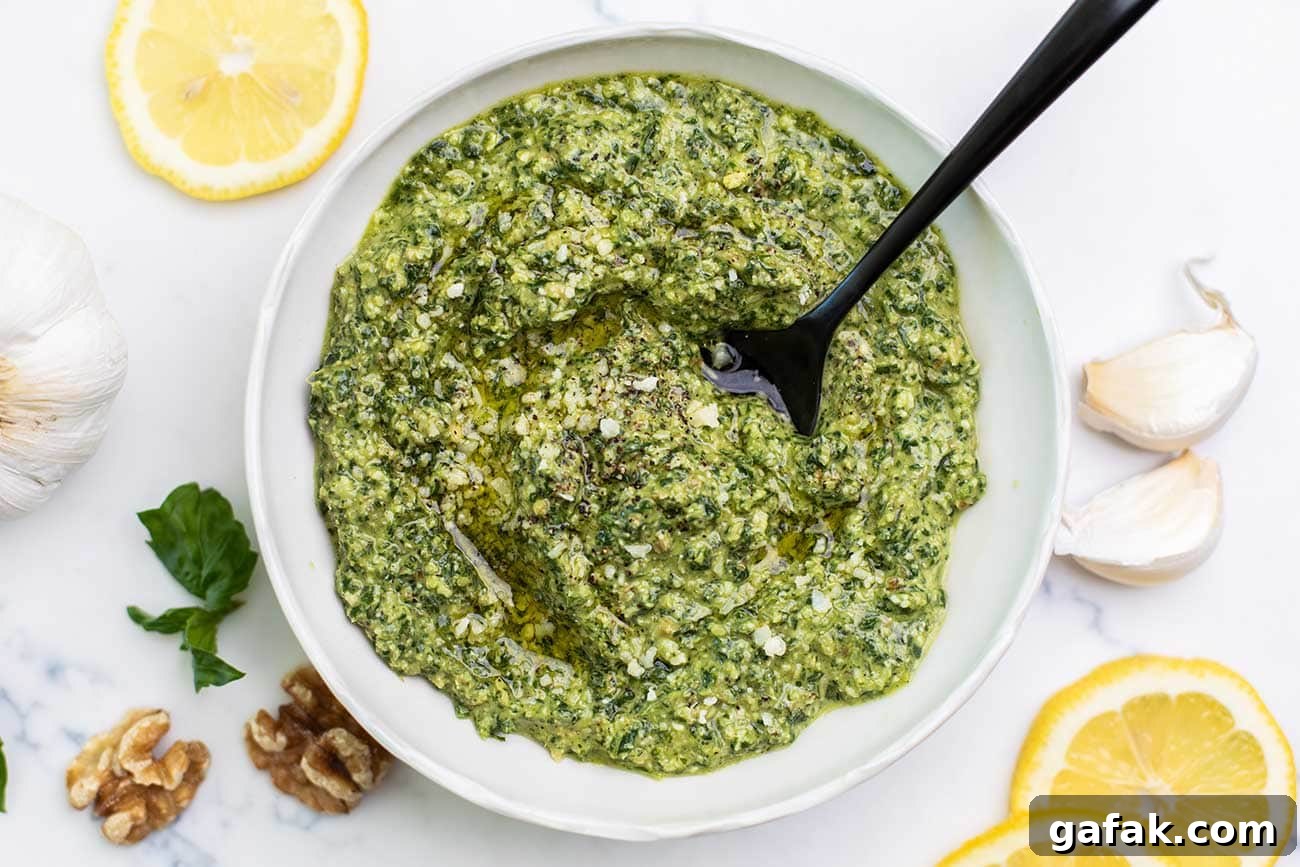
Basil Walnut Pesto is a summer staple in my house. Fresh basil from the garden is combined with walnuts, garlic, and Parmigiano-Reggiano, then finished with lemon juice and extra-virgin olive oil. It’s bright, versatile, and perfect for pasta, roasted vegetables, or grilled meats.
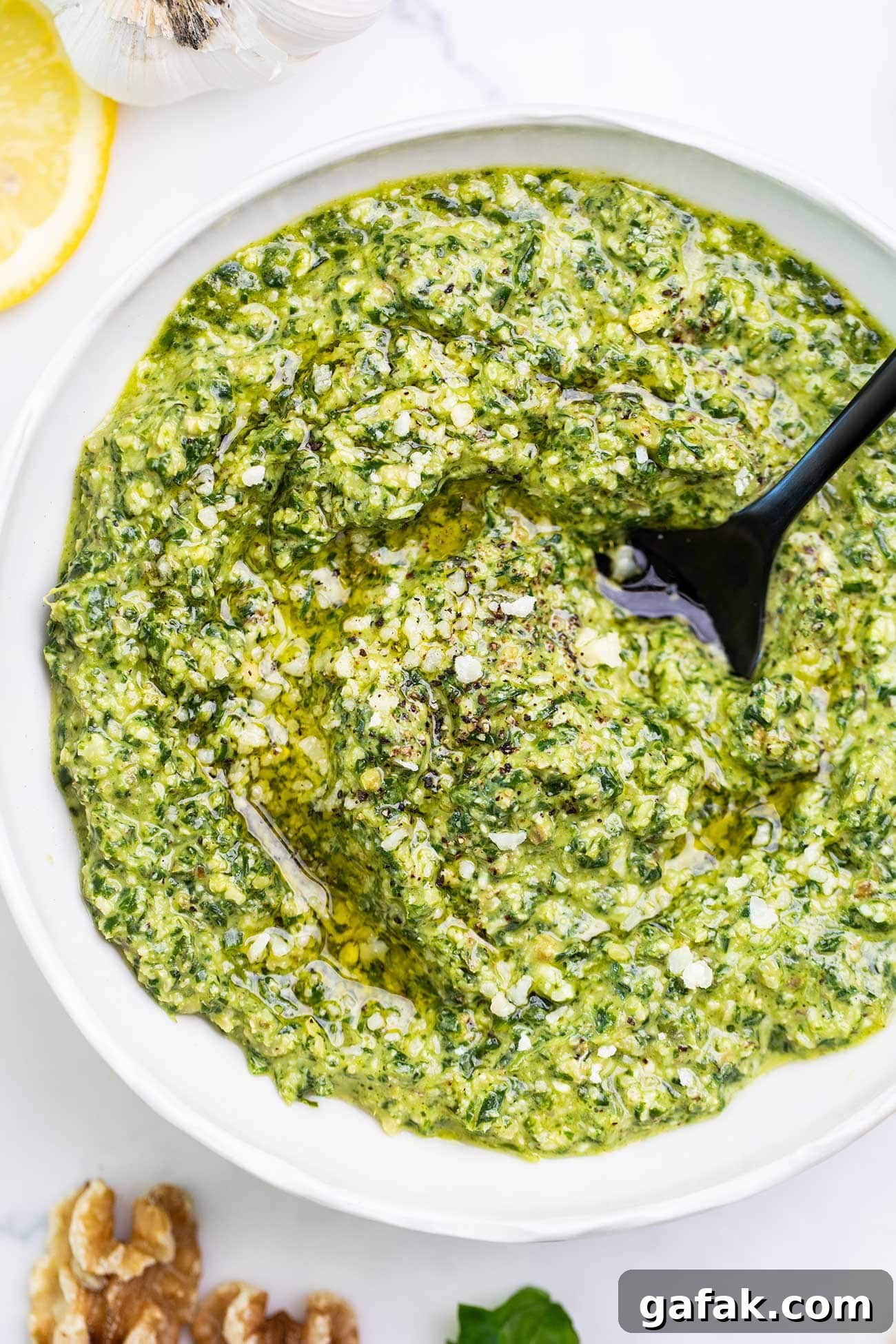
A Classic Pesto Recipe
Pesto has many delicious variations—made with different herbs, greens, or nuts—but the classic basil and walnut combination remains my favorite. This simple sauce comes together with pantry staples plus fresh basil, and it’s an ideal way to use an abundance of leaves from your garden or farmers market.
I add a touch of lemon juice to brighten the flavor and give the pesto a fresh, summery lift. The result is a vivid, flavorful condiment that’s great tossed with pasta, spooned over roasted or grilled vegetables, or used to finish grilled meats. Homemade pesto is quick, economical, and far superior to most jarred versions—especially when you use quality extra-virgin olive oil and fresh ingredients.
This recipe is simple, versatile, and ready in about five minutes.
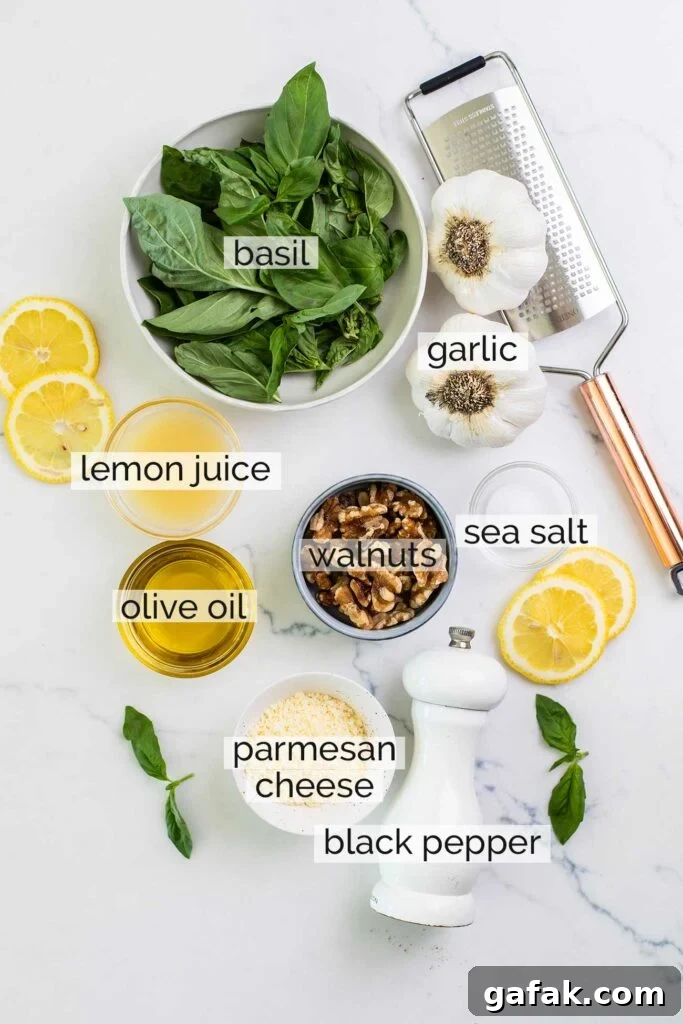
What You’ll Need
- Fresh basil (or substitute part basil with other fresh herbs; see Variations)
- Extra-virgin olive oil (use a good-quality bottle)
- Lemon juice (optional zest for serving)
- Walnuts (raw)
- Parmigiano-Reggiano (or pecorino for a sharper flavor)
- Fresh garlic cloves
- Sea salt and black pepper
How to Make Basil Walnut Pesto
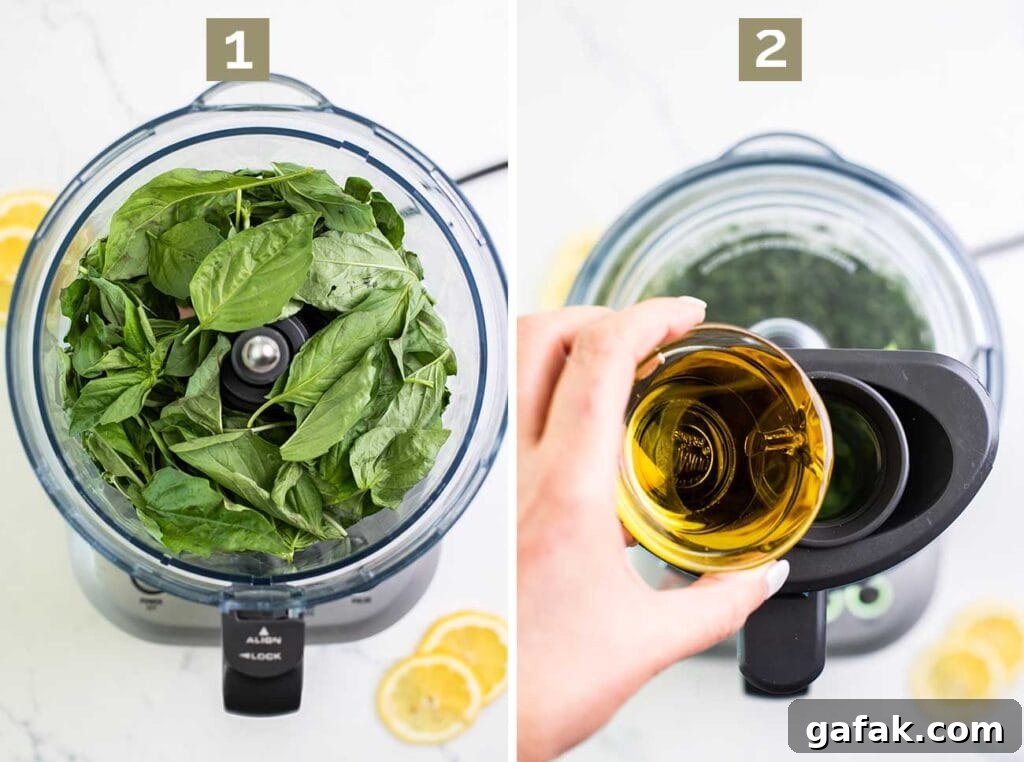
Step 1: Rinse the basil, remove the leaves from the stems, and add them to a food processor or high-speed blender. Pulse or blend until the leaves are broken down and no large pieces remain.
Step 2: With the processor running, slowly stream in the extra-virgin olive oil so the sauce emulsifies and becomes smooth.
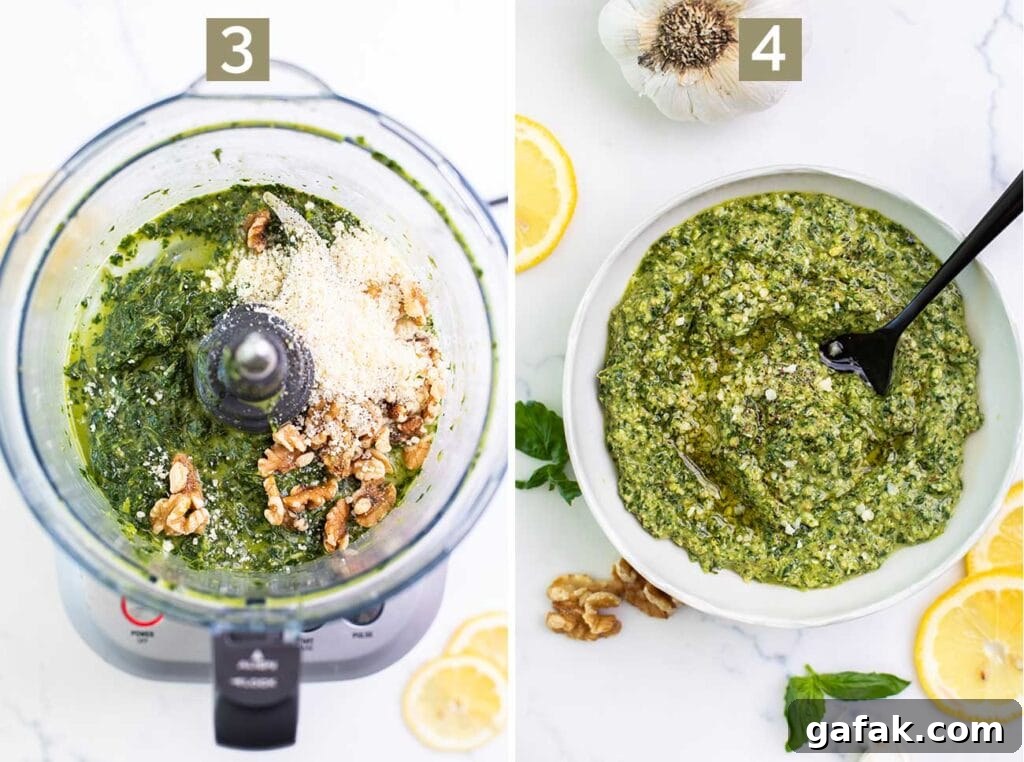
Step 3: Add the walnuts and grated Parmigiano-Reggiano, then pulse until incorporated. The pesto should be creamy but still show flecks of green and small pieces of nuts for texture.
Step 4: Grate fresh garlic into the mixture and taste. Season with sea salt and freshly ground black pepper. Garlic intensifies as the pesto sits, so start with less than you think you need and adjust after it rests a bit.
How to Store Pesto
Transfer pesto to an airtight container and drizzle a thin layer of olive oil over the surface to help prevent oxidation. Refrigerate for up to five days.
Freezing: Pesto freezes beautifully for up to three months. Freeze in an airtight container, or spoon pesto into an ice cube tray for single portions. Once frozen, transfer cubes to a freezer bag and thaw at room temperature before using; stir well to recombine.
How to Use Basil Pesto
Pesto Pasta: Toss with your favorite pasta—regular, gluten-free, or zucchini noodles—for a quick meal.
Pesto Salad Dressing: Shake 1/2 cup pesto with 3 tablespoons red wine vinegar and 1 tablespoon extra-virgin olive oil for a bright dressing.
Pesto Chicken or Salmon: Use pesto as a marinade or finishing sauce for seared or baked proteins, or spread on top before serving for an herbaceous finish.
Other Uses: Stir pesto into grain salads, spoon over roasted vegetables, swirl into soups, or fold into egg dishes like quiches and frittatas for extra flavor.
Variations
Other Herbs: Replace up to half the basil with parsley, chives, arugula, or a handful of baby spinach to change the flavor and deepen the green color.
Other Nuts: Pine nuts, almonds, pecans, and cashews all make excellent pesto bases. For a nut-free option, use toasted pumpkin seeds.
Dairy-Free: Omit the cheese and add 1/4 cup raw cashews for creaminess; increase salt slightly. Nutritional yeast can be used for a cheesy flavor if desired.
Recipe Card
Basil Walnut Pesto
Equipment
-
food processor or blender
Ingredients
- 4 cups basil fresh, loosely packed
- 2 1/2 tablespoons lemon juice
- 1/4 cup extra virgin olive oilor 2 tbsp EVOO + 2 tbsp water for a lighter sauce
- 1/4 cup parmesan cheese grated
- 1/4 cup walnuts
- 1-2 cloves garlic grated to taste
- sea salt & fresh ground black pepper to taste (I used less than 1/8 tsp salt)
Instructions
-
Wash the basil and remove the leaves from the stems.
-
Add basil to the food processor or blender and blend until broken up. Use a tamper if needed or stop and push the leaves down as you blend.
-
Once the basil is broken up, add lemon juice, olive oil (and water if using), and blend until the mixture forms a paste.
-
Add Parmesan and walnuts, then pulse to combine. Add a pinch of sea salt and a few grinds of black pepper. Taste and adjust seasonings; grate in garlic to taste, remembering the garlic will intensify over time.