How to know if essential oils are pure
Did you buy fake essential oils? Learn how to test your oils to determine whether they’re genuine. These six clear signs will help you choose pure, high-quality essential oils without being duped.
Disclaimer: This post contains affiliate links. I may earn a small commission if you make a purchase, at no extra cost to you. I only recommend products I trust.
6 Unmistakable Signs of Fake Essential Oils
Buying essential oils can be confusing: many brands claim purity, but not all oils are created equal.
Essential oils are widely used—diffusers are common in many homes—but quality varies, and some bottles on the market are diluted, synthetic, or poorly processed.
High-quality essential oils can have benefits, including antimicrobial properties and supportive effects for skin and wellbeing, but adulterated or poorly processed oils may be ineffective or even harmful.

Why you shouldn’t use just any essential oil:
- Some products are diluted with fillers or cheaper carrier oils. These can trigger allergic reactions and may clog or damage diffusers.
- Other products use synthetic fragrances to standardize scent. Synthetic additives can cause respiratory irritation and other health concerns.
- Some oils are mishandled during distillation or storage and lose potency, making them ineffective for therapeutic use.
Below are the signs to look for so you can choose essential oils that are likely to be pure and effective.
6 signs to tell if it’s pure essential oil:
1. The bottle
Pure essential oils should be stored in glass bottles, not plastic. Oils can degrade certain plastics over time, contaminating the product. The glass should be colored—amber or cobalt—to block UV light, which breaks down oils and shortens shelf life. Clear glass is a red flag unless it’s sold in a protective outer box.
2. Therapeutic grade
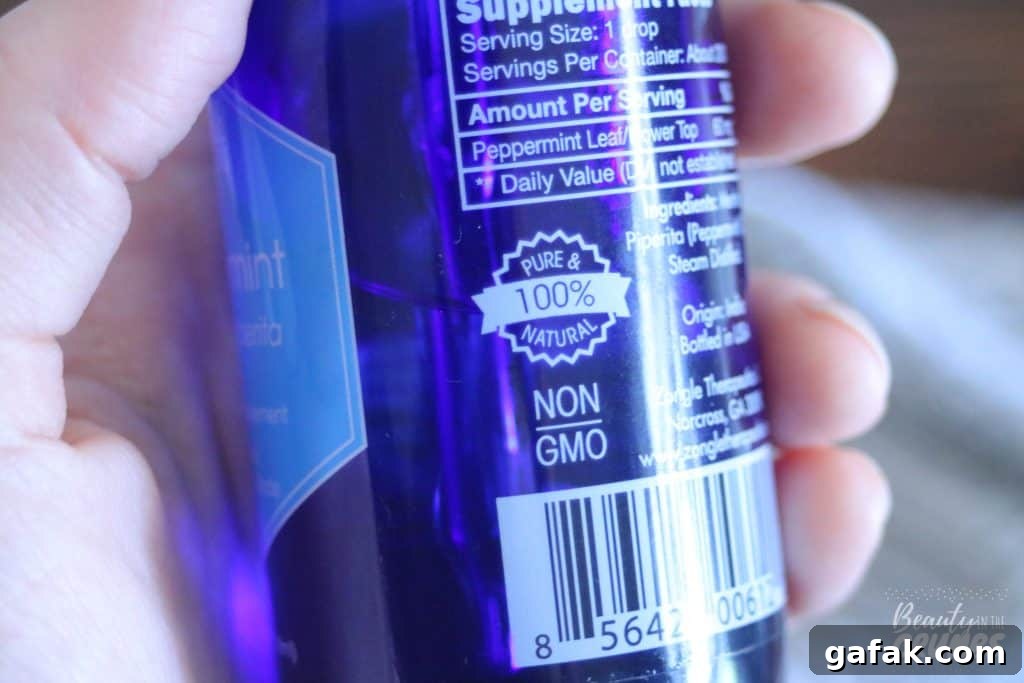
Look for claims of 100% pure and “therapeutic grade.” This label suggests no artificial fillers and stricter quality control, including limited pesticide contamination. While marketing terms can be misused, reputable brands that stand behind a therapeutic-grade claim usually have more consistent standards.
3. Speak Latin
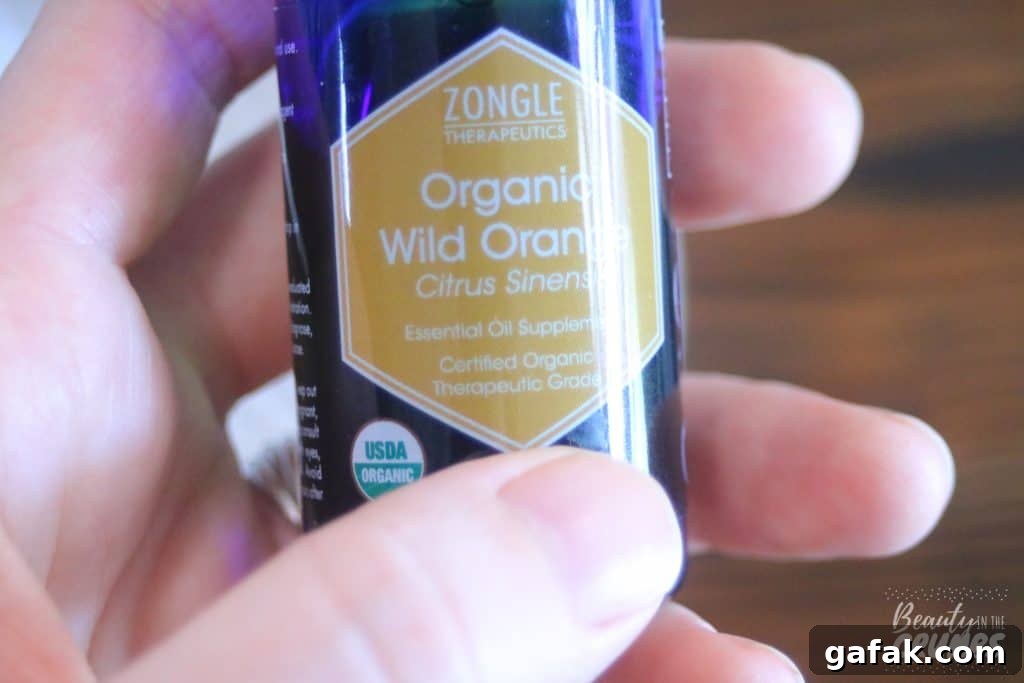
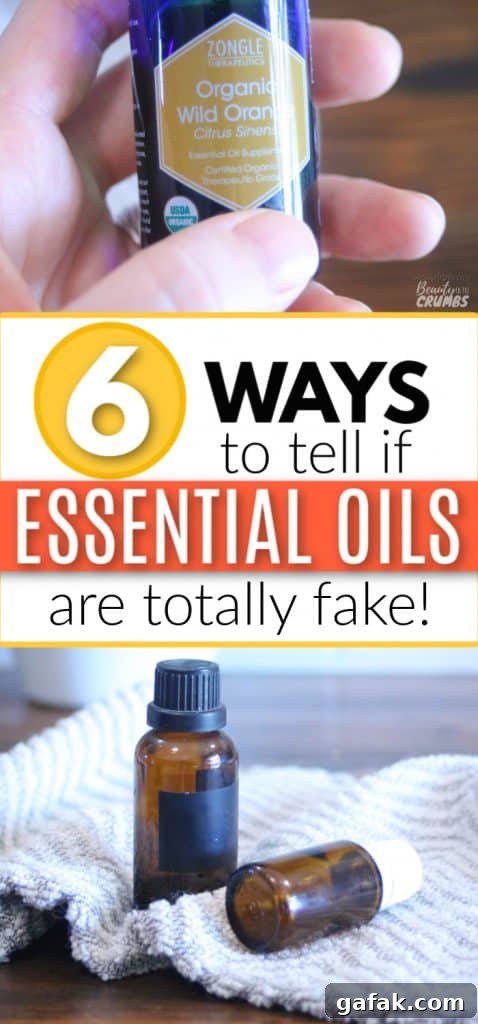
High-quality essential oil labels include the botanical (Latin) name alongside the common English name. For example, wild orange should be listed as Citrus sinensis. The botanical name helps confirm the plant species used and reduces ambiguity.
4. No other ingredients listed
Unless you intentionally buy a blend, an essential oil bottle should list only the single oil (with its Latin name). Carrier oils or added ingredients should be clearly identified when present. If the label lists multiple oils or vague terms like “fragrance,” treat the product with caution.
5. It shouldn’t be perfectly consistent
Because essential oils come from plants, natural variation in color and scent between batches is normal and expected. Differences in soil, climate, harvest time, and processing affect the final product. If every bottle of a particular oil smells and looks identical across many batches, synthetic additives may be involved.
6. Brand website states it’s GC/MS tested
Reliable companies publish GC/MS (gas chromatography–mass spectrometry) test results for their oils. These tests identify chemical components and detect adulteration. Ideally, testing is performed by a third-party lab. If a brand doesn’t provide GC/MS data on its site, ask for it; lack of transparency can be a warning sign.
7. Paper test for filler oils

A simple home test can reveal added carrier oils: place a drop of essential oil on plain white paper and let it dry. Pure essential oil typically won’t leave a noticeable oily ring; diluted or carrier-containing oils may leave a dark, translucent spot. Note exceptions: some oils—patchouli, vetiver, German chamomile, sandalwood—can naturally leave marks due to their constituents.
8. Is the cost too good to be true?
If a bottle is dramatically cheaper than comparable therapeutic-grade oils, be skeptical. Extremely low prices often indicate adulteration or synthetic substitutes. That said, higher price doesn’t always guarantee superior quality: marketing, branding, and distribution models (including MLMs) can inflate cost. Use price as one factor among several when judging quality.
BONUS
When possible, choose organic essential oils—especially for oils you apply to skin (lavender, tea tree) or ingest (peppermint, orange). Organic sourcing reduces the chance of pesticide residues and supports cleaner production practices.
MLM essential oil brands
Multi-level marketing (MLM) brands can offer quality essential oils, but they often cost more due to distribution and sales structures. Higher price doesn’t always equal better quality; evaluate MLM products by the same criteria: packaging, botanical names, ingredient lists, GC/MS testing, and supplier transparency.
If you prefer an MLM brand and trust its quality, it’s fine to continue using their products. Just be aware you may be paying extra for the business model rather than strictly for superior oil quality.
If you have a membership to an MLM essential oil group and love their oils, it’s OK to stick with them. If you appreciate a company and can afford it, supporting them is a valid choice.
Essential oils I recommend:
I don’t endorse a single brand exclusively. Companies change, and quality can vary over time. I choose brands that meet the criteria listed here: clear labeling, GC/MS testing, proper packaging, and transparent sourcing.
From experience, these two brands have consistently met those standards: Zongle Therapeutics and Plant Therapy. They provide clear labeling, testing information, and reasonable pricing for quality products.
Learn how to replace toxic cleaners with natural, homemade alternatives using real essential oils. Consider a guided plan to switch gradually—small, sustainable steps make the transition easier.
Subscribe to a trusted mailing list or resource to receive step-by-step tips and recipes for natural cleaning and safe essential oil use.