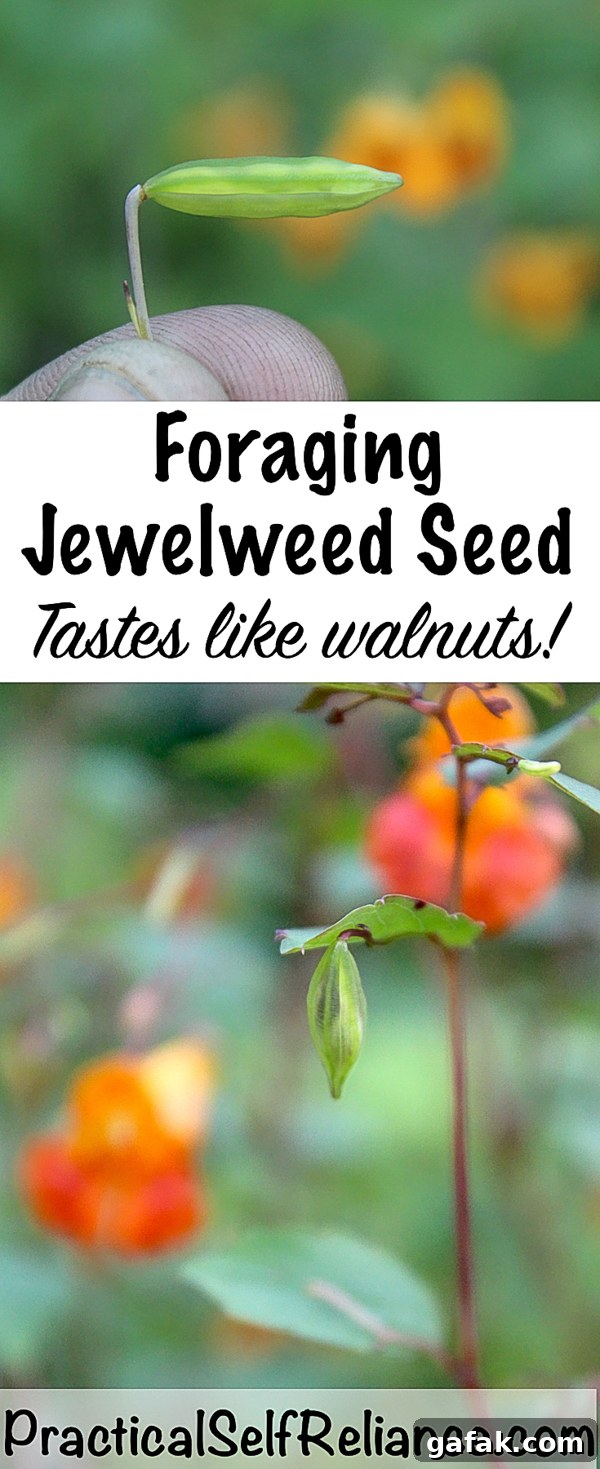
Herbalists long value jewelweed (Impatiens capensis) as a reliable, gentle anti-itch remedy for mosquito bites and poison ivy. When you’re out foraging for this summertime ally, don’t overlook a tasty part of the plant: the seeds.
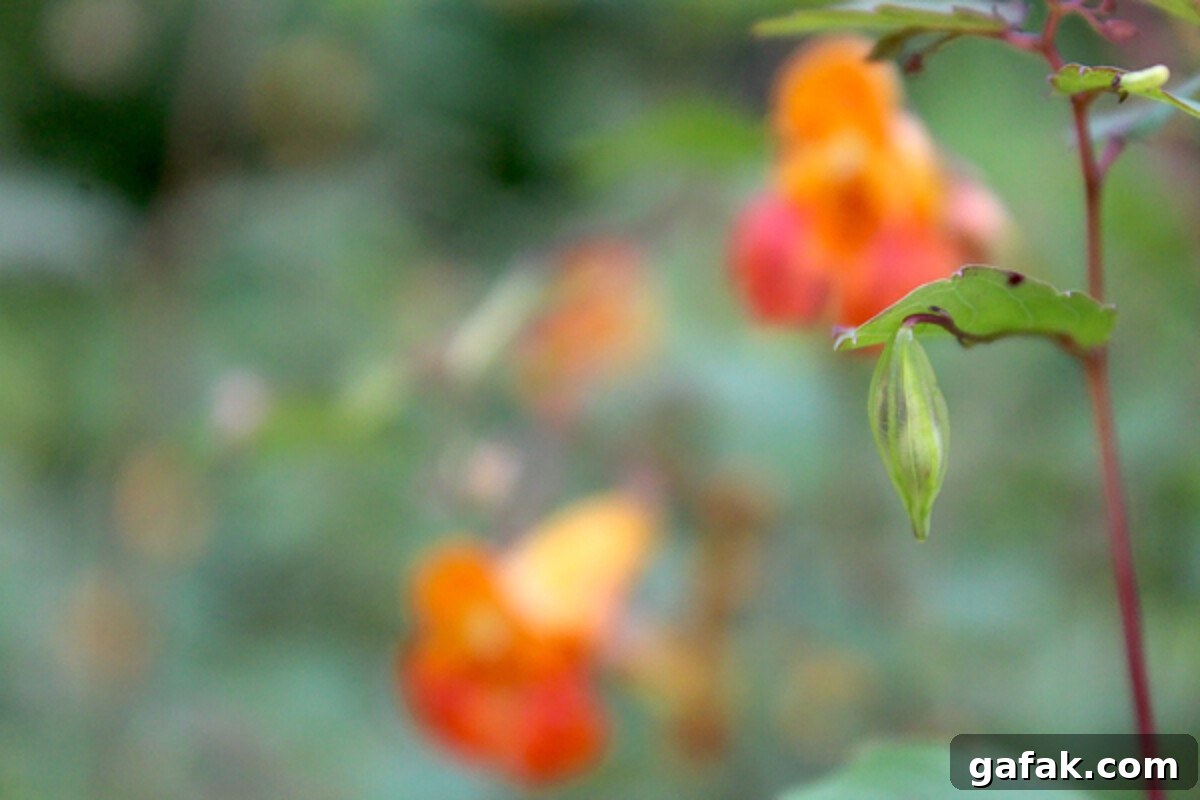
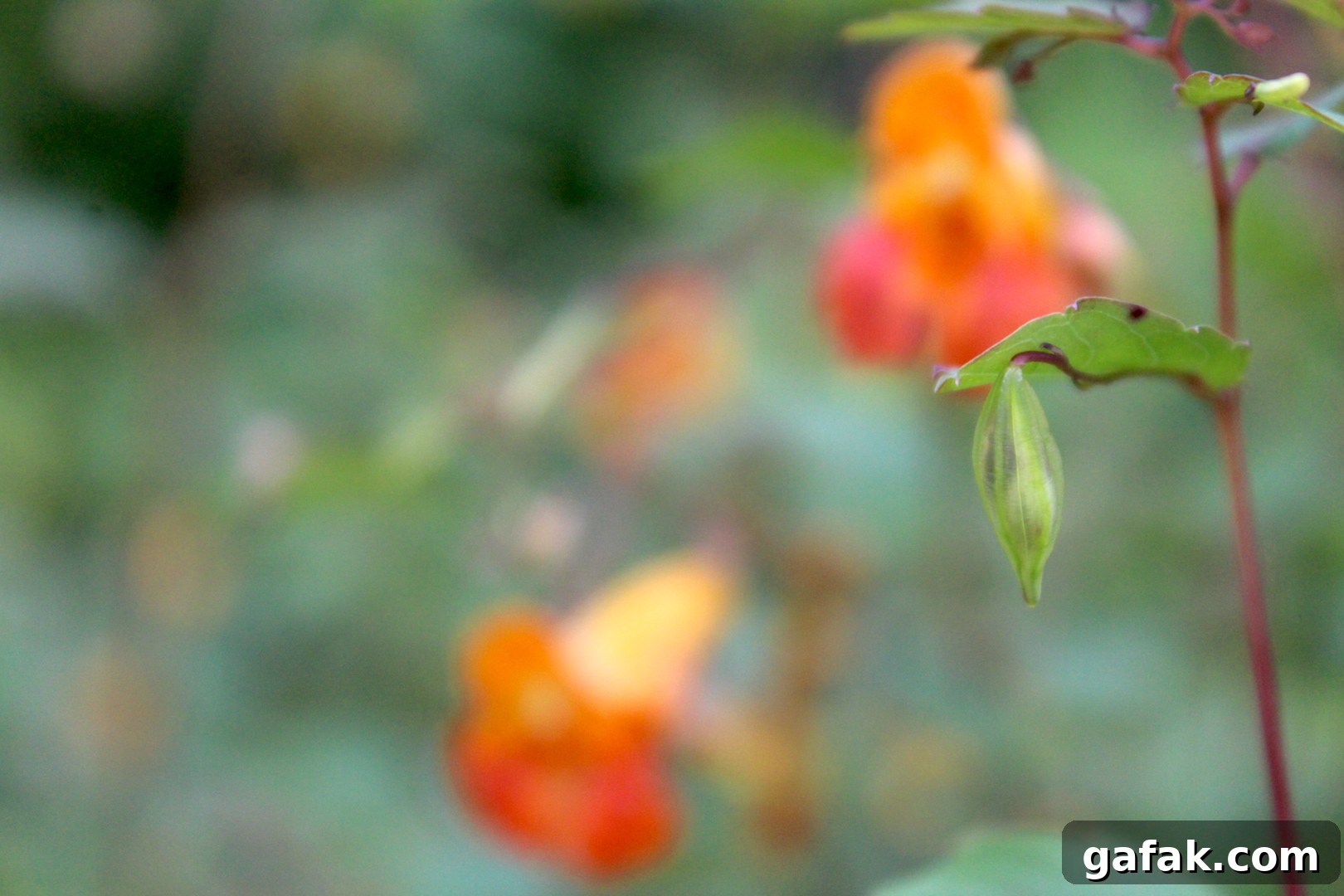
The leaves and stems aren’t especially notable as food, but the seedpods are a delightful surprise. If you extract them carefully straight from the plant, they pop pleasingly in your mouth and have the flavor of English walnuts.
Yes—really. The taste is unmistakably walnut-like; close your eyes and you might not tell the difference.
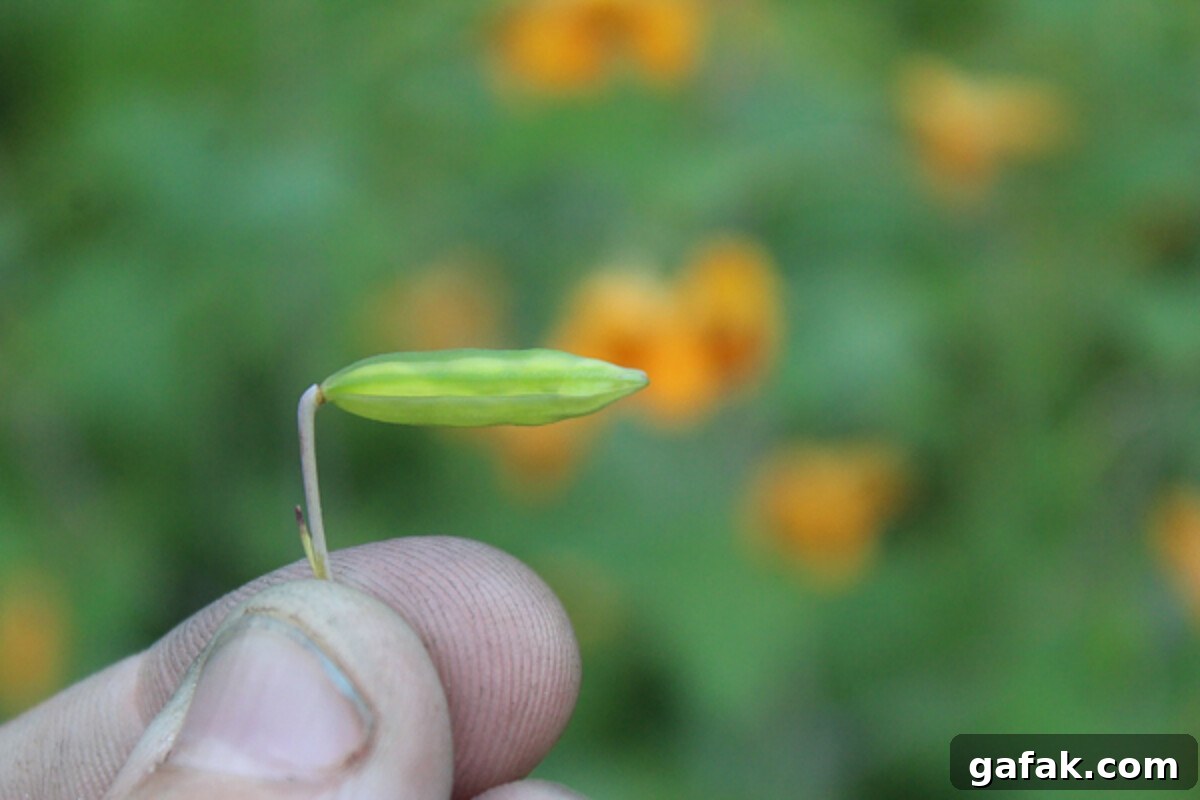
Harvesting the pods without triggering them takes patience. Vermont children raised in the 1950s and 1960s turned it into a game: find an intact pod and extract the seeds without popping it until they reached the mouth. The plant’s seedpods are designed to eject seeds when disturbed—hence the common name “touch-me-not.”
Jewelweed’s bright, tubular flowers are also edible and add color to salads, but they don’t match the distinctive flavor of the seed pods. Foragers should eat jewelweed in moderation. As noted by foraging authors, the plant is rich in minerals and can cause digestive upset if introduced in large amounts too quickly.
If you’re not used to nutrient-dense wild foods, start with small portions and see how your body responds. In practice, overconsumption is unlikely—gathering the seeds is time-consuming, even in dense patches, so eating large quantities is uncommon.
In a survival scenario, jewelweed seeds offer both pleasant flavor and useful nutrition.
If you want to grow jewelweed at home, some small seed companies offer packets of Impatiens capensis for gardeners and foragers who want to cultivate this useful native plant.
Foraging Guides
Interested in more edible weeds? There are many foraging guides that cover a wide range of wild foods. A forager’s bucket list can help you discover dozens of edible wild plants to seek in woods and fields.
- Foraging Pineapple Weed
- Foraging Chickweed
- Foraging Valerian
- Foraging Yarrow