Today was long and full of new techniques, but I’ll save that recap for tomorrow — first I need to describe Wednesday’s Day Eight class.
It was our first official day cooking protein. Up until now we’d trimmed and broken down hundreds of pounds of chicken, but had never actually cooked a whole bird. Although I don’t eat much meat at home, studying butchery and meat cookery has been one of the parts of culinary school I most looked forward to—there’s so much to learn.
Yesterday’s lunch was also my favorite meal so far: very tasty and technically rewarding.
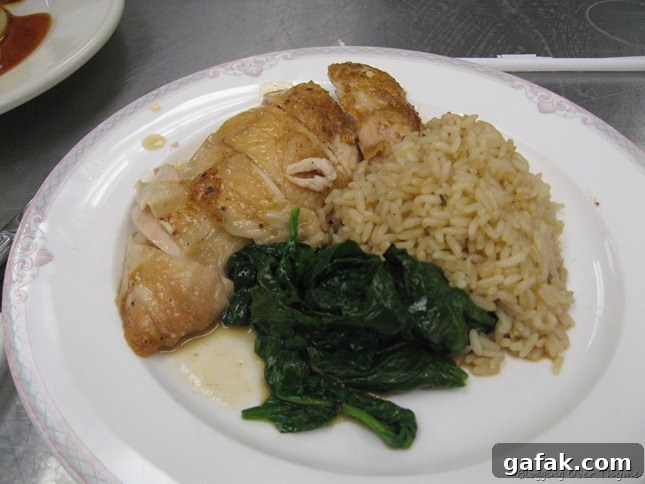
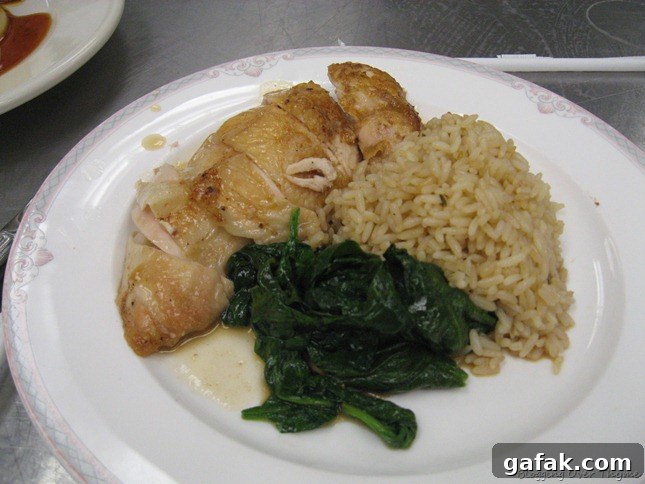
The main course was LE POULET ROTI AU JUS (Roasted Chicken with Jus). We didn’t roast the chicken in the simplest, traditional way. The preparation required more technique, but the result was worth it: a very juicy, flavorful chicken (it tastes better than it looks).
For this dish we completed the following steps:
- Removed the wings and saved them to use in the jus.
- Trussed the chicken to pull the legs close to the body. Trussing helps protect the breasts from drying out, improves presentation, and promotes even cooking and easier carving.
- Seasoned the bird with salt and pepper, then stuffed it with mirepoix — diced carrot, onion, and celery.
Then came the most interesting part: we seared the whole stuffed bird in a hot skillet with clarified butter. Using kitchen forks to steady the bird, we concentrated the sear on the legs and joints. Searing renders some fat, develops color, and helps ensure all parts finish equally moist during roasting.
After searing, we added more mirepoix to the skillet and placed the pan directly in the oven at roughly 375°F (190°C). We roasted until juices ran clear when pierced — pink indicates underdone. In our case we pulled the chicken while it was slightly pink so we could carve it and reheat for service without overcooking. While roasting, we basted with pan juices every 15–20 minutes to keep the meat moist.
When the bird came out of the oven we did the following:
- Reserved the cooked mirepoix from the skillet and drained excess fat from the pan juices.
- Removed and reserved the legs for another menu, then carefully carved off the breasts whole — similar to breaking down a raw chicken but working with hot, more pliable meat.
- Combined the stuffing mirepoix with the pan mirepoix.
- Chopped the backbone and back into pieces, added the wings, and placed the bones in a hot sautoir to caramelize. Bones carry a lot of flavor, so we always use them — this technique is called PINCER.
- Seasoned the mirepoix with thyme, garlic, and bay leaf.
- Deglazed the bones with chicken stock, added the mirepoix, and simmered. Then we strained everything through a chinois (very fine mesh) to remove solids, yielding a dark, flavorful jus, which we finished with a small pat of butter (monte au beurre).
As a side we prepared rice pilaf, which turned out well. Our technique differs from the most common method: we don’t rely on traditional lids and finish the cooking in the oven — I’ll describe that technique soon.
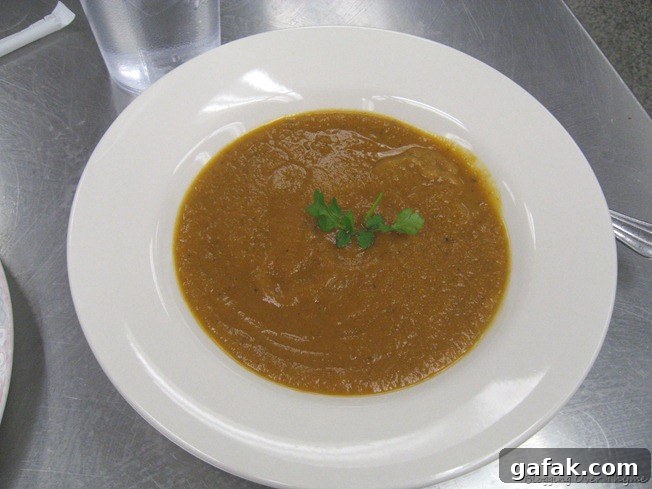
We also made LA SOUPE D’AUBERGINE RÔTIE (Roasted Eggplant Soup), which I loved. Good soup and a well-roasted chicken make me very happy.
The soup was straightforward: halve a whole eggplant, rub with olive oil and toasted, ground cumin seed, then roast until very soft. Scoop out the softened flesh and reserve. Sauté celery and onion, add stock, canned diced tomatoes, the roasted eggplant flesh, and seasonings including cayenne and cilantro. Simmer until flavors meld, then blend until smooth. I’ll probably make this at home soon and may share a recipe.
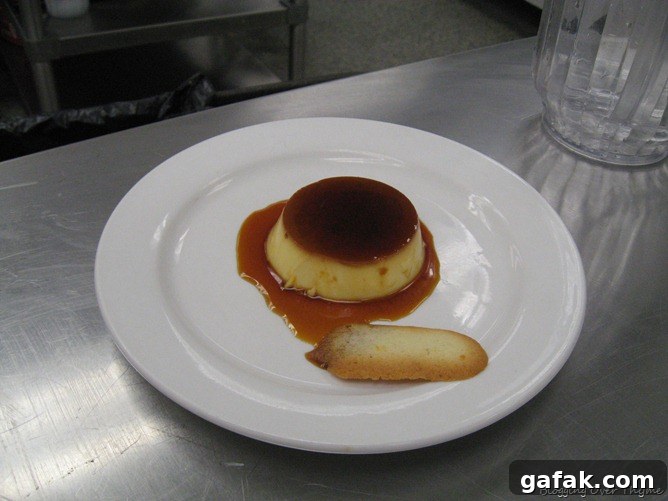
For dessert we prepared crème caramel, a classic French custard, along with les petits fours sec — a crisp, dry cookie piped in the Langue de Chat (cat’s tongue) shape. Crème caramel is simple and one of my favorites: a silky custard flavored with orange and lemon zest and vanilla bean, set over a thin layer of dark, slightly bitter caramel made from sugar, water, and corn syrup. The custards bake in a water bath at low temperature (275–300°F) so the egg proteins stay tender. When inverted, the dark caramel spreads over the custard and balances its sweetness perfectly.
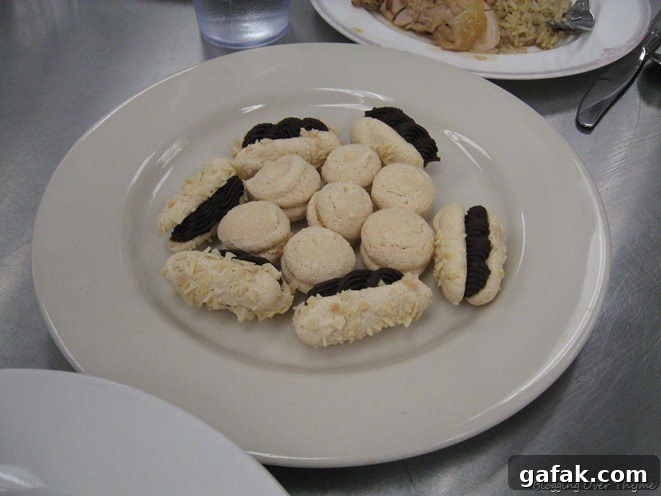
Pastry students also brought additional confections to tempt us at lunch, which was a lovely bonus.
Overall it was a delicious and successful service that I enjoyed making and eating. My partner Turner and I finished our plates on time, which was a nice finish to the day.
The afternoon lecture covered food costing, which I find very interesting and practical. It’s mostly math: determining the true cost of a dish in ingredients and translating that into menu prices. Restaurants generally aim to keep food cost under about 30%. I’ll share more on this topic as I learn.
Tomorrow I plan to try the roasted chicken at home for Connor — both for practice and to prove how good it was. I just need to buy some kitchen twine.
Back soon with Day 9 and the end of Week 3 summary.