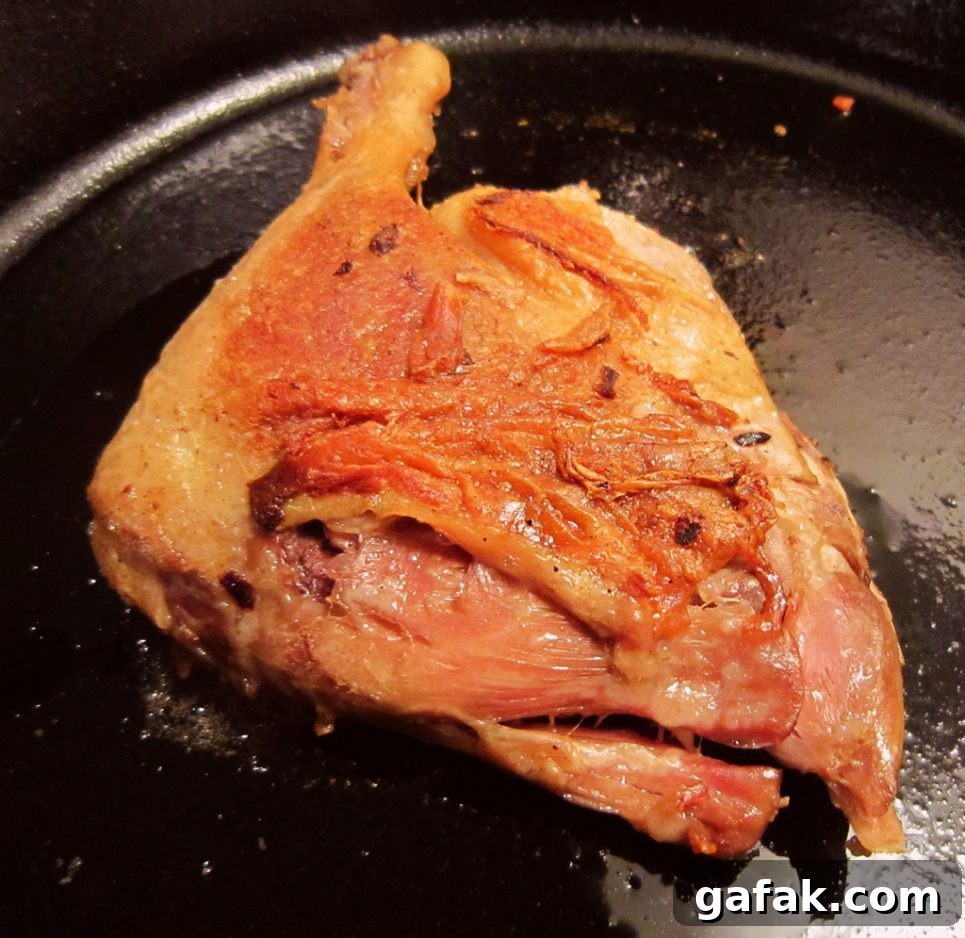
If you’re not familiar with “confit,” it’s a traditional French method where meat is first cured with salt to draw out moisture, then gently cooked in its own fat to preserve and tenderize it. This recipe shows how to make duck leg confit using sous vide, which reduces the amount of fat required while delivering tender, flavorful results.
Duck legs are tougher than duck breasts, so they benefit from a low-and-slow approach. Traditional confit requires a large quantity of duck fat; sous vide lets you achieve similar texture and tenderness with much less fat, making the dish lighter and easier to manage at home.
Equipment
- Sous vide immersion circulator (popular models include Anova and Joule).
- Container or large pot for the water bath. A dedicated container is convenient for larger batches but a heavy pot works well.
- Vacuum sealer and bags, or heavy-duty freezer Ziploc bags. If using Ziploc bags, use the water displacement method to remove air.
Sous Vide Duck Confit: Times and Temperatures
Sous vide confit won’t drastically change the basic texture compared with traditional methods, but it significantly reduces the fat needed and gives precise control over doneness. For tender duck legs, cook at 144°F (62°C). For a firmer, more classic confit texture, use 180°F (82°C). Typical sous vide confit cooks for an extended period—around 12 hours—to ensure the connective tissues break down fully.
Best Sous Vide Duck Confit Recipe
This recipe begins with a dry cure, followed by cooking the legs sous vide in a modest amount of duck fat or neutral oil. The result is succulent meat with crisped skin after a final sear.
Ingredients
- 2 whole duck legs
- 1 tablespoon kosher salt
- 1 tablespoon whole black peppercorns
- 3 sprigs fresh thyme
- 2 bay leaves
- 1/2 cup duck fat (or a neutral vegetable oil as an alternative)
- Salt and freshly ground black pepper for finishing
Directions
- Prepare the cure: combine kosher salt, crushed black peppercorns and the thyme. The cure should be distributed evenly over the duck legs. A useful guideline is an 18% cure-to-meat ratio by weight (for example, 90 g of cure for 500 g of duck legs).
- Rub the cure mixture all over the duck legs, then place them in a sealed container or vacuum bag. Refrigerate for about 24 hours to cure.
- After curing, remove the legs from the bag and rinse or pat them to remove excess salt. Dry thoroughly with paper towels.
- Preheat your water bath to the chosen temperature (144°F / 62°C for very tender; 180°F / 82°C for a more traditional texture).
- Place the duck legs in one or two sous vide bags, add the duck fat or oil and the bay leaves. Remove air from the bag using a vacuum sealer or the water displacement method, then seal.
- Submerge the bags in the water bath and cook for approximately 12 hours.
- When cooking is complete, remove the bags from the water and take out the duck legs. Pat dry, then season lightly with salt and pepper if needed.
- To finish, crisp the skin by searing skin-side down in a hot skillet for about five minutes, or use a torch to brown the skin evenly. Serve immediately.
This sous vide confit method yields tender, flavorful duck legs with less fat than traditional confit, and the final sear delivers the golden, crispy skin that makes confit so satisfying. Adjust seasoning and cooking temperature to match your preferred texture, and enjoy a reliably excellent result with modest hands-on time.