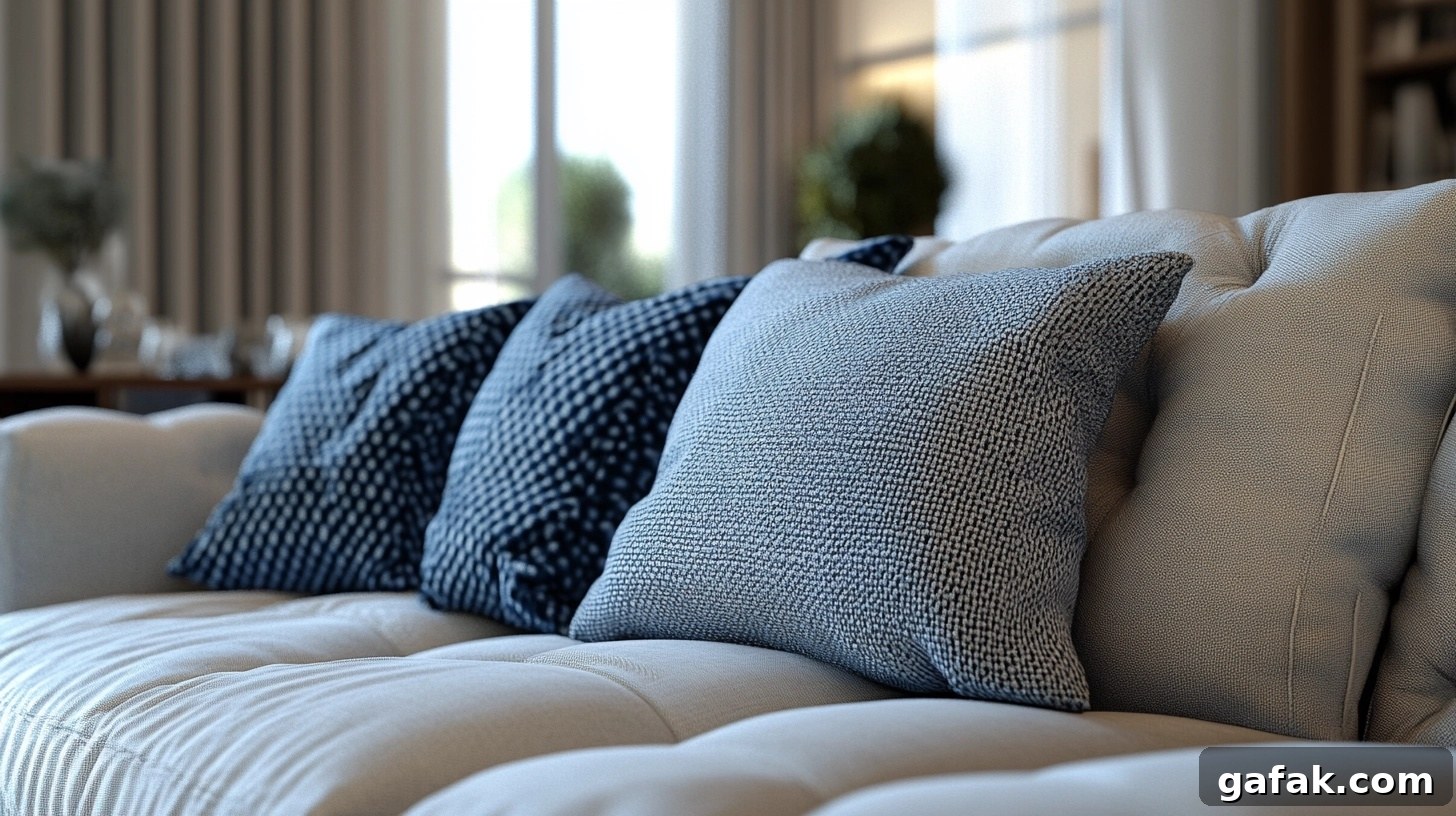
Something about my couch still felt off. The pillows didn’t sit right, and the whole setup looked awkward. The issue turned out to be size: the wrong pillow dimensions can make a sofa look unbalanced and uncomfortable.
I didn’t realize how much pillow size affects the overall look of a sofa until I adjusted mine. In this guide I’ll cover the best pillow sizes for standard sofas, deep seats, sectionals, and loveseats, plus practical tips on inserts, layering, and common mistakes to avoid. There’s a handy size chart to simplify choices and help you get the styling right.
If you want a straightforward way to fix your pillow setup for better comfort and a more polished appearance, this guide will help.
Standard Couch Pillow Sizes Explained
Before buying or styling, it helps to know common pillow sizes and what each one is best for. Size sets the tone—whether you’re going for a minimal, clean look or a layered, cozy feel.
Square Pillow Sizes
Square pillows are the foundation of most sofa styling. Their symmetry creates balance while providing support for lounging or sitting upright.
- 16″ x 16″: Ideal for small chairs, tight spaces, or adding color without bulk.
- 18″ x 18″: A good choice for loveseats or low-back sofas; works well in pairs or as part of a layered arrangement.
- 20″ x 20″: The most versatile and popular size. Fits most standard sofas and pairs easily with larger or smaller pillows.
- 22″ x 22″: Best for deep or oversized couches. Creates a plush, full look and serves well as a base layer.
- 24″ x 24″: Suited to large sectionals or very deep seating. Ideal for a lounge-ready, cozy effect.
Match square pillow sizes to your furniture’s scale and to how they’ll interact with other pillow shapes in your arrangement.
Lumbar Pillow Sizes
Lumbar pillows add ergonomic support and break up rows of square cushions. Their rectangular shape introduces visual rhythm and functions as a natural focal point when centered or placed in front of larger pillows.
- 12″ x 20″: A classic lumbar size for lower back support and front-layering.
- 14″ x 22″: Slightly longer for extra coverage and visual interest.
- 16″ x 24″: Great for deep seating or paired with 22″–24″ squares.
Beyond looks, lumbar pillows provide practical support that makes extended sitting more comfortable.
Choosing the Right Size for Your Sofa Type
Not every couch fits the same pillow sizes. A 24″ pillow that looks perfect on a deep sectional can overwhelm a small loveseat. Match pillow sizes to your seating type for correct scale and comfort.
Standard Sofa

Most standard three-seat sofas with average depth work well with 20″ x 20″ or 22″ x 22″ pillows. Start with two 22″ x 22″ pillows at the corners, then add a pair of 20″ x 20″ or a single lumbar pillow in front for layering. This provides structure and softness without crowding the sofa.
On tighter sofas, skip heavy layering and use two 20″ x 20″ or two 22″ x 22″ pillows, depending on depth.
Deep-Seat Sofa

Deep sofas need larger pillows that don’t disappear into the seat. Choose 22″ x 22″ or 24″ x 24″ for the back layer, then add 20″ x 20″ or lumbar pillows in front. These sizes provide visual presence and proper support when leaning back.
Color choices matter: light neutrals keep a room feeling open, while deep, rich tones create drama in minimalist spaces.
If the low-back deep sofa is also compact or armless, two matching lumbar pillows—one at each side—can be a simple and effective solution.
Low-Back Sofa

With low-back sofas, less is more. Avoid oversized cushions and choose 18″ x 18″ or slim 12″ x 20″ lumbar pillows. Limit the arrangement to two or three pillows so the sofa’s sleek lines remain visible.
Larger pillows can overpower a low profile and make the sofa look out of scale. Aim for support without taking over the seat.
Sectional or L-Shaped Couch
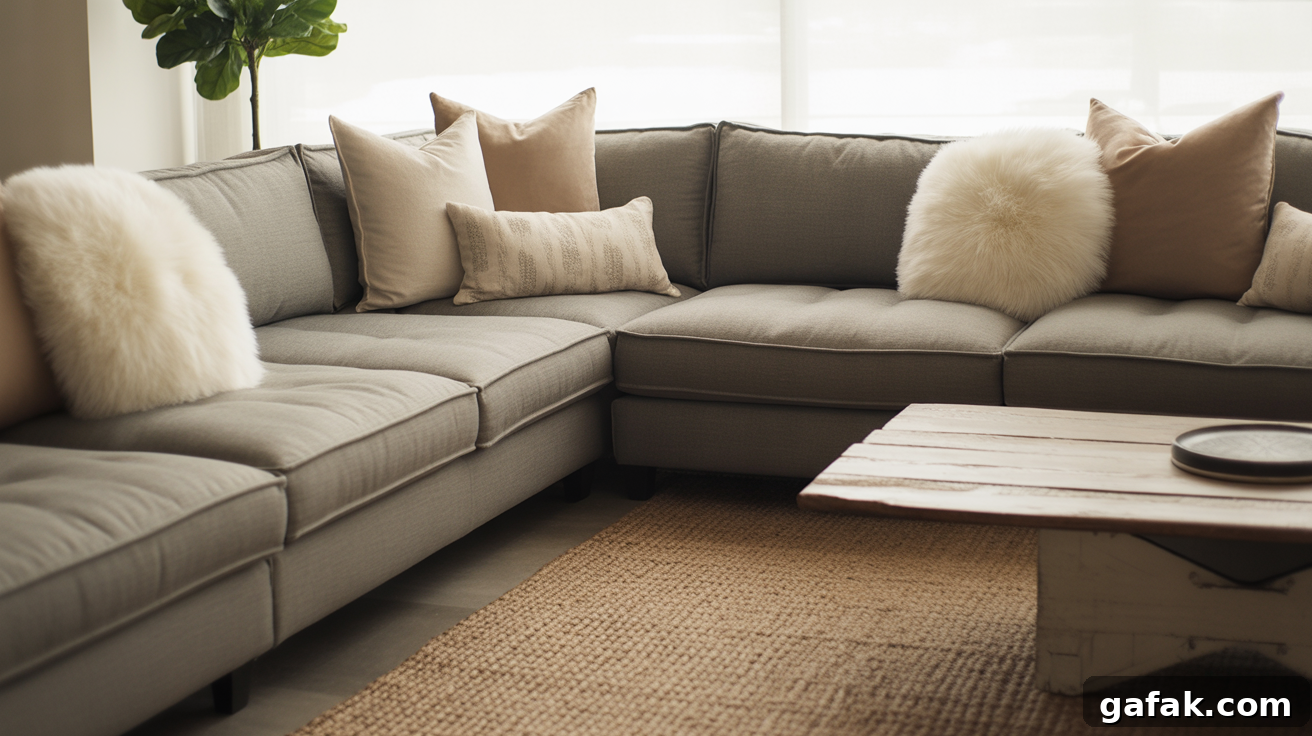
Sectionals require balance across multiple seating zones. Use larger pillows (22″ x 22″ or 24″ x 24″) on the outer arms and medium 20″ x 20″ pillows along inner seats. Add a lumbar (12″ x 20″ or 14″ x 22″) in the center for comfort and variety.
Prefer an odd number of pillows to keep the setup inviting rather than staged. Use pillow colors to anchor your palette—bold in the corners and neutral in the middle, or vice versa. Mix textures like linen, chunky knits, or faux leather for interest.
Avoid overloading the chaise end; one lumbar or small square is usually sufficient so the chaise remains functional for stretching out.
How to Style Throw Pillows by Size and Shape
Picking the right sizes is only half the job—arrangement matters just as much. A well-styled sofa usually looks effortless, but thoughtful placement creates balance, comfort, and visual interest.
Whether you prefer symmetry or a relaxed mix, layout choices can dramatically change a room’s feel. Below are practical styling steps to make pillows look intentional and comfortable.
Start with the Largest Pillows in the Back
Arrange pillows like a triangle: wide at the base, tapering toward the center. Begin with the largest pillows—22″ x 22″ or 24″ x 24″—in the back corners. These anchor the look and fill space on deep seating.
On standard sofas, two large pillows—one at each end—are usually enough to frame the arrangement.
Layer Smaller Sizes in Front
Add a second layer of smaller pillows (20″ x 20″ or 18″ x 18″) in front of the larger ones to create depth and softness. Smaller pillows reduce stiffness and give a cozy, inviting vibe. Use matching pairs or mix patterns and textures for interest without overwhelming the eye.
Prefer a Balanced Look?
Symmetry works well for a neat, polished appearance. Place identical pillow sizes and shapes on both ends—two 22″ x 22″ pillows with matching lumbar pillows in front gives a centered, intentional feel. This is ideal for formal or minimalist spaces seeking visual calm.
Want Something More Relaxed?
For a casual, lived-in look, skip mirror-image setups. Mix sizes, shapes, and textures: try a 24″ x 24″ paired with a 12″ x 20″ lumbar on one end and a single 20″ x 20″ on the other. Slightly tilt or overlap pillows to add charm. This asymmetrical approach suits family rooms, boho interiors, and relaxed spaces.
Add a Lumbar Pillow for Comfort and Shape
Place a 12″ x 20″ or 14″ x 22″ lumbar in the center or slightly off-center to break up square shapes and improve lower back support. A lumbar pillow alone can finish an arrangement with a styled, intentional touch.
Always size your insert 1 to 2 inches larger than the cover. For example, use a 22″ x 22″ insert in a 20″ x 20″ cover to achieve a full, fluffy look that holds its shape.
Couch Pillow Size Chart
Use this chart to match pillow cover size, insert size, and best use for different couch types.
| Pillow Cover Size | Insert Size | Best For | Notes |
| 16″ x 16″ | 17″ x 17″ or 18″ x 18″ | Accent chairs, kids’ spaces | Small, subtle, great for layering |
| 18″ x 18″ | 19″ x 19″ or 20″ x 20″ | Low-back sofas, loveseats | Classic starter size; avoid overcrowding |
| 20″ x 20″ | 22″ x 22″ | Standard sofas, everyday styling | Most popular; works alone or in pairs |
| 22″ x 22″ | 24″ x 24″ | Deep-seated couches, sectionals | Bold base pillow adds structure |
| 24″ x 24″ | 26″ x 26″ | Oversized sofas, cozy lounges | Maximum impact for layered looks |
| 12″ x 20″ | 13″ x 21″ or 14″ x 22″ | All sofas (center or front layering) | Great lumbar support and shape variety |
| 14″ x 22″ | 15″ x 23″ or 16″ x 24″ | Deep sofas or large sectionals | Extra length for visual contrast |
| 16″ x 24″ | 18″ x 26″ | Oversized seating, bench-style sofas | Balances square-heavy setups |
For balanced arrangements work in odd numbers (three or five pillows) and vary sizes and textures. Start with the largest pillows at the outer corners, layer smaller ones toward the center, and finish with a standout lumbar as the focal point.
Common Sizing Mistakes to Avoid
1. Covers That Are Too Small
If a cover and insert are the exact same size, the pillow often looks limp and shapeless—corners sag and edges fold. Fix this by sizing your insert up 1 to 2 inches for a fuller, more structured look.
2. Using One Size for Everything
All the same-size pillows can flatten a layout and make it repetitive. Mix sizes to add contrast, depth, and intentionality. Place larger pillows in the back and smaller ones or a lumbar in front for more visual interest.
3. Pillow Overload
Too many pillows can be inconvenient and messy. If guests have to move pillows to sit down, that’s a sign of overload. Aim for 3 to 5 pillows on a standard sofa, adjusting for scale, and give each pillow a purpose rather than filling space arbitrarily.
4. Ignoring Your Couch’s Shape
Your couch’s style should guide pillow choices. A sleek, low-back sofa will be overwhelmed by bulky cushions, while deep seating makes small pillows disappear. Choose sizes that suit your couch’s depth and height to keep everything in proportion.
Conclusion
Getting pillow sizes right may seem like a small detail, but it has a big impact on how your living room looks and functions. Match pillow size to your sofa, layer thoughtfully, and avoid common mistakes to create a polished, comfortable space.
Mix shapes, upgrade inserts, and keep arrangements simple. The result is a setup that looks better, feels better, and works better without extra effort. Now you have clear guidelines to style your couch with confidence.