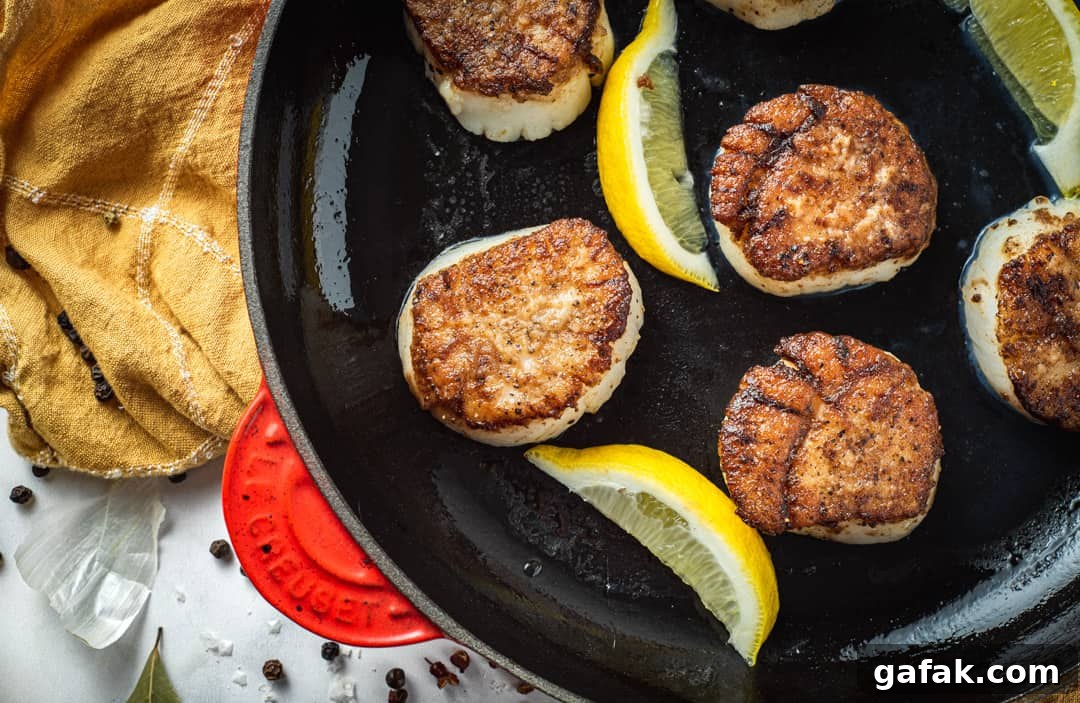
Your guide to achieving perfectly seared scallops.
Why are Pan-Seared Scallops so intimidating?
Pan-seared scallops can feel intimidating because it’s easy to overcook them and end up with rubbery, flavorless results. The goal is a sweet, tender interior with a golden, lightly crisped exterior that locks in flavor. With the right technique and a few tips, you’ll get consistent, restaurant-quality scallops every time.
If you enjoy seared scallops, try these complementary recipes: Creamy Pesto Pasta with Seared Scallops, Seared Scallop Pasta with Vanilla Grapefruit Cream Sauce, or Scallops with Golden Romesco Sauce and Black Rice.
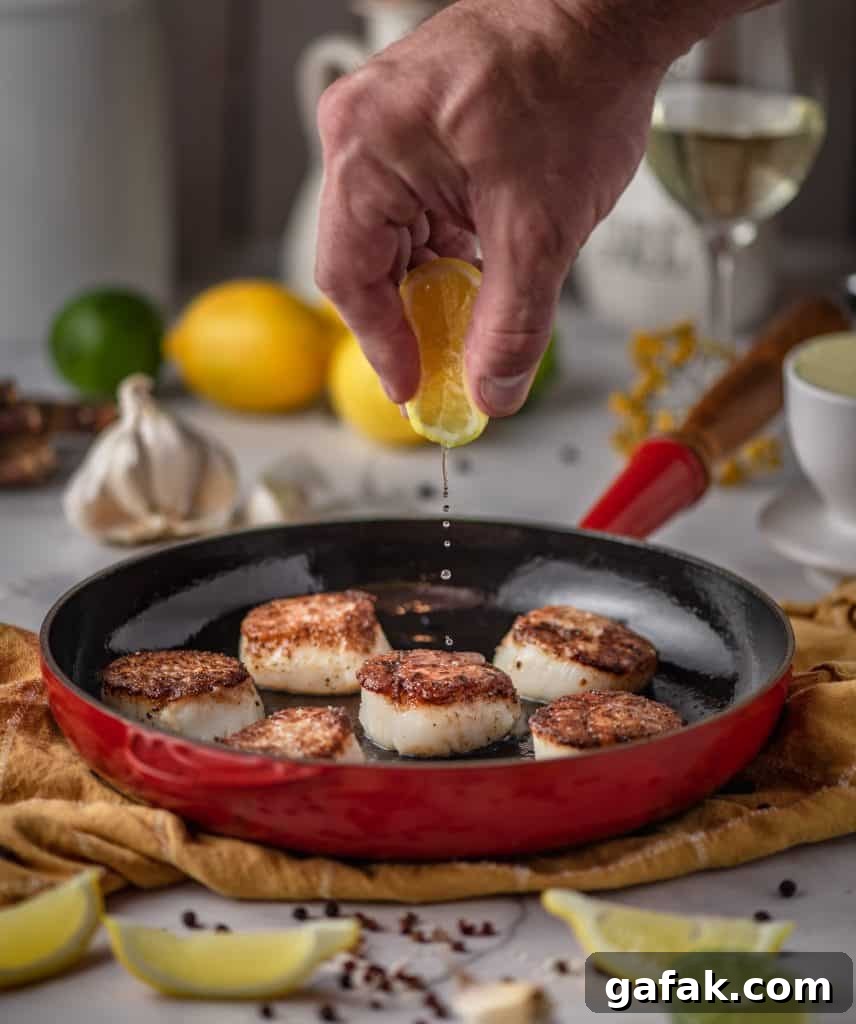
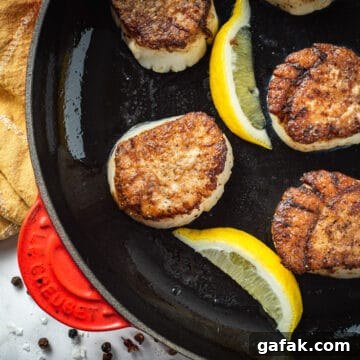
Looking at the photo might make you impatient to learn the secrets — we’re almost there. Before cooking, it’s helpful to understand what to look for when buying scallops to make sure the final dish turns out well.
What should I look for when buying scallops?
Great pan-seared scallops start with quality seafood. Visit a reputable fish counter and choose the freshest scallops you can find. Below are common questions and practical guidance to help you pick the best scallops.
How do I know if my market has fresh scallops?
Ask the fishmonger when the scallops arrived. Most counters are transparent about delivery dates. If they were received several days ago, ask when the next shipment is due and plan accordingly.
Should I buy fresh or frozen scallops?
Fresh, never frozen scallops are ideal. If fresh isn’t available, choose scallops that were individually quick-frozen (IQF) or flash-frozen. Avoid scallops treated with preservative solutions—often called “wet” scallops—as they retain excess water and don’t sear as well.
What kind of scallops are best?
Diver scallops, which are wild-caught, are preferred for texture and flavor. Small bay scallops are great for stews or cioppino but are too small for the classic large, seared presentation most people expect.
What color should a scallop be?
Scallop color ranges from milky white to coral pink, which reflects natural variation and has no impact on taste. Avoid scallops that look dull, gray, or discolored, as they may be old.
Should scallops smell “fishy”?
No. Fresh scallops have a mild, slightly sweet ocean scent. If they smell strongly fishy or unpleasant, do not use them.
How to get that perfect sear on your scallops
Now for the cooking. Follow these straightforward steps to achieve a beautiful sear and tender interior.
1. Rinse and dry: Rinse the scallops briefly and pat them completely dry with paper towels. Never soak scallops; excess moisture prevents a proper sear.
2. Remove the muscle: If there is a small side flap (the abductor muscle), peel it off and discard; it can be tough when cooked.
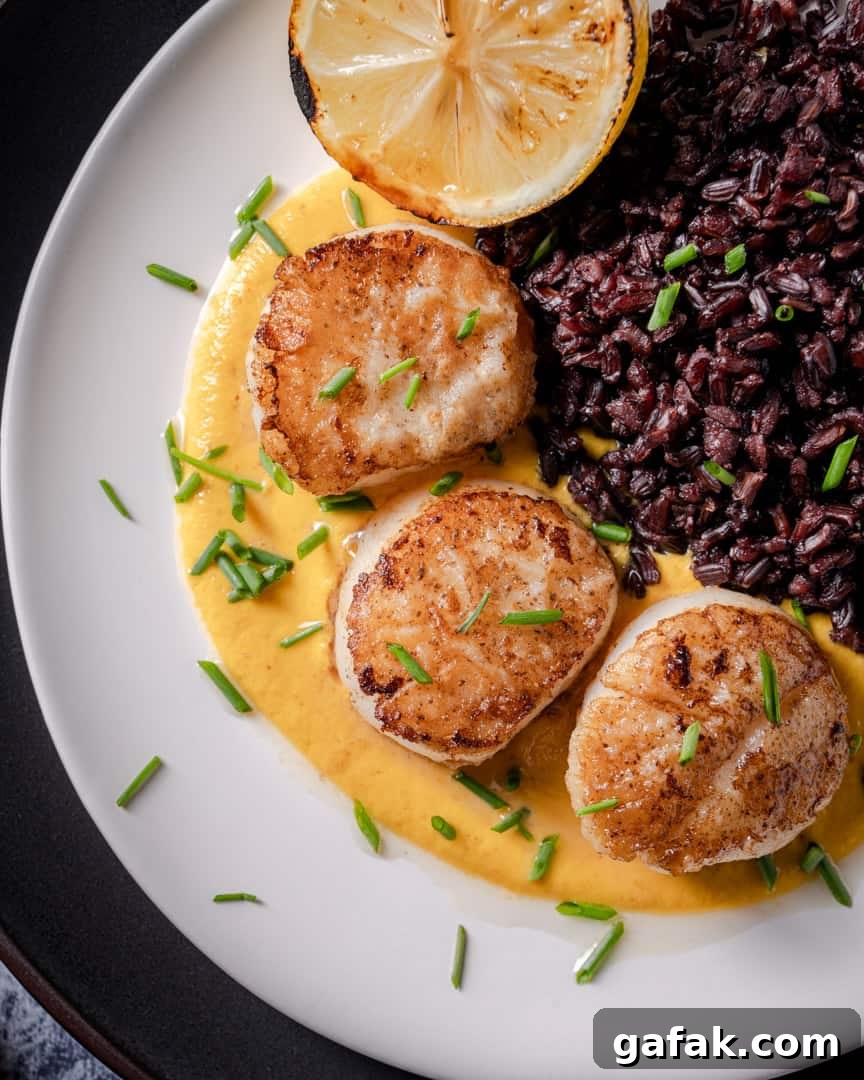
3. Season: Lightly season both flat sides of the scallops with salt and pepper. Be modest with salt; finishing salt can be added at the table if needed.
4. Heat the pan: Use a quality nonstick skillet and heat it until very hot. Nonstick prevents sticking and helps maintain the sear. Add just enough unsalted butter so the pan isn’t dry and let it melt and begin to brown slightly. You can substitute a neutral high-smoke-point oil (grapeseed or avocado) if you prefer.
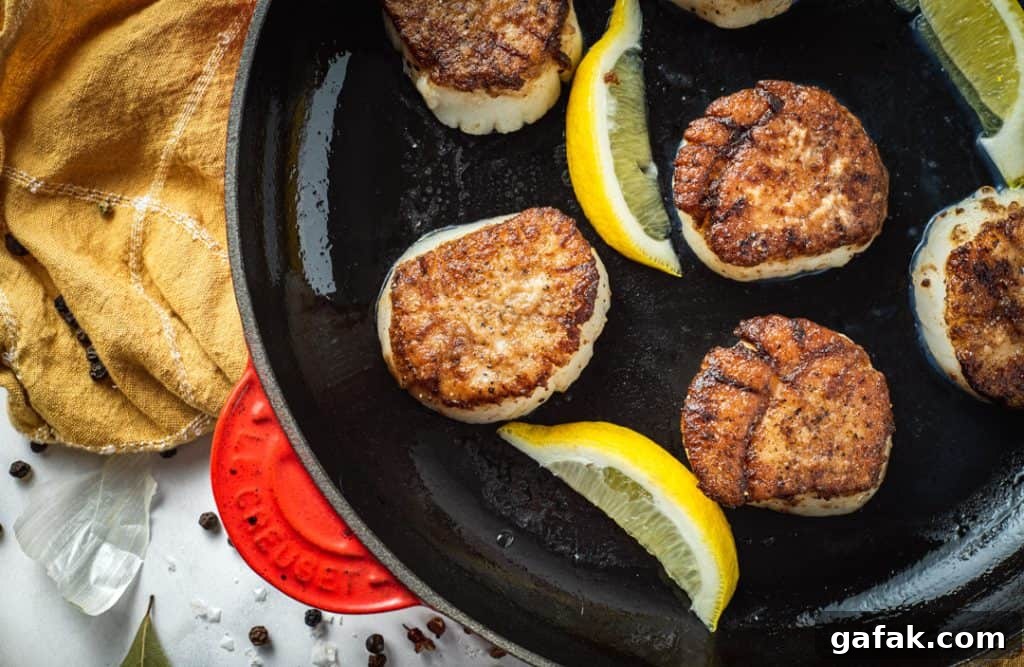
Top Tip: The trick for that nice crust…
Place the scallops in the hot pan without crowding them. For large scallops about 1″ thick, sear undisturbed for 60–90 seconds per side. This yields a medium-rare center with an opaque interior. Total cook time for thick scallops should be about 2–3 minutes—go much longer and they quickly become overcooked and tough.
Serve immediately after searing. Have your sides ready beforehand and keep lemon wedges nearby for a bright, finishing touch. A sprinkle of finishing salt enhances the flavor if desired.
FAQ
Aim for an internal temperature of about 115°F before resting; carryover heat typically raises the temperature another 10–15°F, bringing scallops to a perfect 125–130°F. For thick scallops this usually takes about 1–2 minutes per side.
Pat scallops very dry, preheat the pan until it’s very hot, and avoid moving the scallops while they cook. These steps maximize browning and help form a crisp crust.
Butter adds delicious nutty flavor when browned, but it can brown quickly at high heat. A neutral, high-smoke-point oil like grapeseed or avocado will tolerate higher heat and still produce a good sear. You can also combine oil with a small amount of butter for flavor.
Enjoy!
If you try this method for perfectly seared scallops, tell us how it went. Tag @cooking_with_wine on Instagram to share your results and see other variations.
Need more seafood ideas? Consider shrimp skewers, garlic shrimp tacos, red snapper amandine, or spicy crab cakes for other delicious meals.
📖 Recipe
Perfectly Seared Scallops
Ingredients
- 14–16 scallops
- 2 tablespoons unsalted butter
- Salt, to taste
- Pepper, to taste
- Lemon wedges, for serving
Instructions
- Rinse scallops briefly and pat dry with paper towels.
- Lightly season both flat sides with salt and pepper.
- Heat a nonstick pan over high heat. Add enough butter so the pan isn’t dry and allow it to melt and begin to brown slightly. The pan should be very hot before adding scallops.
- Place scallops in the pan without crowding. Sear undisturbed for 60–90 seconds per side for large scallops (~1″ thick). They should be opaque at the center and tender. Total cook time is about 2–3 minutes—avoid overcooking.
- Serve immediately with lemon wedges and, if desired, a sprinkle of finishing salt.
Nutrition
Carbohydrates: 2 g
Protein: 6 g
Fat: 6 g
Saturated Fat: 4 g
Cholesterol: 28 mg
Sodium: 207 mg
Let us know how it was!