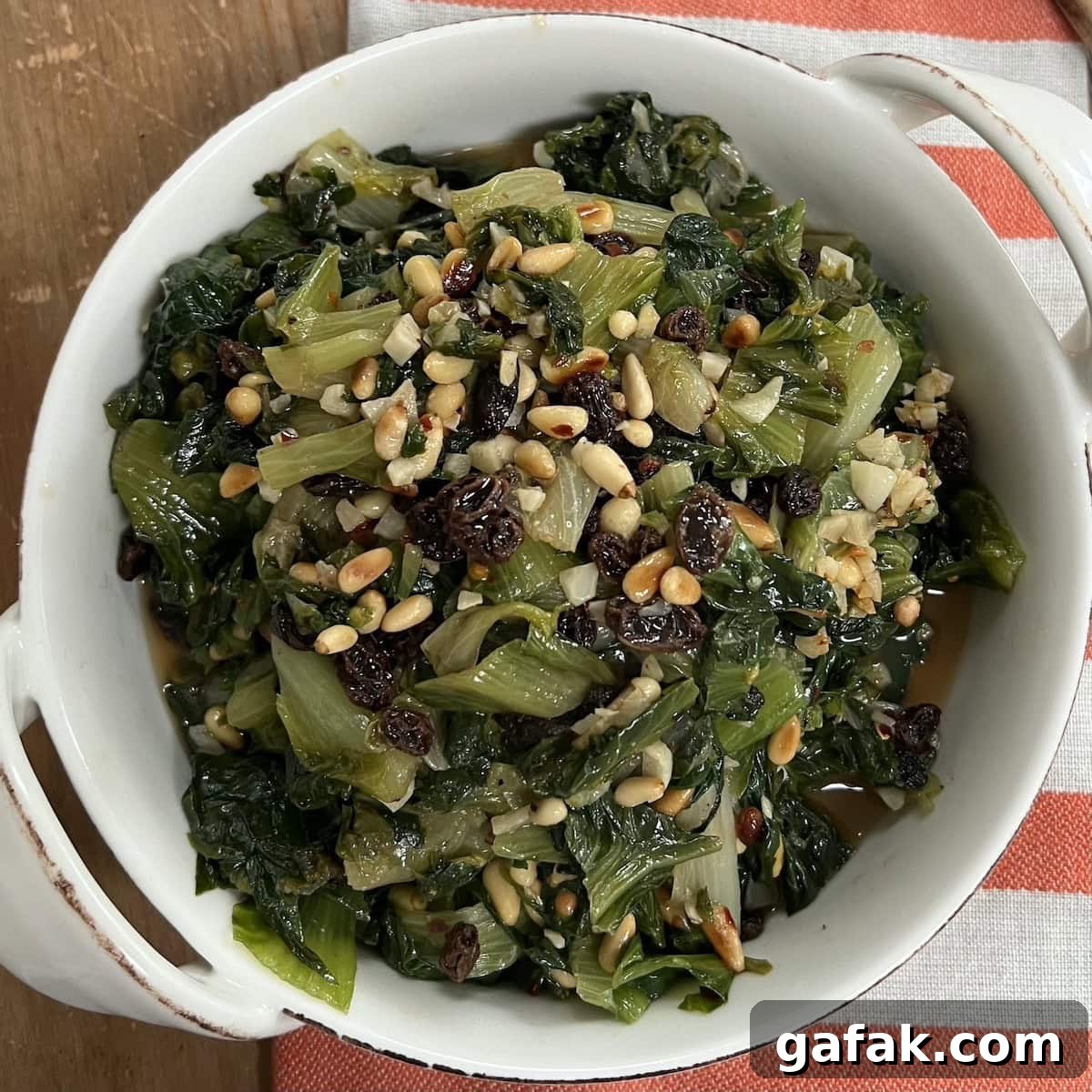
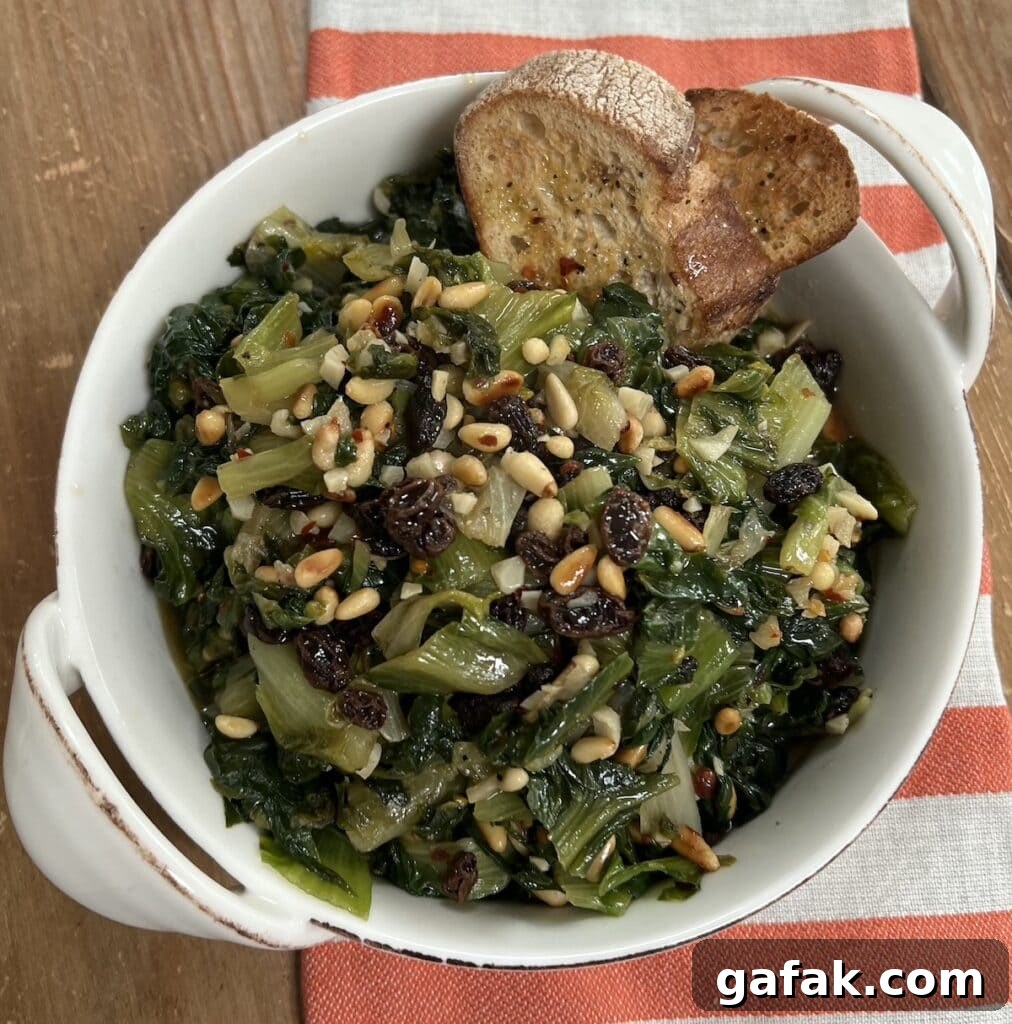
Italian escarole is quickly sautéed in extra virgin olive oil with garlic, then finished with crunchy toasted pine nuts and plump, sweet raisins. This vibrant, vegan side dish offers great nutrition, contrasting textures and bright Mediterranean flavor — perfect for the holidays or any weeknight meal.
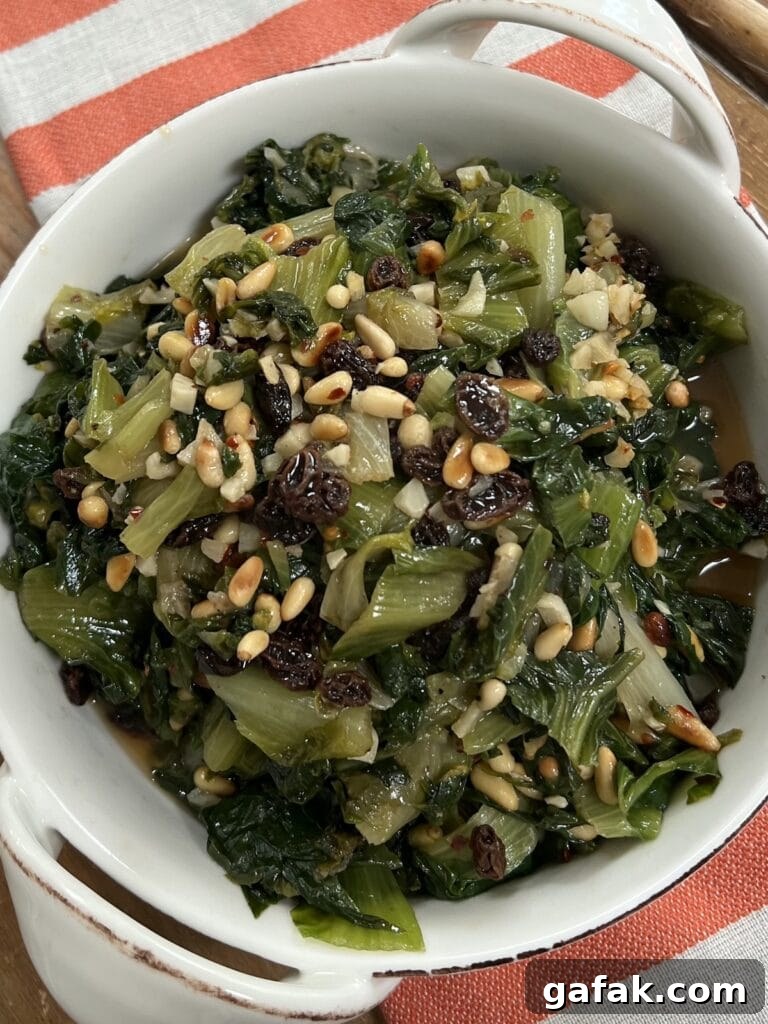
Escarole — called scarola in Italian and affectionately pronounced “schka-roll” in my family — is a classic in Italian-American kitchens, especially in the northeastern United States where it’s available year-round. It’s popular throughout Italy as well and shows up often in Neapolitan and Sicilian cooking.
This green is featured in several favorites on the site: Italian Wedding Soup with Mini Meatballs, Greens and Beans, and Escarole and Cannellini Bean Soup.
This version is Sicilian-inspired: garlicky sautéed greens brightened with toasted pine nuts and hydrated raisins for a sweet-savory balance. Mamma mia — it’s delicious.
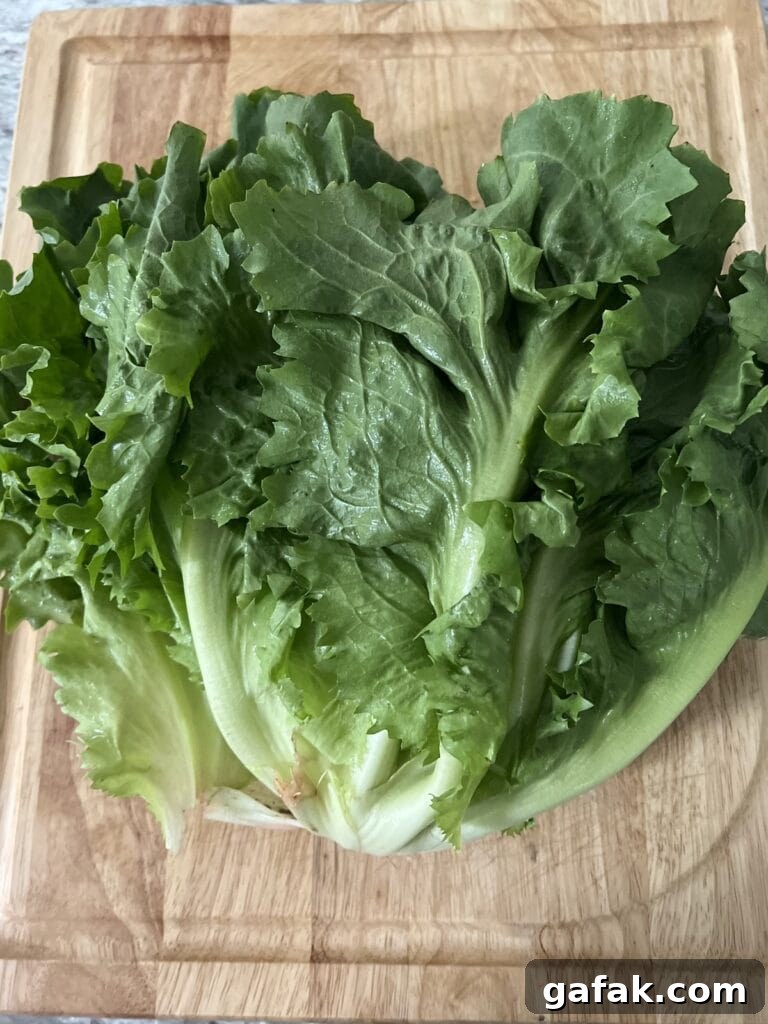
What is Escarole?
Escarole is a sturdy leafy green in the chicory family (related to endive). It has a gentle bitterness that mellows with cooking, making it less assertive than greens like broccoli rabe or dandelion. Escarole is great raw in salads but also stands up well to braising and sautéing.
It’s also sold as broad-leaf endive, Batavian or Bavarian endive, and called scarola or scarole. In this recipe the greens are briefly steamed by their own rinsing liquid, then sautéed with garlic and olive oil. The addition of raisins and pine nuts gives a distinctly Sicilian touch — raisins add a hint of sweetness while pine nuts bring rich nuttiness.
This dish is naturally vegan, dairy-free and gluten-free, making it a simple, festive choice for many menus.
Ingredients
- Escarole: Choose full, heavy heads with crisp, bright green leaves. This recipe used a very large head (about 2 pounds); smaller heads may require two.
- Extra virgin olive oil: Use a quality oil for the best flavor.
- Raisins and pine nuts: Classic Sicilian pairings. Soak raisins briefly in wine vinegar to plump them. If pine nuts are unavailable, substitute chopped almonds, walnuts or pistachios.
- Garlic: Fresh chopped garlic is best — adjust quantity to taste.
- Wine vinegar: Red or white wine vinegar rehydrates raisins and slightly tames escarole’s bitterness.
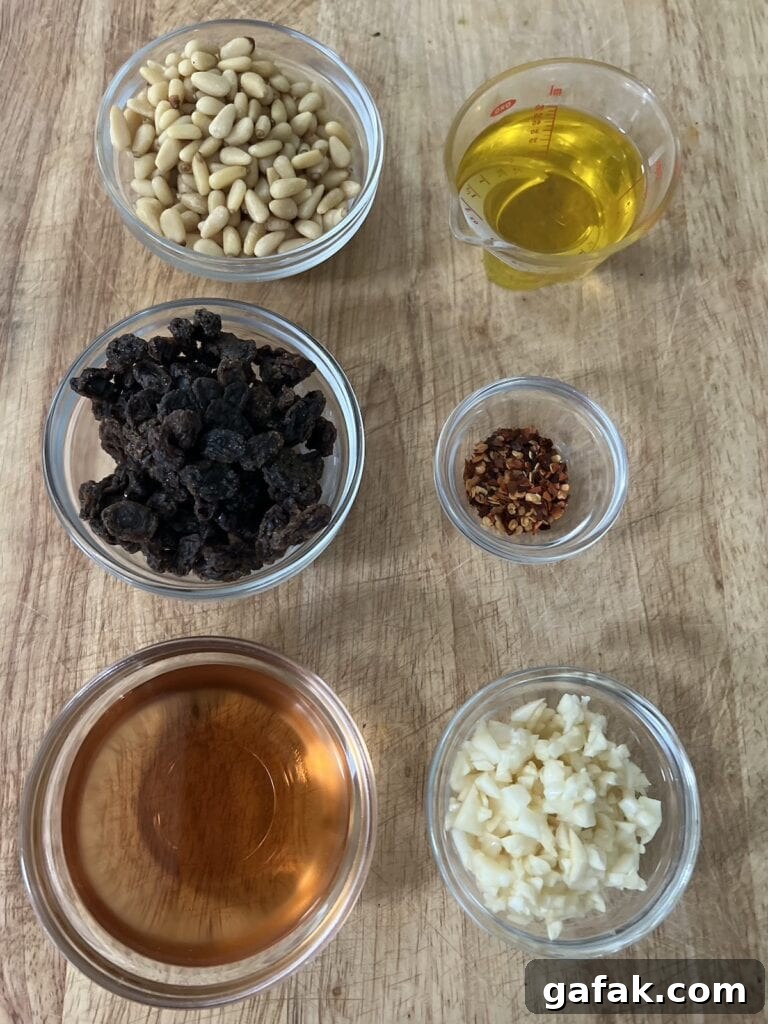
How to Prepare Sautéed Italian Escarole
- Prep and rinse the escarole: Remove damaged outer leaves. Make several vertical cuts along the head, turn and repeat, then slice horizontally into bite-sized pieces. Discard the root end.
- Soak the cut leaves in a large bowl of cold water, agitating them to release grit and sand. Repeat as needed. Lift the escarole out of the water (don’t pour both leaves and water into a colander) and drain in a colander. Leave the leaves slightly damp — the moisture helps steam them during cooking.
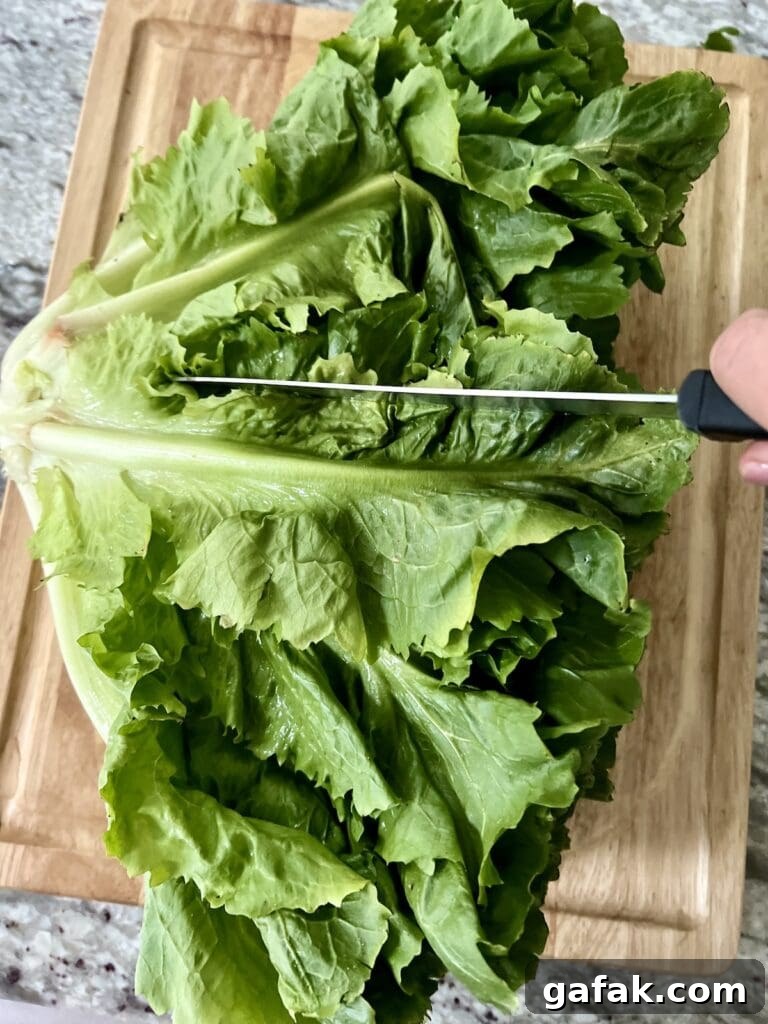
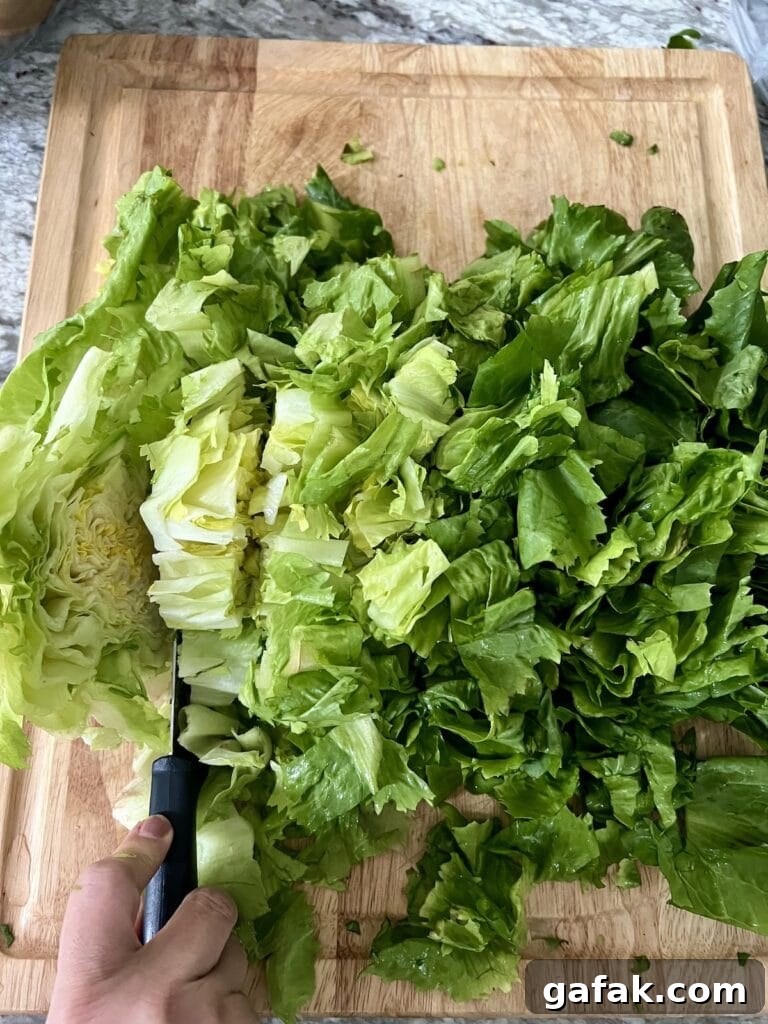
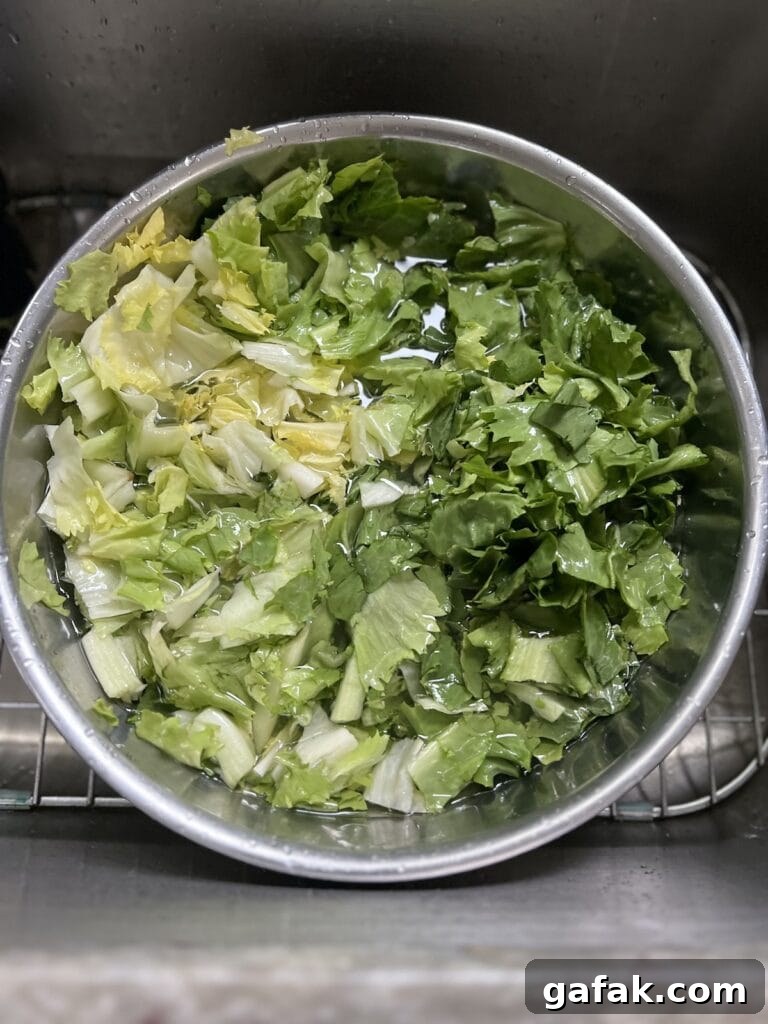
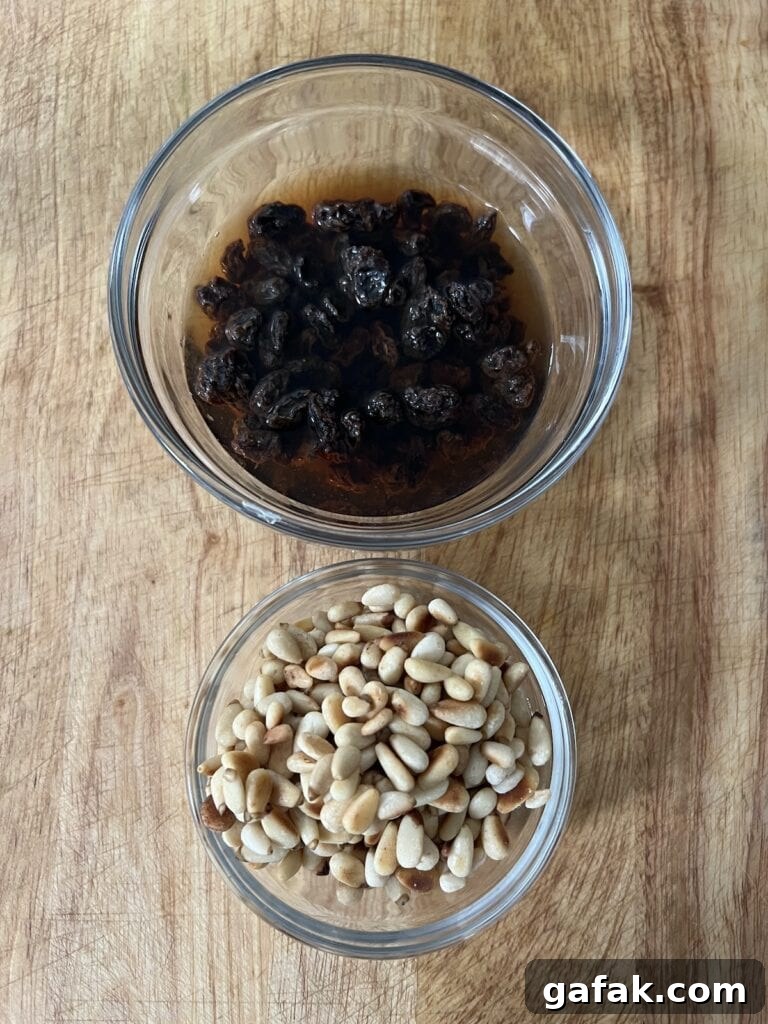
- Rehydrate raisins: Place raisins in a small bowl and cover with wine vinegar. Let sit about 15 minutes until plumped, then drain. Water may be used if you prefer.
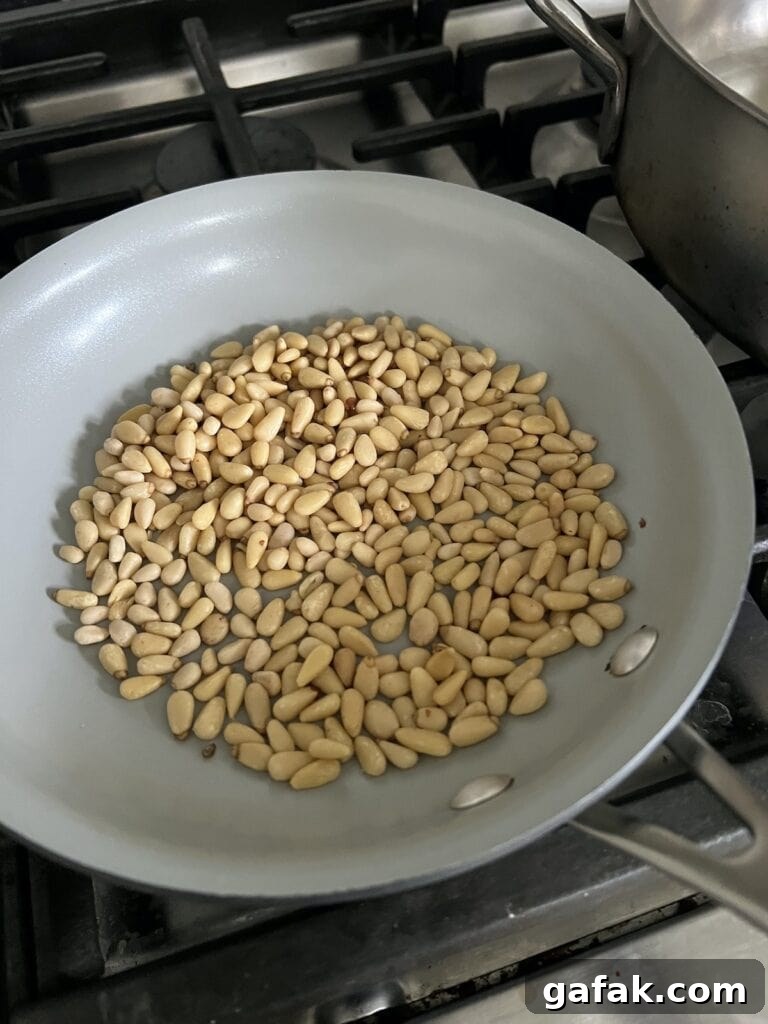
- Toast pine nuts: In a small dry skillet over medium-low heat, toast pine nuts in a single layer, stirring frequently until golden and fragrant — this takes only a couple of minutes. Watch them closely so they don’t burn. Set aside.
- Heat 2 Tbsp oil in a large skillet or Dutch oven over medium. Add half the escarole, cover and let it reduce, stirring once or twice.
- Add a pinch of salt, then add the remaining escarole, cover again and cook until tender, stirring occasionally. If needed, add a splash of water — the residual rinsing liquid usually provides enough steam.
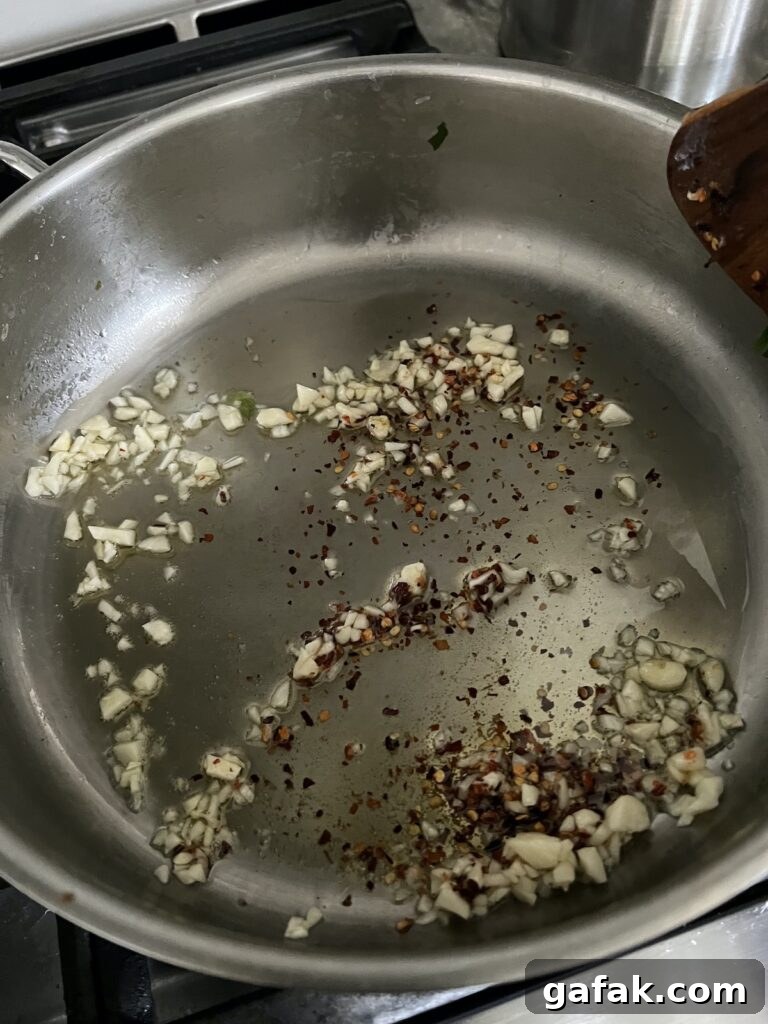
- Once tender, remove the escarole to a colander and pour off excess liquid. Add the remaining 2 Tbsp oil to the pan with chopped garlic and an optional pinch of crushed red pepper. Cook until garlic becomes lightly browned — don’t burn it.
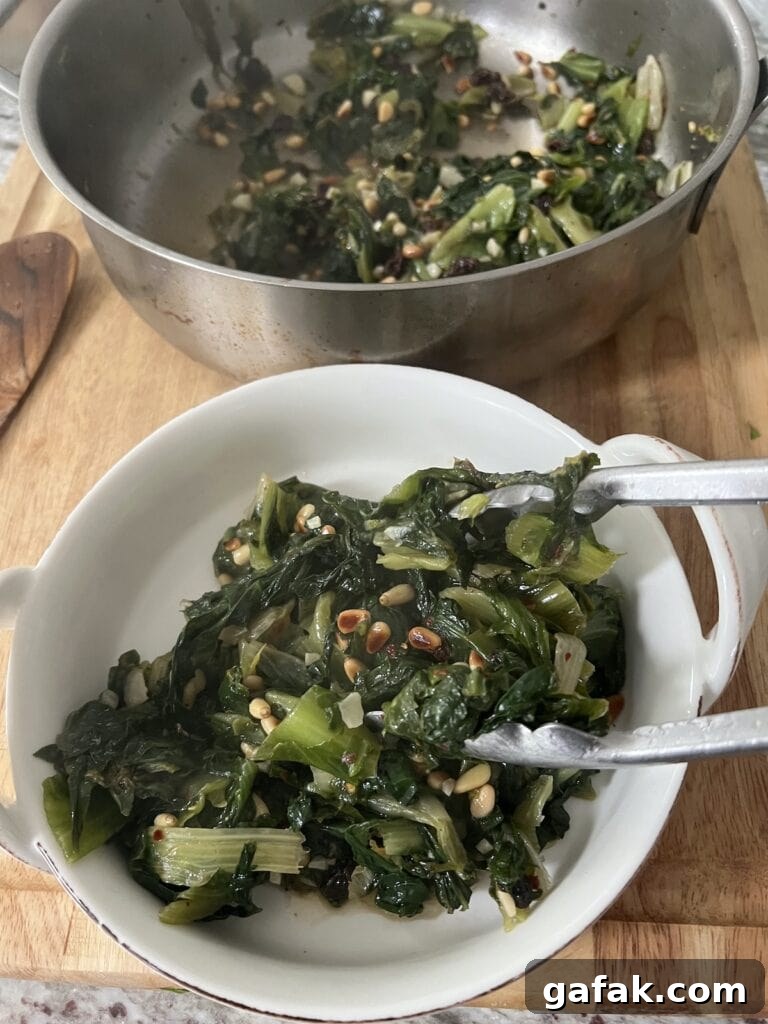
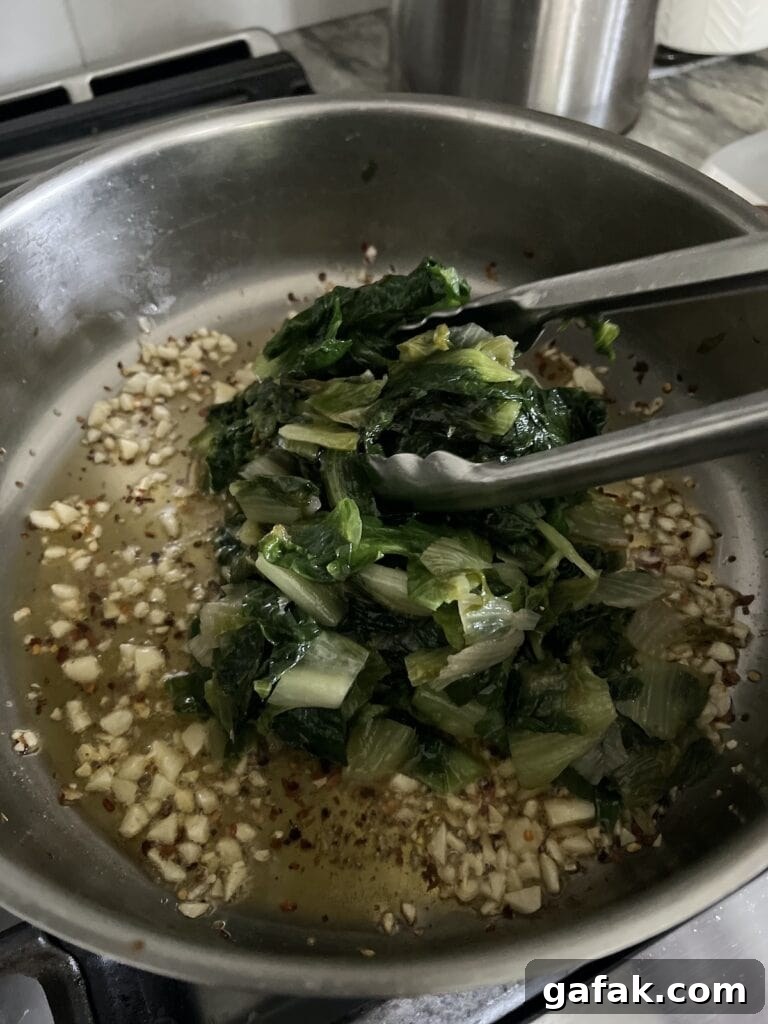
- Return the drained escarole to the pan, season with salt and pepper, and toss to coat in the oil and garlic.
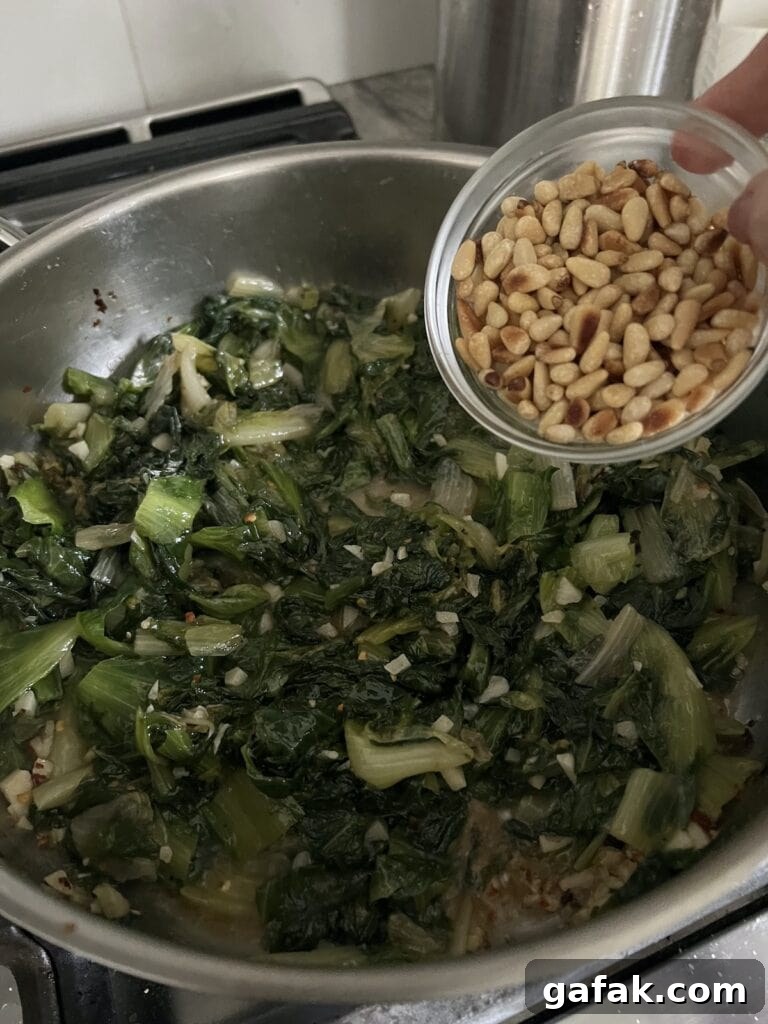
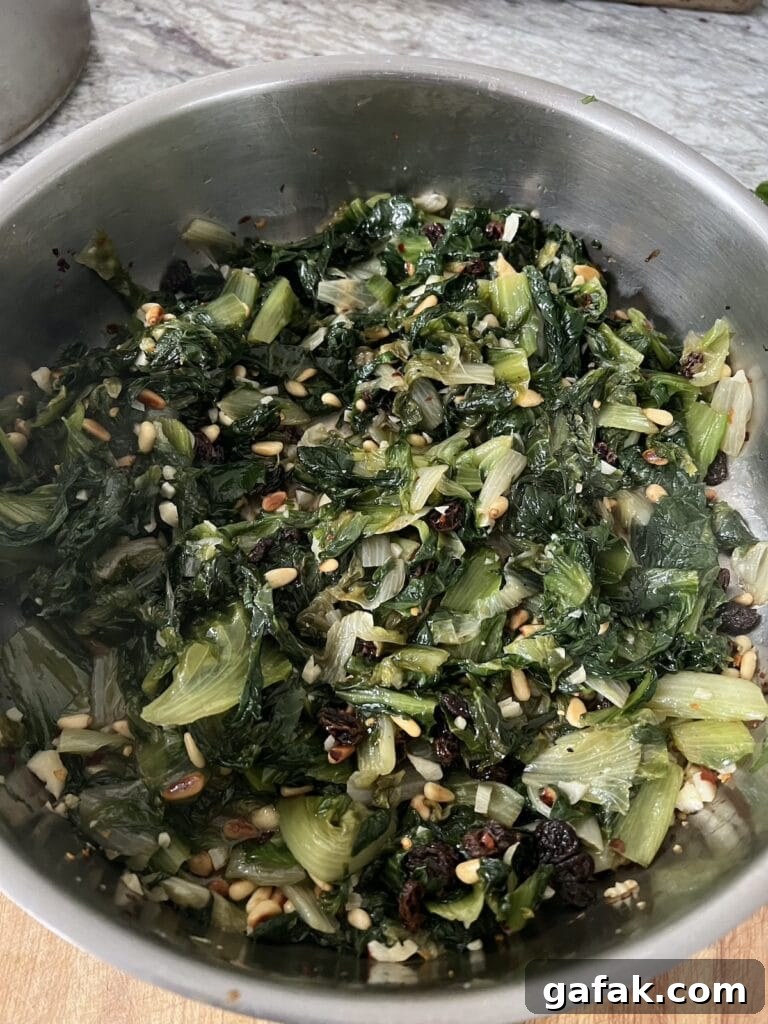
- Turn off the heat, fold in toasted pine nuts and drained raisins, and serve immediately. Reserve a few pine nuts and raisins for garnish if desired.
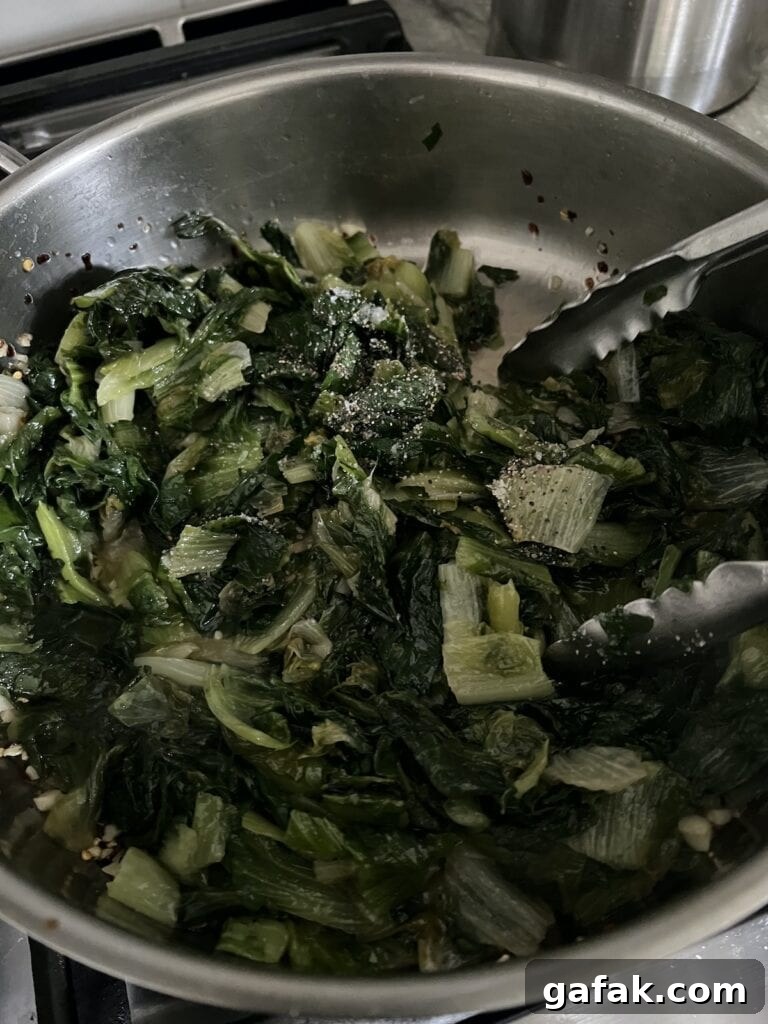
- Finish and serve: Fold in pine nuts and raisins, then serve warm as a side or use the sautéed greens to top pasta, beans or grain bowls.
More Italian-Inspired Vegetables
- Baked Artichoke Hearts with Lemon Breadcrumbs
- Marinated Grilled Eggplant
- Pesto Roasted Vegetables
- Ciambotta — Italian Vegetable Stew
- Steakhouse Creamed Spinach
- Green Beans in Tomato Sauce
- Roasted Zucchini with Mint and Vinegar
- Roasted Eggplant with Crispy Garlic and Herbs
- Sauteed Bell Peppers with Olives and Capers
Frequently Asked Questions about Italian Escarole
Choose dense heads with firm, bright green leaves and no yellowing or wilting. Store unwashed heads in the refrigerator in a loose plastic bag for up to three days.
Yes. Cleaned and chopped escarole can be refrigerated for 1–2 days. Spin or pat it dry and place a couple paper towels in the bag to absorb excess moisture and prevent wilting.
Cooking reduces bitterness naturally. For an extra step, blanch the leaves in salted boiling water for about 1 minute, plunge into ice water, drain and squeeze out excess liquid before sautéing. Blanching removes more bitterness while preserving color.
Top Tips for Sautéed Italian Escarole
- Clean thoroughly: Escarole traps grit between leaves. Soak in cold water and lift the leaves out, leaving dirt behind, rather than pouring both into a colander.
- Prep ahead: Washed and cut escarole stores 1–2 days in the fridge if dried well before bagging.
- Substitutions: Spinach, Swiss chard or Tuscan kale can be used if escarole isn’t available. If pine nuts are too costly, use chopped almonds, walnuts or pistachios.
- Variations: Skip pine nuts and raisins for a simpler garlic-and-oil version; add anchovies with the garlic for an umami boost; or swap raisins and pine nuts for olives and capers for a briny twist.
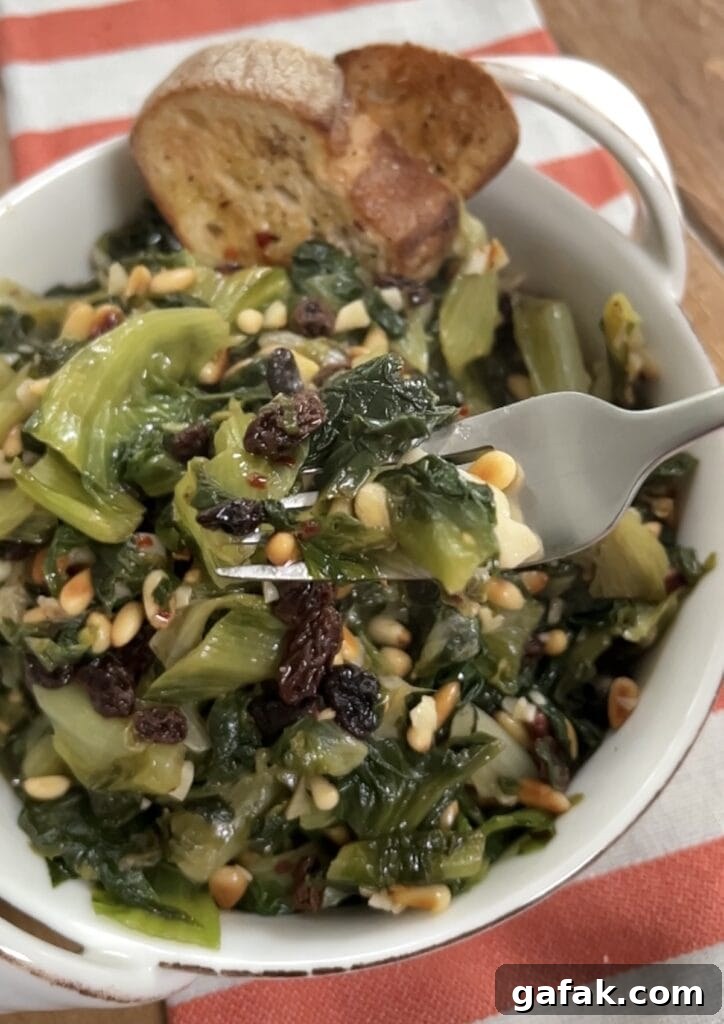
- Serving suggestions: Pair with baked ziti, steak pizzaiola, baked chicken cutlets, roasted turkey breast or sausage. Toss with pasta, stir into beans, top grain bowls, or serve with crusty bread.
- Leftovers: Refrigerate in an airtight container for up to five days. Reheat in a skillet or microwave.
If you try this sautéed Italian escarole, please leave a comment to share how it turned out — I love hearing from readers. Buon appetito!
Sautéed Italian Escarole
Ingredients
- Approx. 2 pounds escarole (1–2 heads depending on size)
- ½ cup raisins (black or golden)
- ⅓ cup red or white wine vinegar
- ⅓ cup pine nuts
- 4 Tbsp extra virgin olive oil, divided
- 2–3 Tbsp chopped garlic
- Pinch crushed red pepper flakes (optional)
- Salt and black pepper, to taste
Instructions
- Gather ingredients and prep escarole as described above.
- Soak and rinse the leaves thoroughly to remove grit, then drain.
- Place raisins in vinegar to rehydrate for about 15 minutes, then drain.
- Toast pine nuts in a small dry skillet until golden, watching closely, then set aside.
- Heat 2 Tbsp oil in a large skillet or Dutch oven. Add half the escarole, cover and let reduce. Add a pinch of salt, then the remaining escarole; cover and cook until tender, stirring occasionally. Drain.
- Add the remaining oil to the pan with garlic and optional red pepper. Cook until the garlic lightly browns. Return the drained escarole to the pan, season with salt and pepper, and toss to coat.
- Turn off the heat, fold in pine nuts and raisins, and serve immediately.
Notes
- Escarole sizes vary; adjust quantity accordingly.
- Lift escarole from soaking water to avoid reintroducing grit when draining.
- Store unwashed escarole heads in the fridge up to 3 days. Washed, dried and prepped leaves keep 1–2 days.
- To further reduce bitterness, blanch leaves 1 minute in salted boiling water, then shock in ice water, drain and squeeze out excess before sautéing.
- Leftovers keep up to 5 days in an airtight container; reheat in a skillet or microwave.