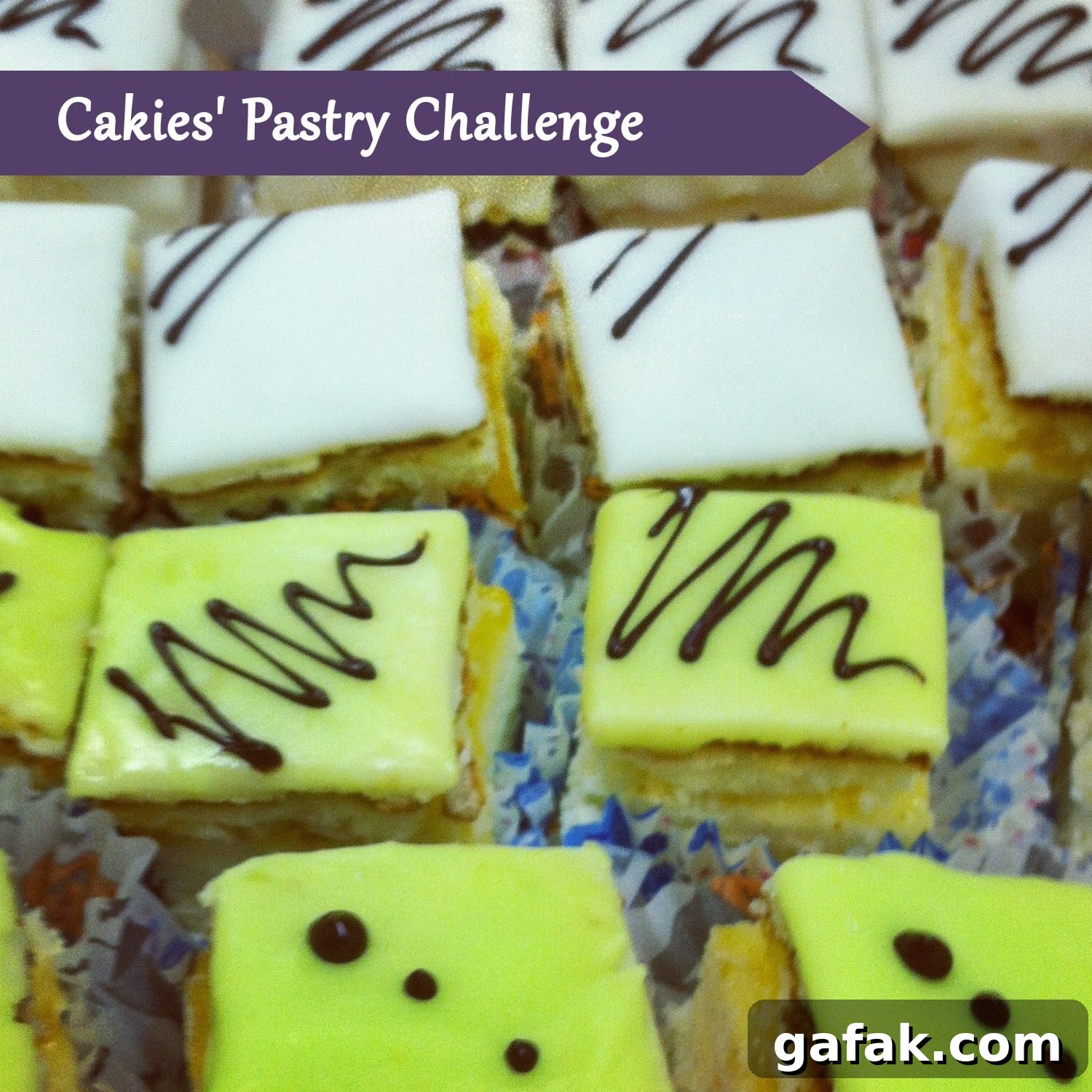
The 23rd day of the course was exceptionally busy and rewarding. During the session we prepared petit fours, macarons and croquettes, each requiring different techniques and attention to detail.
Assembling petit fours is straightforward in concept. Start with a sheet of sponge cake, slice it into thin layers, add a filling between the layers, and spread a thin coat of buttercream on top. Cover that with a very thin layer of marzipan, then trim the block into the desired petit four shapes. The basic assembly is simple, but the real challenge is the finish.
Finishing petit fours involves dipping them into fondant icing upside down, typically using a bent fork to hold each piece. This technique takes practice: the fondant must coat the petit four smoothly without leaving drips or uneven edges. It’s a delicate, hands-on task that tests steadiness and timing. I struggled a little at first, but after a few tries I managed a tidy finish and was pleased with the final appearance.
We also started making macarons, which was a lot of fun and very instructive. A crucial step in macaron-making is allowing the piped shells to rest and form a skin before baking. Proper drying time helps create the signature smooth top and the delicate “foot” around the bottom. I chose a green shell color with a fresh lime buttercream filling for contrast and flavor. The shells did not rise as much as I had hoped, so the feet were a bit modest, but the texture and taste were excellent. That balance between sweetness and citrus was spot on. I plan to keep practicing at home until I can consistently achieve the perfect macaron shell.
Finally, we made croquettes. You might wonder how croquettes fit into a pastry course, but historically croquettes were often made by pastry chefs and are considered a classic element of patisserie. It’s a neat piece of culinary history that makes the practice more meaningful.
The croquette filling was rich and well seasoned. Because the lesson time ended before I could finish the assembly and frying, I brought the remaining components home to complete them. Finishing at home allowed me to control the final crispness of the coating and the temperature of the oil. For a first try, the croquettes turned out very well: the exterior was golden and crunchy while the interior remained smooth and flavorful. I served one with a small dollop of mustard, which complemented the filling nicely.
Overall, day 23 was a productive mix of sweet and savory practice. Each item taught a different skill set: delicate handling and finishing for petit fours, precise drying and texture control for macarons, and classic savory technique for croquettes. I left the class motivated to refine these techniques and excited to try them again at home.