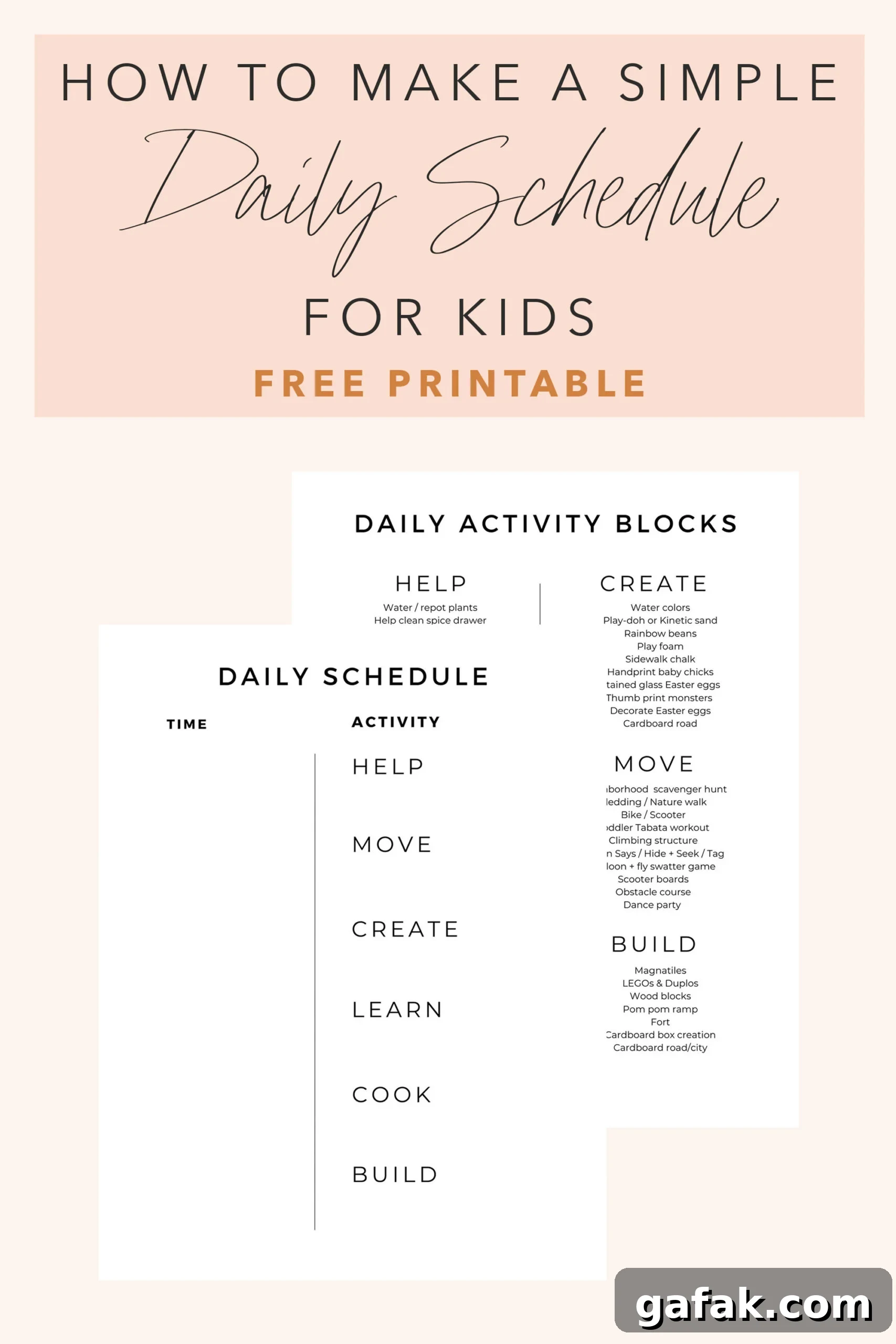
Learn how to use activity blocking to bring structure and variety to your days with this free printable activity-blocking worksheet and simple daily schedule for kids. It’s easy to customize and works well for toddlers, preschoolers, and older children.
Table of Contents
Are the kids climbing the furniture and the walls? You’re not alone.
The last few weeks have altered routines dramatically. What started as news about the novel coronavirus quickly became a reality in our neighborhoods, and many families have seen school, work, extracurriculars, and community events come to a halt.
With millions of children out of school and parents juggling remote work or changes to employment, days at home look very different. Social distancing is essential, but staying inside for weeks or months can feel daunting.
A practical way to bring calm and predictability to your household is a simple daily schedule: a routine that’s structured yet flexible and includes a mix of activities that keep kids engaged while giving parents predictable windows for work and chores.
How to Make a Simple Daily Schedule for Kids
First, brainstorm activities by block.
To avoid scrambling for ideas each day, start by listing every activity you can think of and grouping them into blocks. These blocks become a framework that adds structure and variety while giving you a rotating list of options to pull from.
Your blocks may differ, but here are the categories we use to build our kids’ daily schedule at home:
HELP
With everyone at home, household tasks still need doing. Young children often enjoy helping, and small chores can teach responsibility and keep them occupied.
Ideas for age-appropriate helpers:
- Watering or repotting plants
- Loading or unloading the dishwasher and washer/dryer
- Choosing clothes for the next day
- Swapping batteries in toys
- Decluttering a few toys
- Wiping fingerprints off windows and appliances
- Tidying specific areas at set times
- Cleaning and organizing a kitchen drawer
MOVE
Physical activity supports both body and mind. Try to include movement twice a day—even 20–30 minutes helps.
Movement ideas:
- Neighborhood scavenger hunts
- Biking
- Sledding or tubing (seasonal)
- Nature walks
- Kid-friendly workouts
- Jumping on a mattress on the floor
- Dance parties
- Obstacle courses
- Games like Simon Says, hide-and-seek, or tag
CREATE
Creative activities spark imagination and can be tailored to your supplies and space.
Creative ideas:
- Watercolors or finger painting
- Sidewalk chalk
- Simple crafts
- Play-doh or kinetic sand
- Face painting and pretend play
- Costume-making like paper crowns or capes
COOK
Spending more time at home means more meals. Invite kids into the kitchen: it’s a chance to learn skills and enjoy the results together.
Cooking ideas:
- Baked goods like cookies or muffins
- Homemade popsicles
- Sandwiches or lunch roll-ups
- Picnics with finger foods, indoors or out
- Breakfast projects like waffles, pancakes, or overnight oats
LEARN
Learning blocks add quiet, focused time and can include low-key educational activities.
Learning ideas:
- Books and audiobooks
- Puzzles
- Board and card games
- Worksheets and activity pages
- Educational apps, videos, or podcasts
BUILD
Building activities encourage independent play and problem solving.
Building ideas:
- Magnetic tiles and blocks
- LEGOs or DUPLO
- Wood blocks
- Cardboard box creations
- Forts
Keep adding ideas to your lists as you discover new favorites. Below are examples of an activity-blocking worksheet and a completed sample you can adapt to your family’s needs.
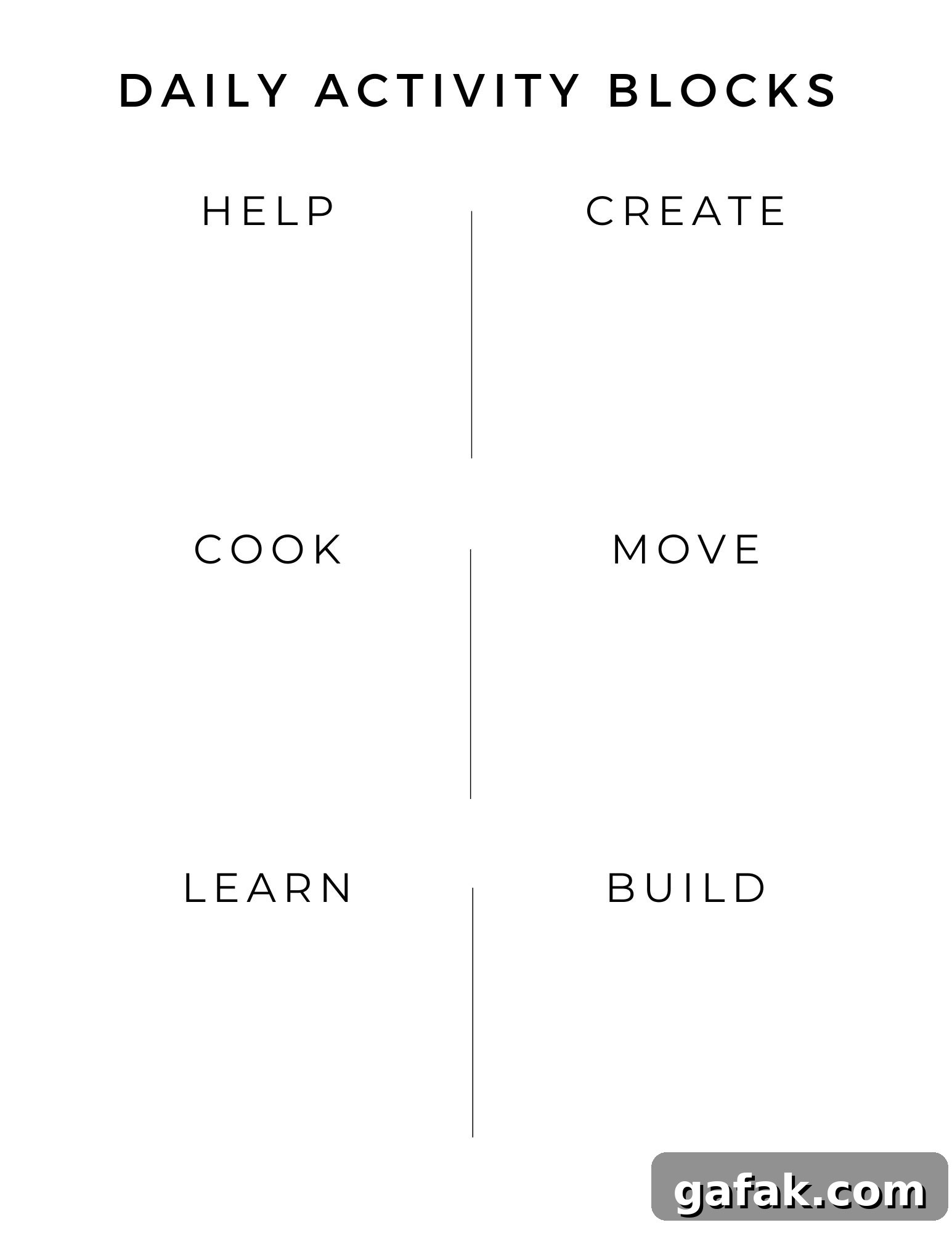
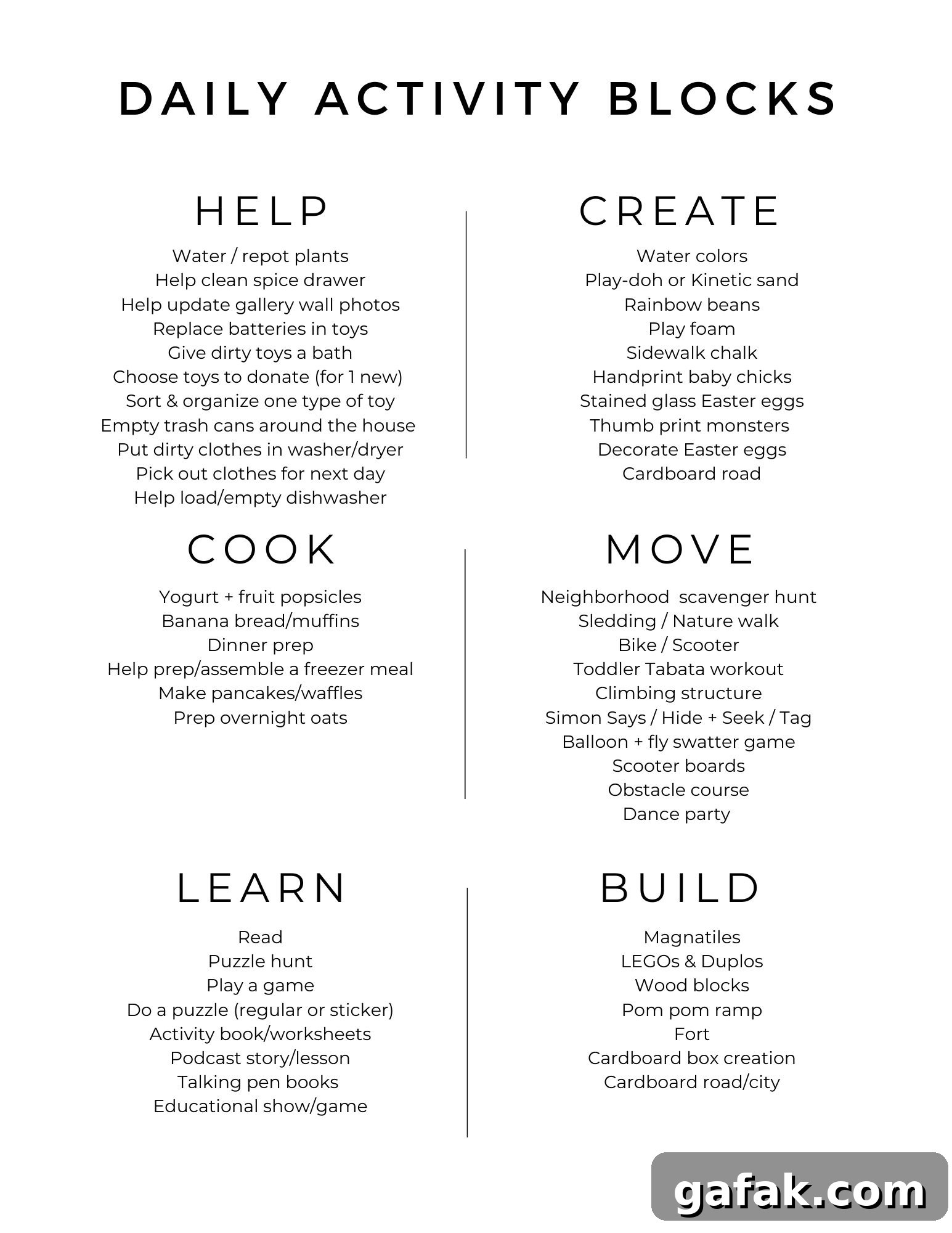
Choose 1–2 activities from every block for your daily schedule.
After sorting activities into blocks, build a simple daily plan by selecting one or two activities from each block. Include meals, snacks, naps, and bedtime to round out the day. This approach gives enough variety to keep children engaged while leaving flexibility for real-life needs.
We often schedule HELP tasks in the morning when the kids are fresh and reserve quieter LEARN time around nap or quiet time. With a 2- and a 4-year-old, strict time slots aren’t always realistic, so we use morning/afternoon groupings instead of rigid hourly plans. The printable schedule can be as detailed or relaxed as you prefer.
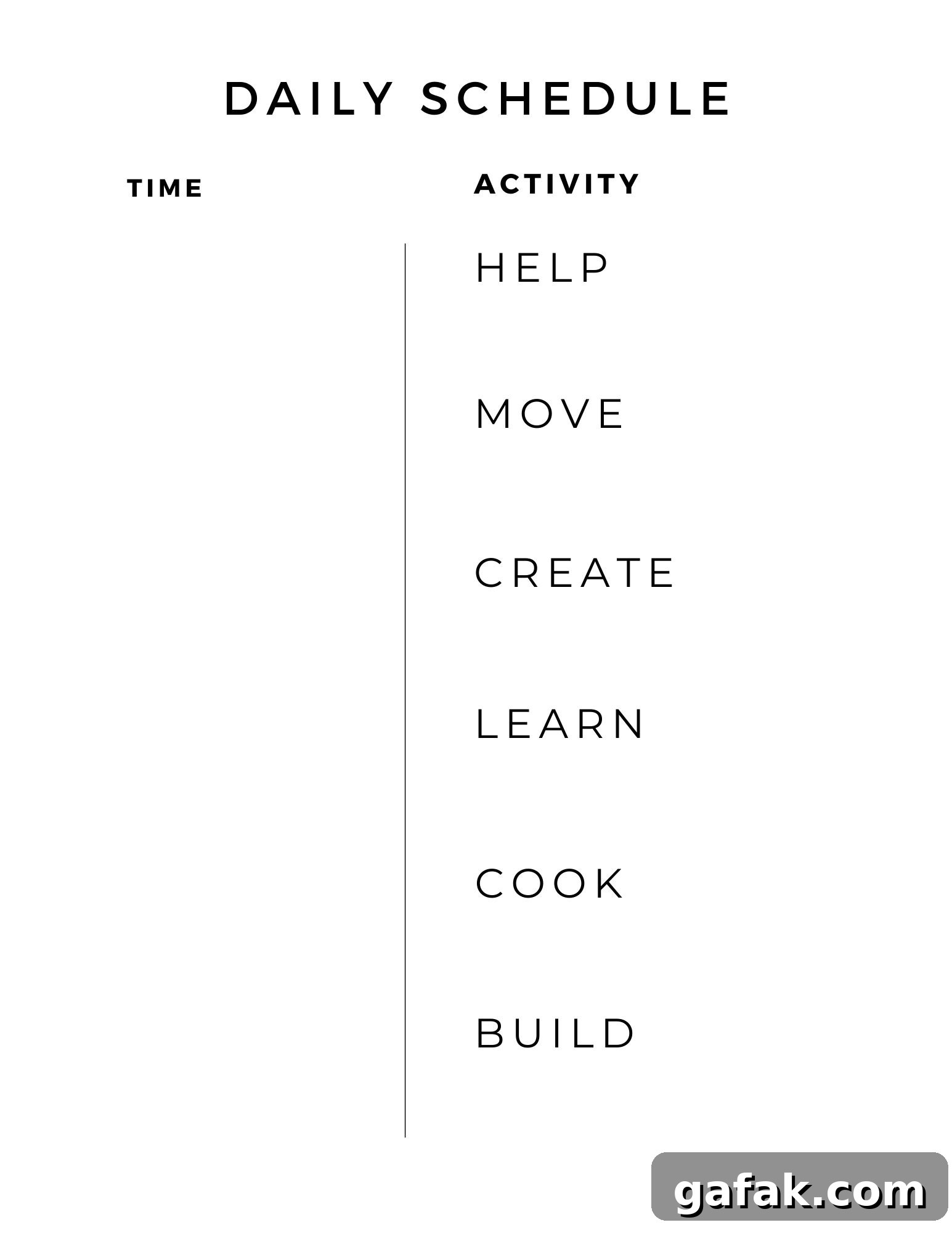
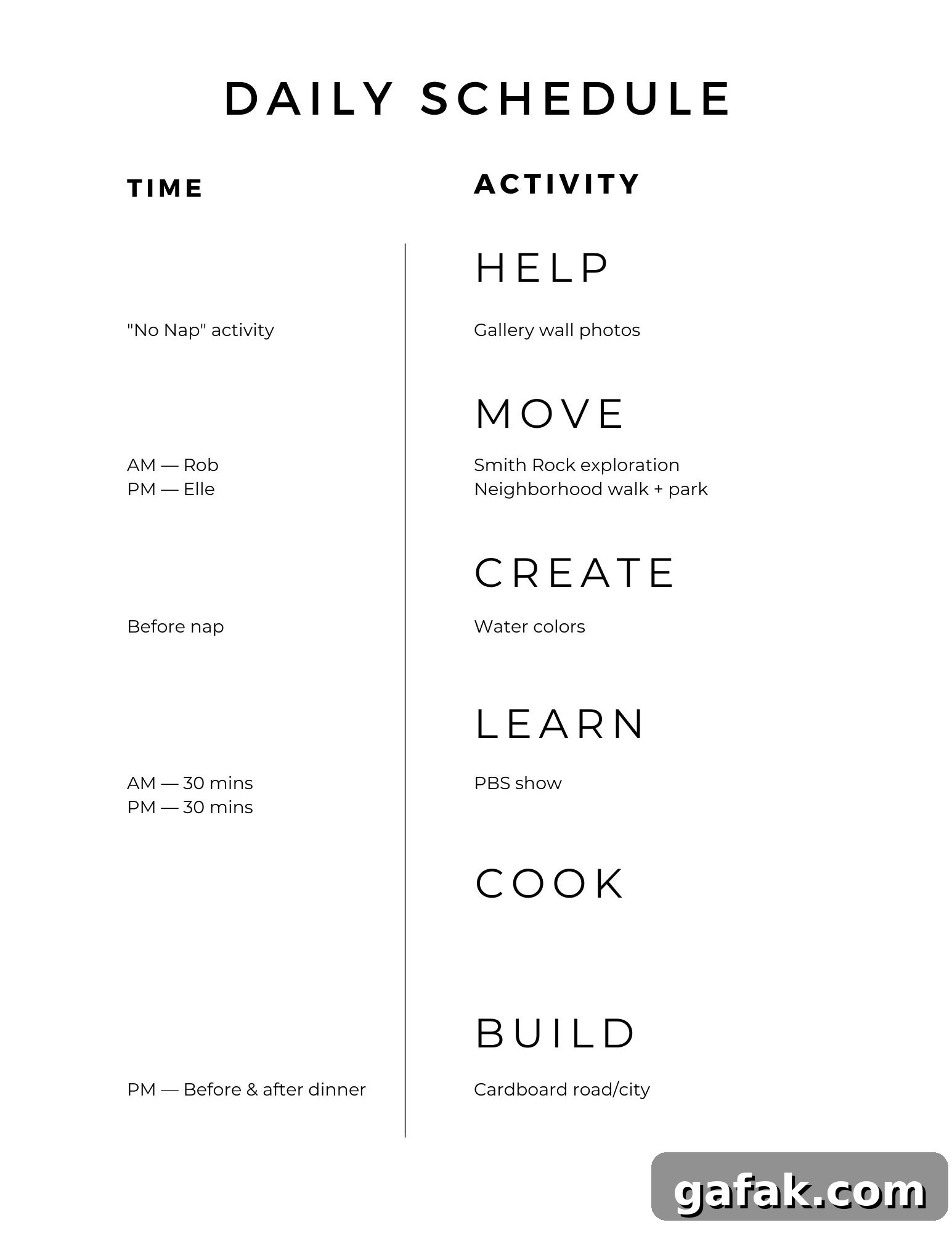
In time, your family may not need a printable to stay on track, but for now the activity-blocking worksheet and simple daily schedule can be a helpful blueprint for at-home days.
I hope this approach helps your household as much as it has helped ours. Take care and stay healthy—you’ve got this.
Pin this Post