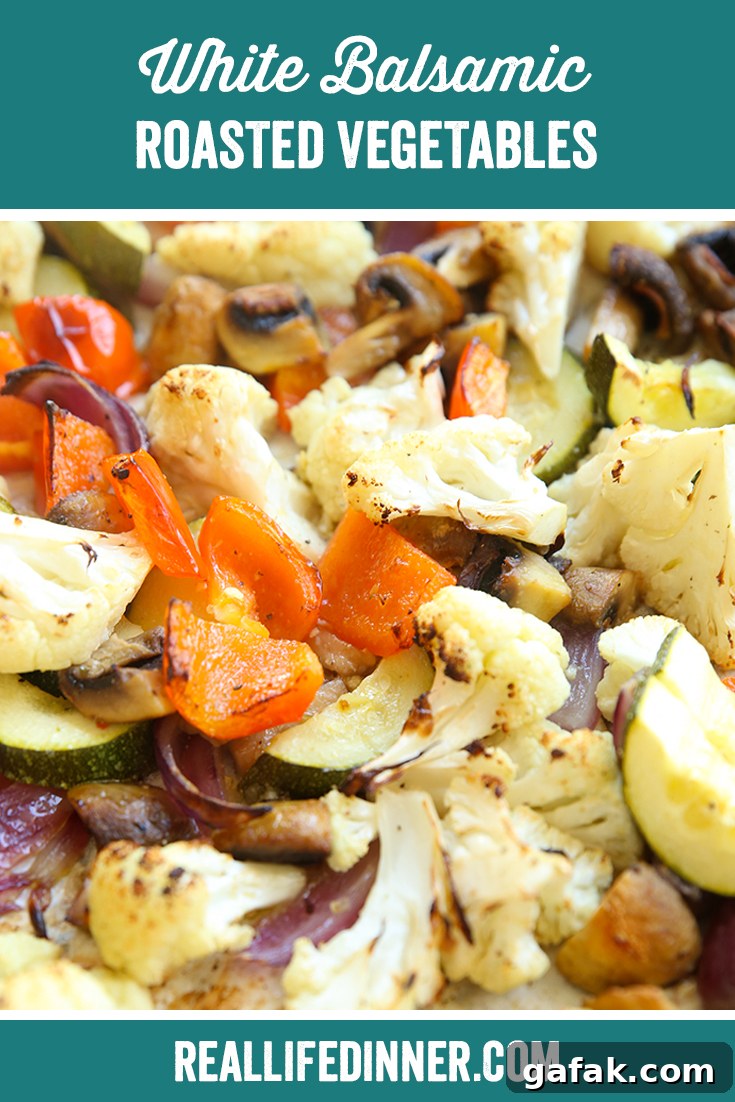
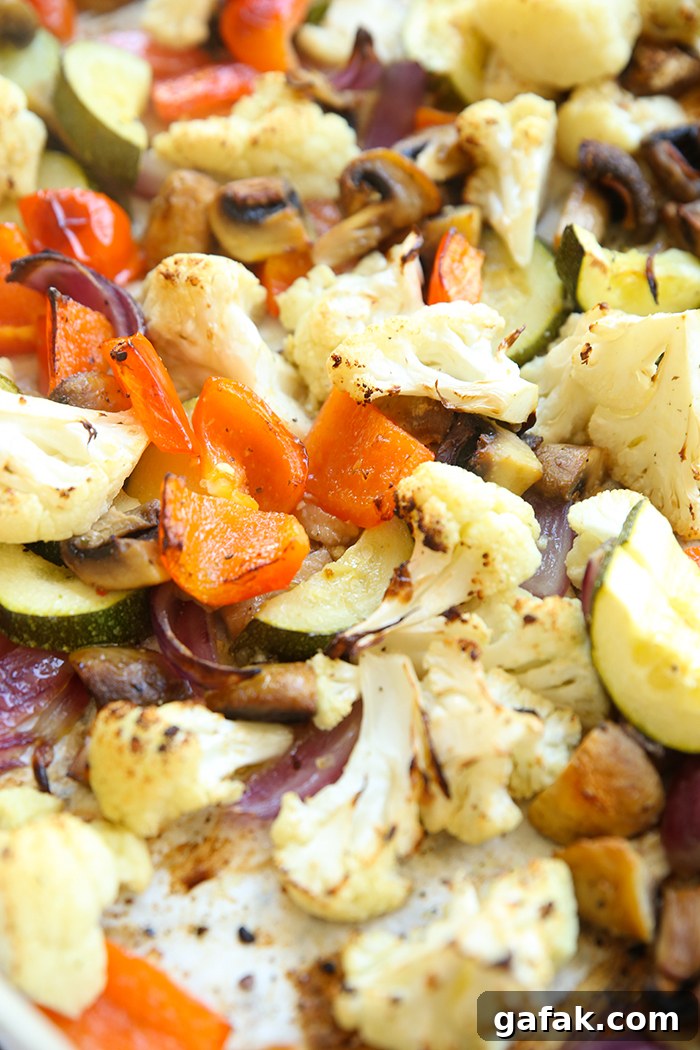
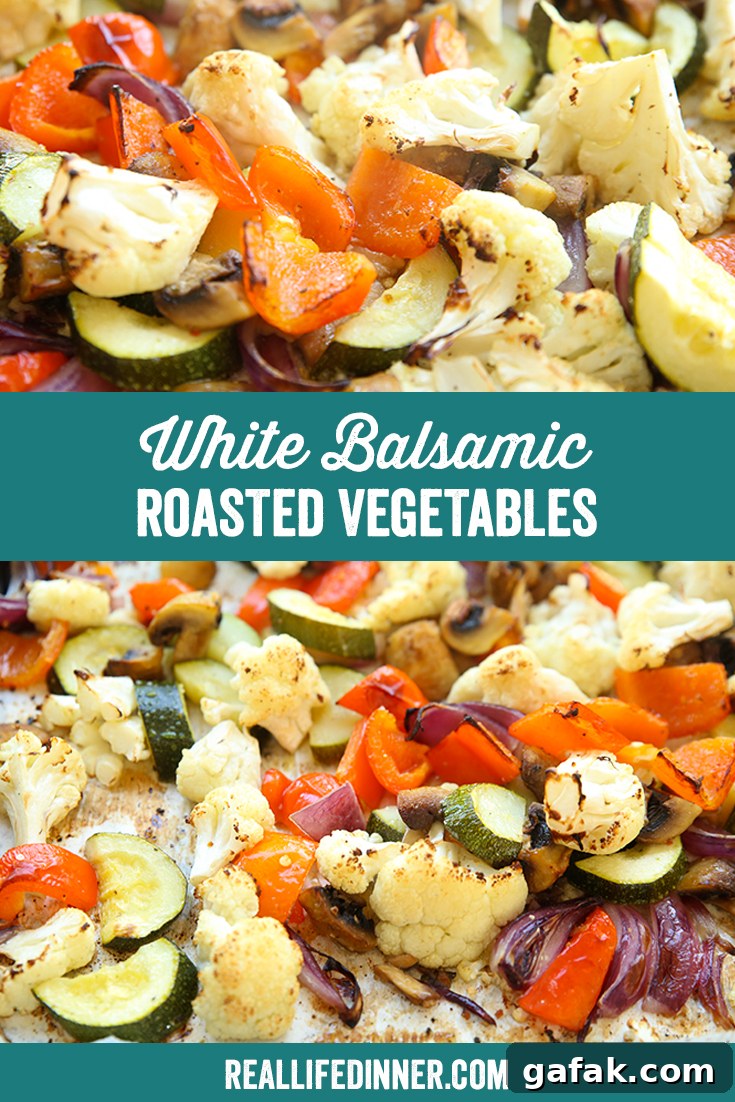
 If you love roasted vegetables, this white balsamic method is a game changer. I’ve started preparing them this way and the difference is incredible — tender, caramelized, and lightly sweet from the white balsamic. These White Balsamic Roasted Vegetables are simple to make, family-friendly, and a great way to get extra veggies on the table. For a meal pairing that highlights balsamic flavors, try the Slow Cooker Balsamic Pork Loin recipe from the same kitchen.
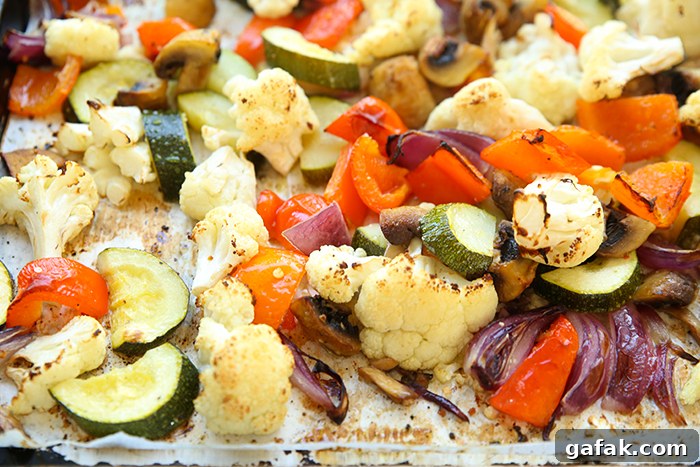
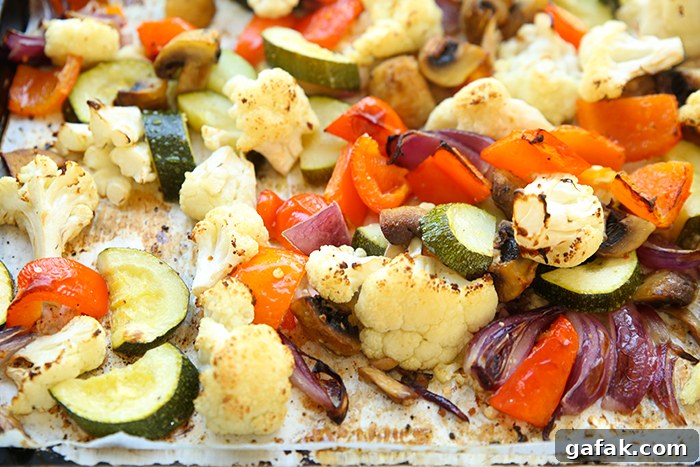 You can mix and match vegetables based on preference or season. I like including red bell pepper, mushrooms, and red onion for their bold flavor, and in this batch I used cauliflower, zucchini, red onion, mushrooms, and red bell pepper. A single-vegetable pan, like broccoli only, also works wonderfully with this treatment. If you have white balsamic vinegar on hand, it’s worth preparing a tray tonight — the result is bright, slightly sweet, and irresistibly roasted.
More Veggie-Loaded Recipes
- Company Cauliflower
- Million Dollar Zucchini Skillet
- Minestrone Soup
- Easy Greek Salad
- Ukrainian Coleslaw
- No-Noodle Zucchini Lasagna
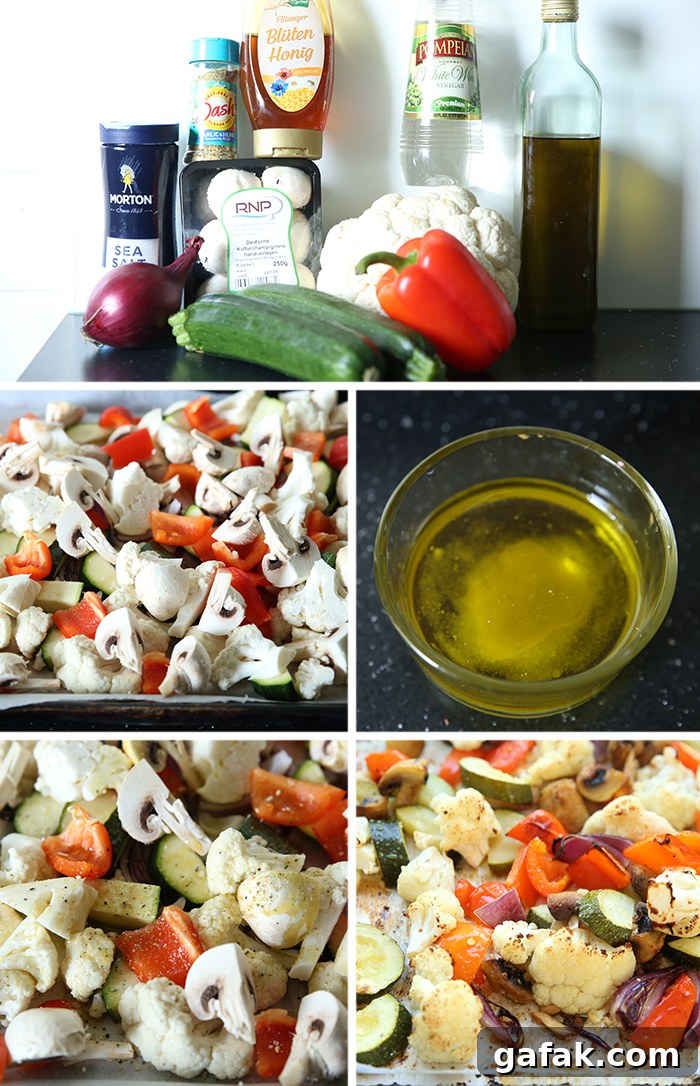
Step-by-Step Photos for making White Balsamic Roasted Vegetables
 Frequently Asked Questions & Tips for making White Balsamic Roasted Vegetables
 Frequently Asked Questions & Tips for making White Balsamic Roasted Vegetables
What is white balsamic vinegar?
White balsamic vinegar is a pale, golden vinegar with a light, slightly sweet flavor. It’s milder than traditional dark balsamic, which makes it ideal for brightening vegetables without overpowering them.
Can I substitute regular balsamic vinegar for white balsamic?
Yes. Regular balsamic can be used if that’s what you have, though it will add a darker color and a more pronounced sweetness. White wine vinegar is another viable substitute when you want a lighter profile.
What other recipes use white balsamic vinegar?
White balsamic works well in salad dressings and vinaigrettes, marinades, lighter sauces, soups, and braised dishes where you want a subtle acidic balance without the deep color of traditional balsamic.
Tips:
 Tips:
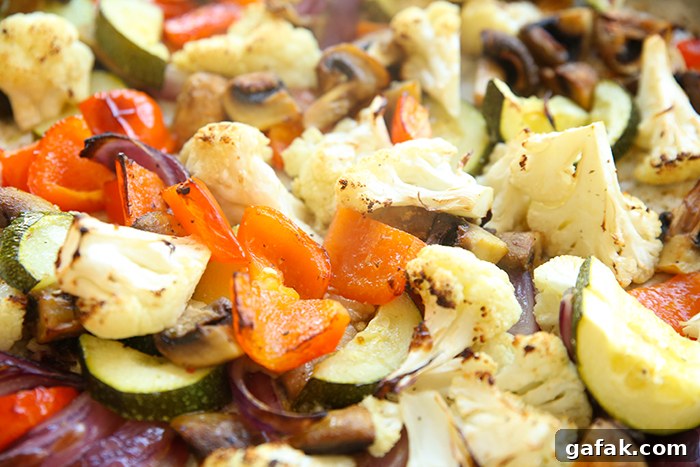
Tips:- Cut vegetables into similar-sized pieces so they roast evenly. Refer to the step-by-step photos for guidance.
- Use convection mode if available — roast at 400°F for excellent results.
- Line your baking sheet with parchment paper for easier cleanup and to prevent sticking.
- If you don’t have coarse sea salt, regular table salt works fine — adjust quantity to taste.
- Add freshly cracked black pepper when seasoning, if desired.
- If you don’t have a garlic-and-herb seasoning blend, a simple sprinkle of garlic powder provides plenty of flavor.
Chef’s Tools:
 Chef’s Tools:
- White balsamic vinegar
- Chef’s knife
- Cutting board
- Large baking sheet
- Parchment paper
- Coarse sea salt
Serve with…
- 8–10 cups cut vegetables (choose a mix that will cook evenly when chopped)
- 1/4 cup olive oil
- 2 1/2 tablespoons white balsamic vinegar
- 2 tsp granulated sugar
- Coarse sea salt (about 1 1/2 tsp)
- Garlic-and-herb seasoning or garlic powder (about 1 tsp)
- Preheat the oven to 450°F (or 400°F for convection).
- Line a large baking sheet with parchment paper.
- Arrange the chopped vegetables in an even layer on the baking sheet.
- Whisk together olive oil, white balsamic vinegar, and sugar in a small bowl. Drizzle over the vegetables and toss to coat evenly. (Alternatively, toss in a bowl before spreading on the sheet.)
- Sprinkle the garlic-and-herb seasoning (or garlic powder) over the vegetables, then add the coarse sea salt. Add cracked black pepper, if desired.
- Roast at 450°F (or 400°F convection) for about 12 minutes. Stir the vegetables, then roast another 5–10 minutes until they reach your preferred level of caramelization.
- Serve immediately and enjoy.
Don’t forget dessert